Ukraine and Russia ended a second day of U.S.-brokered peace talks in Abu Dhabi on Saturday without reaching a deal, though both sides said further discussions were expected next weekend.
The talks concluded as overnight Russian air strikes cut power and heating to large parts of Ukraine during subzero winter temperatures.
Statements released after the talks did not indicate that any agreements had been reached, but Moscow and Kyiv both said they remained open to continued dialogue under U.S. mediation.
Volodymyr Zelenskyy said the discussions had focused on what he described as "possible parameters for ending the war", writing on social media that negotiators had explored options for bringing the conflict to a close.
A U.S. official, speaking on condition of anonymity after the talks concluded, said another round of negotiations was expected to take place in Abu Dhabi next Sunday. The official said discussions had moved into "granular detail" and that there had been "a lot of respect in the room" between the delegations.
The United Arab Emirates said there had been rare face-to-face engagement between Ukrainian and Russian negotiators, describing the atmosphere as "constructive and positive" and confirming that talks had addressed outstanding elements of Washington’s proposed peace framework.
The meetings in Abu Dhabi marked the first trilateral talks between Ukraine, Russia and the United States since Moscow launched its full-scale invasion of Ukraine in 2022.
The talks took place as Ukraine came under renewed Russian bombardment. Hundreds of drones and missiles targeted Kyiv and the eastern city of Kharkiv overnight, knocking out electricity and heating for hundreds of thousands of people amid freezing temperatures. Ukrainian officials said at least one person was killed and more than 30 were injured.
Ukraine’s Foreign Minister Andrii Sybiha accused Moscow of acting cynically, saying the attacks undermined the negotiations. "His missiles hit not only our people, but also the negotiation table," he wrote.
Ukraine’s air force said Russia had launched 375 drones and 21 missiles, once again striking energy infrastructure. The government said around 800,000 people in Kyiv were left without power, with temperatures falling to around minus 10 degrees Celsius.
Kyiv is under increasing pressure from Washington to make concessions in order to secure a deal to end Europe’s deadliest conflict since World War Two.
However, a central obstacle remains territorial control in eastern Ukraine. Russia has insisted that Ukraine yield the entirety of the Donbas region, including the parts of Donetsk and Luhansk still under Kyiv’s control.
Zelenskyy has repeatedly ruled out ceding territory that Russian forces have failed to capture during nearly four years of fighting, while opinion polls show little public support in Ukraine for territorial concessions.
Russia has said it remains open to a diplomatic solution but will continue military operations until its objectives are met.
Land dispute defines stakes in Abu Dhabi meeting
Ukraine's President Volodymyr Zelenskyy, who met U.S. President Donald Trump at the World Economic Forum in Davos on Thursday, said the key issue would be that of territory.
Neither side has softened its stance in terms of key demands and negotiations to end the nearly four-year-long war could last up to two days.Washington has increased pressure on Kyiv to reach a peace deal. Zelenskyy has consistently refused to cede a large swathe of land in the eastern area of Donbas to Moscow. Russian President, Vladimir Putin, says his troops won't stop fighting until this happens.
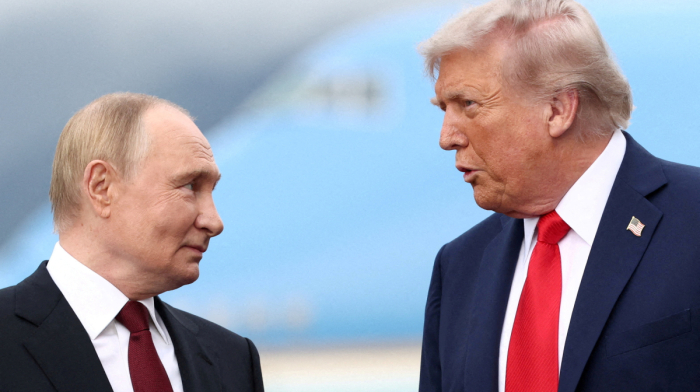
The trilateral talks follow a late-night meeting in Moscow between Vladimir Putin and senior U.S. officials, including Special Envoy Steve Witkoff and Senior Advisor Jared Kushner.
Kremlin aide Yuri Ushakov described the Moscow discussions, which lasted around four hours, as “substantive, constructive and very frank,” but stressed that a durable peace would not be possible without resolving territorial disputes outlined in last year’s Trump-Putin summit in Alaska.
Ushakov praised the Americans for setting up Friday's security meeting with Russia and Ukraine in Abu Dhabi.
"The Americans, it must be acknowledged, have done a great deal to prepare for it, and they hope that this meeting will be successful and will open up prospects for progress on the entire range of issues related to ending the conflict and reaching a peace agreement," he said.
Upcoming dialogue
According to the Kremlin, Russian Admiral Igor Kostyukov will lead Moscow’s delegation at the Abu Dhabi talks, while investment envoy Kirill Dmitriev will meet separately with Witkoff on economic issues.
Although Putin reaffirmed Russia’s interest in a diplomatic solution, Ushakov warned that Moscow will continue its military operations until territorial demands are met.
In Abu Dhabi, military-to-military working groups will operate alongside the trilateral meetings, according to President Zelenskyy.
The talks come as Ukraine endures its harshest winter since the war began, with heavy Russian missile and drone strikes leaving hundreds of thousands without power and heating.
The Abu Dhabi trilaterals are being closely watched as a potential step towards a negotiated settlement and post-war reconstruction for Ukraine, signalling the first coordinated high-level engagement among Kyiv, Moscow, and Washington since the conflict escalated.
Davos meetings
On Thursday, Zelenskyy said key terms for Ukraine’s security had been finalised during his discussion with Trump and an economic deal was near completion - part of Kyiv’s proposals to counter a previous U.S. plan viewed as heavily favouring Moscow. However he said that the issue of territory remained unsolved.
Trump described his discussion with Zelenskyy as “good”, but said efforts to end the war launched by Russia remain an “ongoing process”.
Earlier at Davos, Steve Witkoff reported “a lot of progress” in the long-running negotiations and suggested only one major issue remained unresolved.
“I think we’ve got it down to one issue, and we have discussed iterations of that issue, and that means it’s solvable,” Witkoff said.
“If both sides want to solve this, we’re going to get it solved,” he added.
Why the Middle East, and what Russia wants from the talks
Diogo Castro Silva, a political analyst from São Paulo, Brazil, told AnewZ that the choice of Abu Dhabi follows an established pattern in sensitive diplomatic engagements.
“The Middle East has been the venue chosen for this kind of talks several times,” he said, noting that Europe presents practical complications.
“Europe poses issues about air-flight clearances because of sanctions,” he explained.
Saudi Arabia and Qatar have hosted similar contacts in the past, and Abu Dhabi offers the same mix of neutrality and logistical ease.
Turning to Russia’s incentives, Castro Silva described Moscow’s approach as largely tactical.
“Putin is playing a game of not trying to be confrontational with Washington,” he said, arguing that Russia aims to “make a semblance that it wants peace while continuing with maximalist demands.”
He added that battlefield realities now form a secondary pressure point.
“Russia has barely moved for a year and has less territory than in 2022,” he noted, suggesting this is beginning to weigh on morale and casualties even if it has not shifted the political strategy.
On prospects for concrete outcomes, he identified two immovable issues: “the fate of the unoccupied Donbas territory that Russia keeps claiming” and “the Zaporizhzhia power plant.”
Without a change in Moscow’s stance, he said it is “hard to see what room there is for compromise,” though limited progress could still emerge on narrower items, such as prisoner exchanges.
These smaller steps, he added, may allow each side to show “that it is the other and not themselves that are obstacles to peace” as Washington presses for movement.














What is your opinion on this topic?
Leave the first comment