European countries have sent small numbers of military personnel to Greenland as Denmark moves ahead with plans for a larger NATO presence on the island, despite U.S. President Donald Trump's insistence that Washington may use force to acquire the territory.
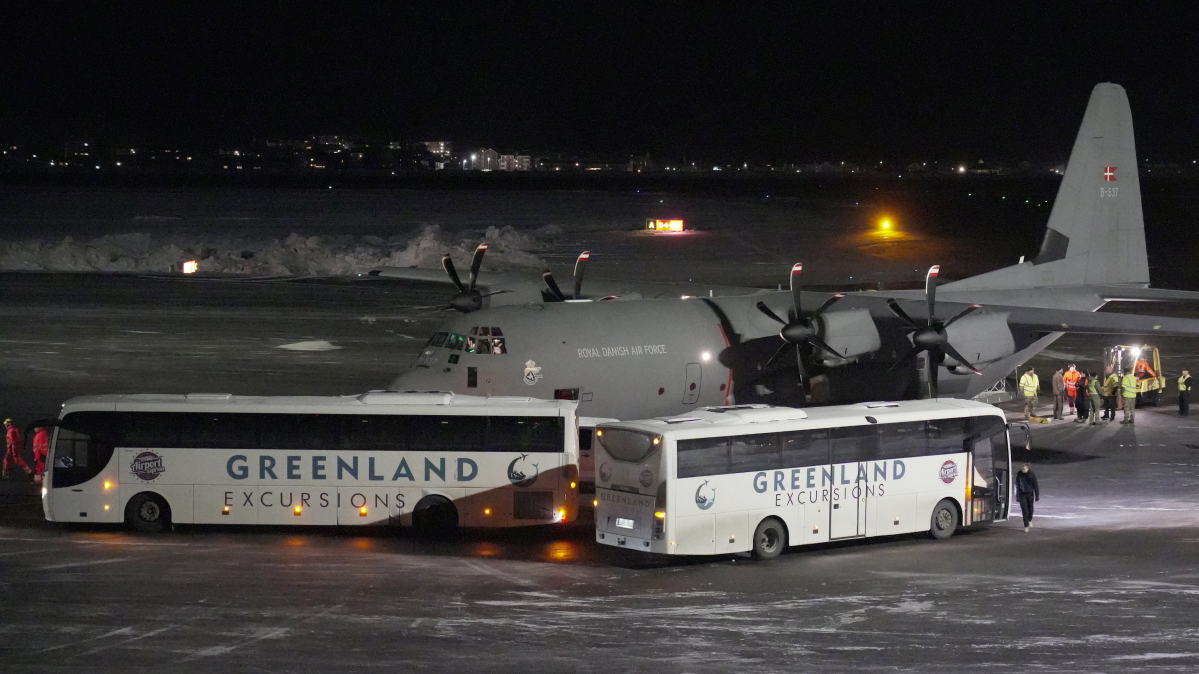
European deployments to Greenland began on Thursday, arriving shortly after U.S., Danish and Greenlandic officials failed to resolve a diplomatic standoff over the island's status. Denmark said the modest troop arrivals will support preparations for wider exercises and signal unity within the alliance.
President Trump has repeatedly argued that Denmark cannot secure Greenland against potential Russian or Chinese designs, calling the mineral-rich island vital to U.S. national security. He has not ruled out using force to take it, an idea dismissed by both Greenland and Copenhagen as dangerous and unacceptable.
Denmark's defence minister Troels Lund Poulsen said precise numbers for the anticipated NATO expansion were not yet finalised, but confirmed planning is under way for a more permanent presence throughout 2026. He said the Arctic's security is a shared responsibility across NATO, not just for the Kingdom of Denmark.
The move has drawn strong backing from major European Union states, which warn that any U.S. attempt to seize territory from a fellow NATO member would undermine the alliance itself. Analysts say the small deployments serve two purposes: to demonstrate readiness to defend Greenland and to show Washington that European allies are addressing U.S. concerns over surveillance and sovereignty.
Denmark had around 150 personnel at its Joint Arctic Command before the latest steps. Germany, France, Sweden, Norway, Finland and the Netherlands have each announced limited deployments to begin preparations for larger drills later this year. Danish aircraft have already landed in Nuuk with personnel, while France is sending mountain specialists to be followed by land, air and naval assets. Sweden is sending three officers, Norway two, Finland two liaison officers, and the Netherlands and the United Kingdom one officer each.
Local reaction in Greenland remains cautious. Business owner Mads Petersen in Nuuk said that seeing more soldiers on the island would be unusual and that he hoped it would not become permanent.
The White House said the U.S.-Denmark-Greenland meeting had been productive but stressed that European troop movements would not affect the president’s goal of acquiring Greenland. Spokeswoman Karoline Leavitt said troop deployments in Europe "do not impact the president's decision-making process."
Russia dismissed NATO claims of Russian and Chinese interest in Greenland as myth-making and accused the alliance of raising tensions in the Arctic. Moscow warned that attempts to overlook Russian interests in the region would prompt a response.
Danish foreign minister Lars Lokke Rasmussen said about 200 U.S. troops are already stationed on the island, whose population is around 57,000. While the full scope of Europe’s planned military build-up is undisclosed, initial deployments suggest a limited footprint.
After meetings with U.S. Secretary of State Marco Rubio and Vice President JD Vance, Denmark and Greenland agreed to establish a working group with Washington to address ongoing concerns. A bipartisan delegation of 11 U.S. lawmakers is expected to meet Danish Prime Minister Mette Frederiksen and Greenland Premier Jens-Frederik Nielsen in Copenhagen on Friday.
Speaking to Greenlanders there, Nielsen received a standing ovation as he reaffirmed that the island chooses to remain within the Kingdom of Denmark and does not wish to be governed by, or integrated into, the United States.













What is your opinion on this topic?
Leave the first comment