The United Nations’ top court at The Hague has begun hearings on whether Myanmar committed genocide against the Rohingya ethnic minority. Gambia told judges on Monday that Myanmar targeted minority Muslim Rohingya for destruction and made their lives a nightmare in a landmark case.
Myanmar, now under military rule, denies all allegations.
It is the first genocide case the International Court of Justice is hearing in full in more than a decade.
West African nation Gambia filed the case at the International Court of Justice (ICJ) in 2019, claiming that Myanmar’s military “clearance operations” in 2017 violated the 1948 Genocide Convention.
In his opening statement, Gambian Justice Minister Dawda Jallow said his country had taken the case out of a “sense of responsibility” based on its own experience with military rule.
“Wherever and whenever oppression or crimes against individuals and groups occur, we must raise our moral voice in condemnation,” he told a packed courtroom.
"Myanmar has denied them their dream, in fact it turned their lives into a nightmare subjecting them to the most horrific violence and destruction one could imagine."
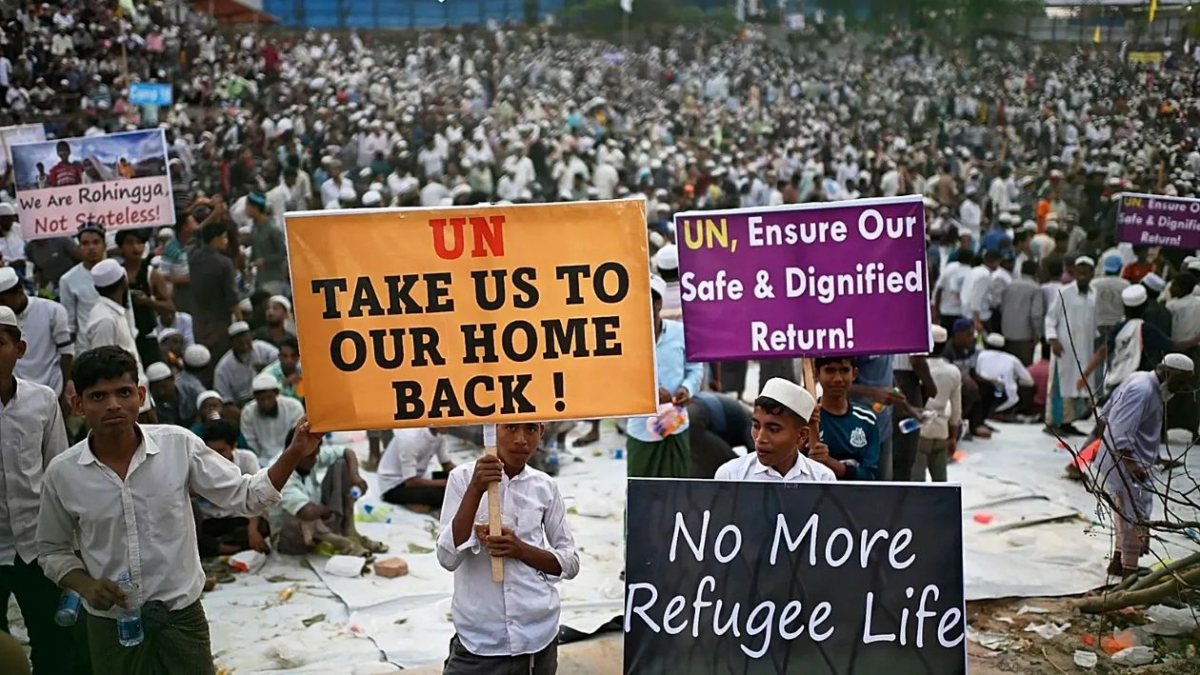
Myanmar's armed forces launched an offensive in 2017 that forced at least 730,000 Rohingya from their homes and into neighbouring Bangladesh, where they recounted killings, mass rape and arson.
A UN fact-finding mission concluded the 2017 military offensive had included "genocidal acts".
Myanmar authorities rejected that report, saying its military offensive was a legitimate counter-terrorism campaign in response to attacks by Muslim militants.
Today, around 1.2 million Rohingya live in overcrowded camps, where armed groups recruit children, and girls as young as 12 are forced into prostitution.
Severe cuts to foreign aid under U.S. President Donald Trump last year led to the closure of thousands of camp schools, leaving some children to starve.
“We don’t have anything that human beings should have,” said Yousuf Ali, who travelled from a refugee camp in Bangladesh to attend the hearings in the Netherlands.
Myanmar was initially represented by Nobel Peace Prize laureate Aung San Suu Kyi, who denied that the country’s armed forces committed genocide. In 2019, she described the mass exodus of Rohingya as the “unfortunate outcome” of fighting insurgents. Suu Kyi is now in prison following a military coup in 2021.
Myanmar contested the court’s jurisdiction, arguing that Gambia was not directly involved in the conflict. Judges rejected this in 2022, allowing the case to proceed.
The ruling opened the door for South Africa to file a case accusing Israel of genocide against Palestinians in Gaza which Prime Minister Benjamin Netanyahu denies.
Experts say the ICJ’s decision on Myanmar could also influence other international proceedings, including the International Criminal Court in The Hague, where the chief prosecutor in 2024 requested an arrest warrant for Myanmar’s military chief Min Aung Hlaing.










What is your opinion on this topic?
Leave the first comment