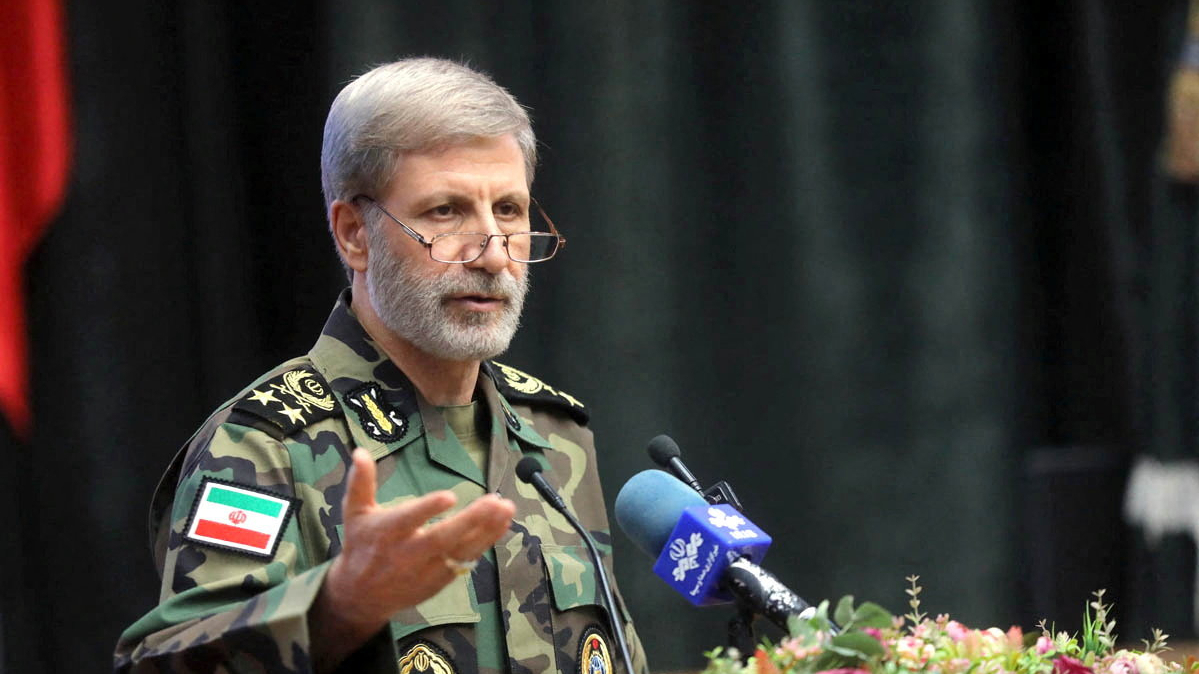
Iran’s Commander-in-Chief of Army, Major General Amir Hatami has warned against hostile rhetoric from U.S. and Israeli officials. “Iran considers the intensification of the enemies' rhetoric against the Iranian nation as a threat and will not leave its continuation unanswered,” Hatami said.
He made the comment at an address to senior military students at the Army Command and Staff Academy in Tehran on Wednesday (7 January).
The Iranian general was referring to recent remarks made by U.S. President Donald Trump and Israeli Prime Minister Benjamin Netanyahu about the possibility of renewed attacks in the wake of ongoing violent protests to rising prices in Iran.
“I can confidently say that today the preparedness of the Iranian Armed Forces is far greater than before the last war, so that if the enemy makes a mistake, it will receive a more decisive response, he said citing the Israel-U.S. 12-day military attacks last June.
“We will cut off the hand of any aggressor,” General Hatami added.
Iran’s newly-formed Defense Council also warned on Tuesday that Tehran could respond before an attack if it detected clear signs of a threat, raising the possibility of a pre-emptive action.
“Continued hostile behaviour would prompt a response, with full responsibility for the consequences resting with those behind it,” it said in a strongly-worded statement.
Also Iran’s Foreign Ministry condemned the “interventionist and deceptive” remarks made by U.S. officials regarding Iran’s internal developments, describing them “a clear sign of the continued hostility of the U.S. government toward the people of Iran”.
“Such positions are not taken out of concern for the Iranian people; rather, they are in line with the policy of maximum pressure, threats, and interference in Iran’s internal affairs, aimed at inciting violence and terrorism and creating unrest and insecurity in the country,” read a ministry’s statement.
Meanwhile, Foreign Minister Abbas Araghchi ruled out renewed Tehran-Washington negotiations under current circumstances.
He told reporters after a cabinet meeting on Wednesday that it was not the right time to hold new round of talks with Washington.
"The current situation is not conducive to negotiations with the United States due to its policies.”
Iran’s top diplomat also said that it was not Iran which left the negotiating table.
“We have always been ready for negotiations based on mutual interests and respect, but the U.S. government does not have such an approach at the moment,” he added.
“When Trump speaks of peace through the language of coercion, he is in effect endorsing the law of the jungle, claiming that those with greater power are entitled to do whatever they wish,” Araghchi told reporters on Monday after a meeting with the Parliamentary Commission on National Security and Foreign Policy on.












What is your opinion on this topic?
Leave the first comment