Oil prices hit four year high: Latest news on the Middle East conflict on 9 March
Global oil prices reached a four year high on Monday (9 March), surpassing $...
The United States has declared it will temporarily oversee Venezuela’s political transition following a surprise overnight operation that led to the capture of President Nicolás Maduro.
The U.S. declared it will “run” Venezuela during an interim period to ensure what President Donald Trump described as a “safe, proper and judicious transition” of power.
The announcement came after U.S. forces launched overnight strikes on Caracas and other cities on Saturday, disabling air defence systems and raiding President Nicolás Maduro’s compound.
U.S. officials said Maduro and his wife, Cilia Flores, surrendered and were flown out of the country within hours. They are expected to face drug trafficking and weapons charges in New York.
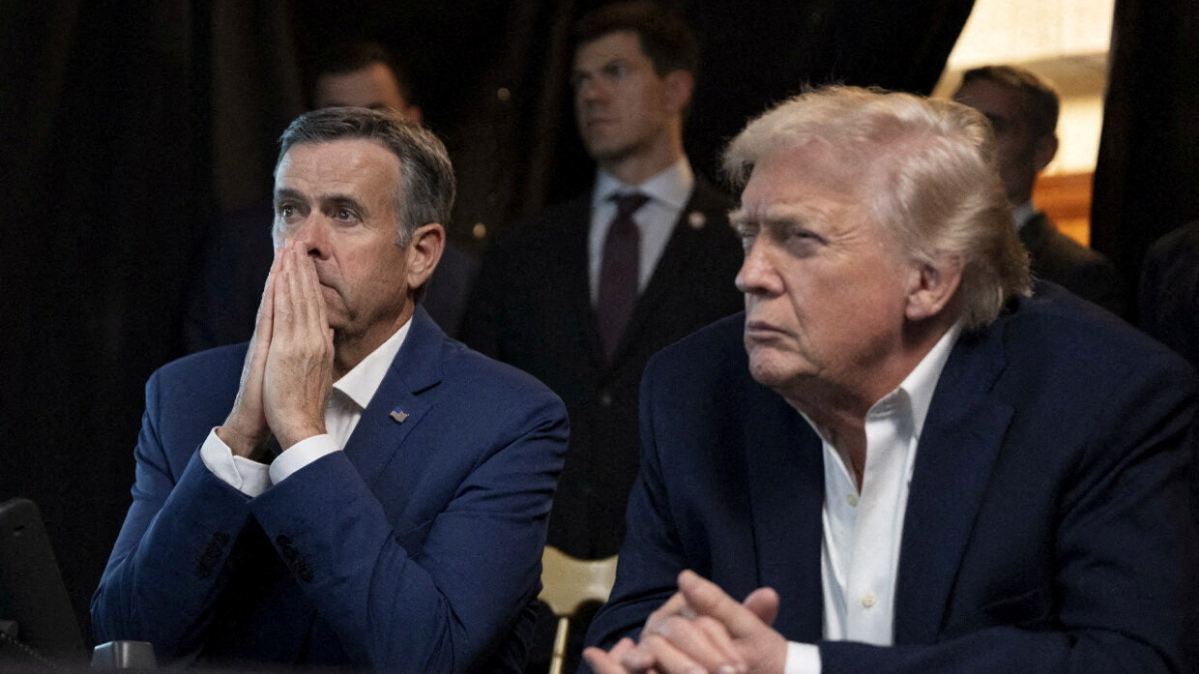
President Trump later shared images on Truth Social that appear to show him and senior U.S. officials watching the strikes and monitoring the operation that led to Maduro’s capture.
Trump said U.S. companies would enter Venezuela to rebuild the country’s damaged oil infrastructure and restart production. He added the U.S. is prepared to carry out a second attack if necessary and did not rule out U.S. troops remaining on the ground.
The White House said discussions are under way on interim governance, led by U.S. Secretary of State Marco Rubio. Trump indicated cooperation with Vice President Delcy Rodríguez, though there has been no confirmation from Venezuelan media.
Reactions inside Venezuela were mixed, with some residents welcoming the move as a chance for change, while others warned it could deepen instability. International critics questioned the legality of the operation, calling it a violation of international law.

Mojtaba Khamenei, son of the late Ayatollah Ali Khamenei, is a hardline cleric with strong backing from the Islamic Revolutionary Guard Corps. His rise signals continuity in Tehran's anti-Western policies.
Global oil prices surpassed $119 a barrel on Monday (9 March, 2026), an almost four year high, as the Middle East conflict rumbled on.
Trump says the United States "don’t need people that join wars after we’ve already won," targeting his criticism at UK Prime Minister Keir Starmer. Israel continues to fire missles at strategic sites in Iran and Gulf regions report more strikes from Iran.
China has urged Afghanistan and Pakistan to resolve their dispute through dialogue after Chinese envoy Yue Xiaoyong met Afghan Foreign Minister Amir Khan Muttaqi, as fighting between the two neighbours entered its eleventh day.
Iran named Mojtaba Khamenei to succeed his father Ali Khamenei as supreme leader on Monday (9 March), signaling that hardliners remain firmly in charge, as the week-old U.S.-Israeli war with Iran pushed oil above $100 a barrel.
U.S. President Donald Trump and UK Prime Minister Keir Starmer spoke by phone on Sunday as tensions between Washington and Westminster deepened over the conflict involving Iran. The call came less than a day after Trump criticised Britain’s response to U.S. strikes on Iranian targets.
Norwegian police are searching for a suspect after an explosion at the U.S. embassy in Oslo on 8 March caused minor damage but no injuries, in what authorities say may have been a deliberate attack linked to the Middle East crisis.
An explosion damaged a synagogue in the Belgian city of Liège early on Monday (9 March) in what authorities said was an antisemitic attack that caused damage but no injuries.
The Group of Seven (G7) finance ministers will meet on Monday to discuss a global rise in oil prices and a joint release of oil from emergency reserves coordinated by the International Energy Agency, the Financial Times reports.
Start your day informed with AnewZ Morning Brief. Here are the top news stories for the 9th of March, covering the latest developments you need to know.
You can download the AnewZ application from Play Store and the App Store.
What is your opinion on this topic?
Leave the first comment