U.S. President Donald Trump has ordered a "blockade" of all sanctioned oil tankers entering and leaving Venezuela on Tuesday (16 December), in Washington's latest move to increase pressure on Nicolas Maduro's government, targeting its main source of income.
"For the theft of our Assets, and many other reasons, including Terrorism, Drug Smuggling, and Human Trafficking, the Venezuelan Regime has been designated a FOREIGN TERRORIST ORGANIZATION," Trump wrote on Truth Social.
"Therefore, today, I am ordering A TOTAL AND COMPLETE BLOCKADE OF ALL SANCTIONED OIL TANKERS going into, and out of, Venezuela," he added.
It's unclear how Trump will impose the move against the sanctioned vessels, and whether he will turn to the Coast Guard to interdict vessels like he did last week.
Some analysts suggest that the U.S. Coast Guard could be tasked with intercepting vessels, as it did last week when a sanctioned oil tanker was seized.
The move marks a significant escalation in Washington’s strategy to target the country’s oil sector, which is a crucial source of income for the Maduro government. This move comes as part of the broader U.S. strategy to increase economic and military pressure on the Venezuelan regime, further isolating Venezuela on the global stage.
The administration has already moved thousands of troops and nearly a dozen warships - including an aircraft carrier - to the region.
Despite the ambiguity surrounding the enforcement mechanism, oil market participants are already reacting, pushing crude oil prices higher in anticipation of a potential reduction in Venezuelan exports. As of Tuesday (16 December), U.S. crude futures had risen by more than 1% to $55.96 a barrel.
The Venezuelan government has strongly rejected Trump’s announcement, calling it a “grotesque threat” aimed at further destabilising the country. Maduro’s administration has long accused the U.S. of meddling in Venezuela’s internal affairs, claiming that such measures are part of a broader effort to topple the government and seize control of Venezuela’s vast oil reserves.
The Venezuelan government maintains that it will continue to resist foreign intervention and defend its sovereignty, even in the face of this latest U.S. move.
Maduro reiterated his belief that the U.S. is intent on exploiting Venezuela’s natural resources, including oil, gas, and gold. He also emphasised the resilience of the Venezuelan people in the face of economic hardships, asserting that peace would ultimately triumph in Venezuela despite the external pressures.
The rhetoric from both Washington and Caracas reflects the increasingly polarised state of relations between the two countries, with no sign of a diplomatic breakthrough in sight.
Legal implications of the U.S. blockade
The U.S. president has broad powers to deploy military force abroad, but the declaration of a blockade against Venezuela raises significant legal questions.
Elena Chachko, an international law scholar at UC Berkeley Law School, has pointed out that while blockades have historically been viewed as permissible during wartime, their legality is contingent on specific conditions under both domestic and international law. This development could set a new precedent for presidential powers, especially in the context of using military force to enforce such a blockade.
U.S. lawmakers have also weighed in, with Representative Joaquin Castro (D-TX) condemning the blockade as an act of war. Castro argued that such a military action, which could have far-reaching consequences, had never been authorised by Congress and was not supported by the American public.
This move could further inflame tensions within the U.S. political system, especially as calls for transparency and checks on presidential authority grow louder.
Impact on oil market and Venezuela’s export potential
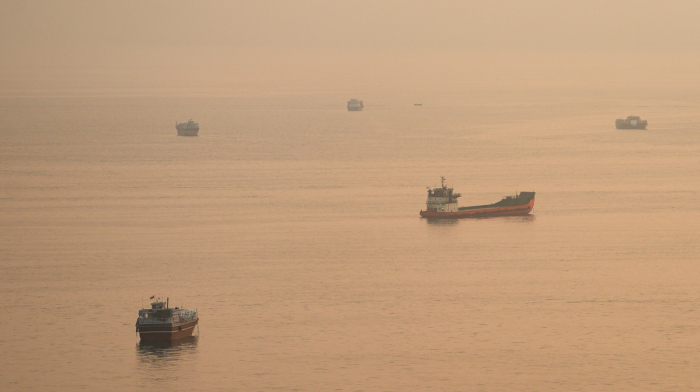
Since the U.S. imposed sanctions on Venezuela’s oil sector in 2019, the country’s crude exports have plummeted, with its oil sales largely confined to sanctioned vessels and alternative buyers, including Iran and Russia. The blockade could exacerbate the already precarious situation for Venezuela’s oil industry. If fully enforced, it is estimated that the blockade could result in the loss of nearly a million barrels of oil per day, significantly impacting global oil markets.
Oil market analysts are closely monitoring the situation, with many predicting that the loss of Venezuelan oil exports could push oil prices higher. While the market remains well-supplied for now, with millions of barrels sitting on tankers off the coast of China, the longer the blockade persists, the tighter the oil supply could become. The potential disruption in Venezuelan exports could lead to a rise in global prices by as much as five to eight dollars per barrel, according to former State Department energy diplomat David Goldwyn.
Humanitarian and economic consequences for Venezuela
The long-term consequences of the U.S. blockade could go beyond the economic impact on oil markets. Venezuela is already facing one of the worst economic crises in its history, with hyperinflation, widespread poverty, and millions of people fleeing the country in search of better living conditions. If the blockade results in even more significant cuts to oil exports, the already fragile Venezuelan economy could be pushed to the brink of collapse.
David Goldwyn has suggested that the blockade could lead to severe inflation, worsening food and medicine shortages, and an increase in migration from Venezuela to neighbouring countries. The humanitarian crisis in Venezuela has already displaced millions, particularly to Colombia and other Latin American nations, and a further tightening of the country’s economic conditions could exacerbate this migration crisis. The economic strain on Venezuela could also push more people to rely on informal or illegal means of survival, further destabilising the region.
U.S. military presence and escalating tensions
Trump’s strategy in Venezuela has involved a significant military presence in the region, with U.S. forces increasing their activities in the Caribbean Sea and the Pacific Ocean. This military buildup has raised concerns among both domestic and international observers, with many questioning whether the Trump administration is preparing for more direct military action. The U.S. has already conducted several military strikes on vessels in the region, which have resulted in casualties.
Trump’s stance, as articulated by his chief of staff Susie Wiles, suggests that the president is willing to continue using military force as part of his strategy to pressure Maduro. This aggressive rhetoric has raised alarms in Venezuela, where Maduro claims that the U.S. is seeking to overthrow his government and seize control of the country’s vast natural resources. The military buildup, combined with Trump’s statements about future land strikes, signals that tensions could escalate further.








What is your opinion on this topic?
Leave the first comment