U.S. envoy Steve Witkoff and Ukrainian President Volodymyr Zelenskyy held two rounds of high-stakes talks in Berlin, Germany on 14-15 December. Ukraine’s chief negotiator, Rustem Umerov, posted on X that discussions with the U.S. envoy have been "constructive and productive".
However, the demands of each side in the conflict reportedly remain far from fully aligned.
Speaking to AnewZ from Lisbon, Portugal, political analyst Ana Evans highlighted the complexity of the issue, emphasising that any resolution ultimately depends on both sides, with Russia holding significant leverage.
“It depends on what Russia is offered because Russia ultimately has the veto power here. Ukraine, of course, has a word. Nothing can be done without Ukraine,” Evans said.
She noted that the Kremlin will only consider ending the war if it receives a package of benefits that compensates for halting hostilities without appearing to have lost the conflict.
Evans explained that Russia continues to sustain its war effort through financial and political support from China, as well as allies in the Global South, Iran, and North Korea.
She added that Moscow has the capacity to wait longer than Kyiv, making a negotiated settlement contingent on highly persuasive incentives.
“So, unless it receives a very convincing gift of interests, which might involve third countries, not just Ukraine — considering Russia’s strategic stakes in the Middle East, Central Asia, and Africa — the war is likely to continue,” she said.
Evans emphasised that any package would need to be substantial enough to align with Russia’s broader geopolitical ambitions and preserve its leverage.
According to Evans, the current battlefield dynamics and diplomatic efforts alone are unlikely to bring the war to a close in 2026.
The continuation of hostilities, she noted, reflects Russia’s capacity to withstand pressure while maintaining influence across multiple regions, underlining the challenges facing negotiators seeking a sustainable peace.
Status of negotiations
At this point, U.S. negotiators are reportedly still pressing Ukraine to cede control of the eastern Donetsk and Luhansk regions as a condition for peace talks with Russia, AFP reported according to an official briefed on the discussions.
Kyiv is resisting Washington’s demand that it withdraw troops from the two regions, collectively known as Donbas, which Russia has struggled to fully capture since its invasion in February 2022.
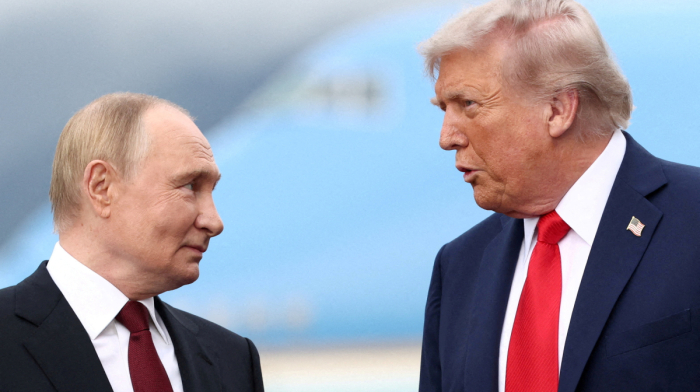
The official told AFP that Russian President Vladimir Putin “wants territory,” while the United States is insisting that Ukraine pull back, a proposal Kyiv is refusing to accept.
“It’s a bit striking that the Americans are taking the Russians’ position on this issue,” the official added.
Currently, Moscow controls nearly all of Luhansk and approximately 80 percent of Donetsk, according to the U.S.-based Institute for the Study of War.
Meanwhile, a poll published today by the Kyiv International Institute of Sociology (KIIS), based on 550 respondents, found that 75 percent of Ukrainians oppose giving up Donbas.











What is your opinion on this topic?
Leave the first comment