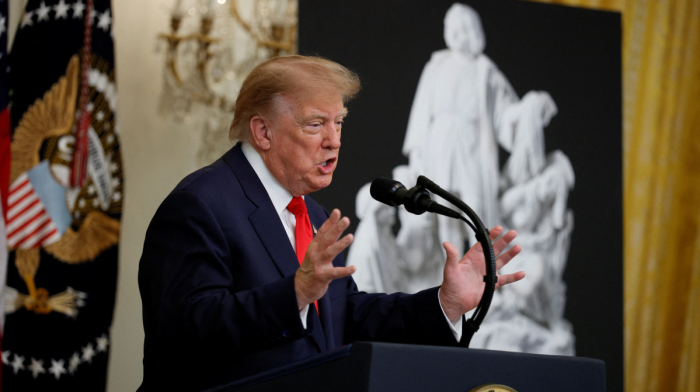
European leaders say they will intensify work on a U.S.-led plan to end the Russia-Ukraine conflict after a joint call with President Donald Trump, marking what they see as a decisive moment for Kyiv’s political and security direction.
The joint call has injected a sense of urgency into European diplomacy as leaders from France, Germany and the U.K. try to reassert influence in a process that has recently drifted toward Washington and Moscow. Their effort lands in a moment shaped by shifting calculations in Kyiv, new demands from Moscow and fresh scrutiny over Europe’s strategic weight.
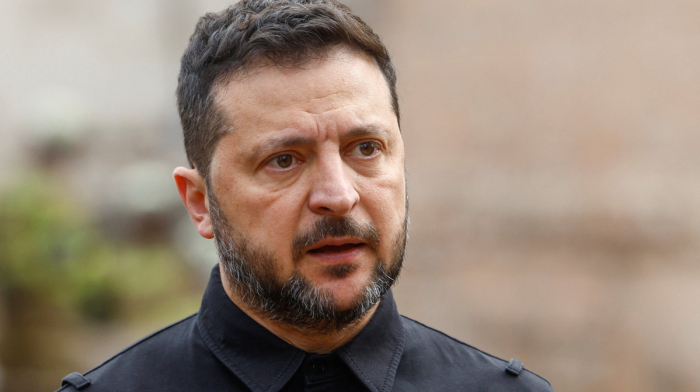
Alexandra Filippenko, speaking to AnewZ from Vilnius, described the call as significant not only because European leaders engaged President Trump directly, but because “President Zelenskyy took part in the talks primarily”, signalling Ukraine’s determination to stay inside the diplomatic process rather than watch it unfold from the sidelines.
She noted that Europe has been caught between Trump’s criticism of weak leadership and a series of back-channel contacts involving Kremlin representatives and figures linked to Trump’s team. Filippenko said these developments created a sense that Europe risked being sidelined just as the conflict entered a more sensitive phase. The response has been a visible push by several capitals to show that they can guide both the diplomatic momentum and Ukraine’s long-term security arrangements. She added that leaders such as Macron, Merz and Starmer want “to take a stance and show Europe… as ready to negotiate and take more responsibility regarding Ukraine”, even while navigating Trump’s sharper tone on transatlantic relations.
As work resumes on the peace plan, now reportedly reduced to twenty points, diplomats face the difficult task of translating broad aspirations into something workable. Filippenko said Europe is trying “to make the peace plan realistic, not just mere wishes of one side”, stressing that the Kremlin aims to “make an impression on Trump that they are negotiating” without offering meaningful concessions. Europe, she argued, wants to avoid a situation where talks exist “only on paper”, while Ukraine is under growing pressure to refine its position after submitting a revised proposal that includes ideas on territorial arrangements and oversight of the Zaporizhia nuclear plant.
Behind the scenes, roughly thirty countries are coordinating through an online format co-chaired by the U.K. and France, a group Filippenko described as essential for Kyiv’s diplomatic survival. She underlined that Ukraine’s priorities now focus on securing commitments that extend into a possible post-ceasefire environment, even if a comprehensive peace deal remains distant. President Trump’s recent remarks that Russia currently holds the upper hand have added further complexity, pushing European leaders to demonstrate momentum where little exists.
Zelenskyy’s signal that he could hold a wartime election within three months has opened a new political debate. Filippenko said the idea resonates strongly in Washington, where wartime elections are seen as expressions of democratic continuity. Yet she stressed that Ukraine faces extraordinary constraints. With parts of its territory occupied and limited experience conducting secure voting under threat, any election would require international guarantees. She said that for Ukraine, the key condition remains clear: “If there is security,” an election becomes possible, but without it the risks for voters are severe.
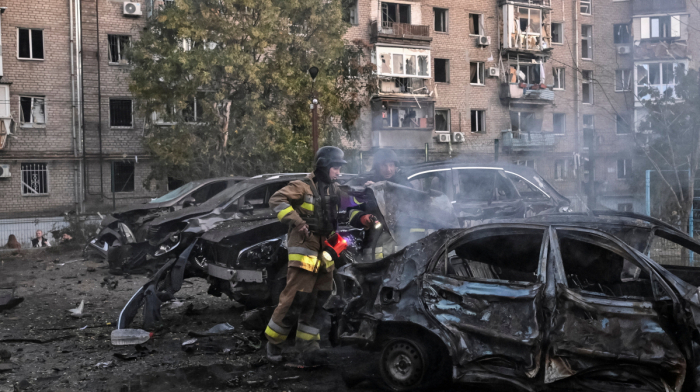
The prospect of an energy ceasefire adds another layer of uncertainty. Zelenskyy has proposed halting Ukrainian drone strikes on Russian energy facilities if Moscow stops targeting Ukraine’s infrastructure, which has been repeatedly hit each winter since the start of the full-scale invasion. Filippenko said such an arrangement “might take place”, though she remains sceptical given Russia’s current posture. She noted that the Kremlin continues to frame the conflict as a special military operation, a narrative that allows Moscow to pretend “as if nothing is actually happening”, making concessions harder to imagine.
With negotiations still fragile and expectations uneven across capitals, the coming days will test whether Europe’s renewed diplomatic push can translate into something tangible. For now, Ukraine’s revised proposal hints at a shifting strategy shaped by pressure, opportunity and a rapidly narrowing window to influence the direction of the talks.








What is your opinion on this topic?
Leave the first comment