Just a month after becoming Mali President in 2013, Ibrahim Boubacar Keita declared that the days of mutinous soldiers undermining government authority in the capital, Bamako, were over. Yet, seven years later, Keita himself was toppled, facing the very fate he had vowed to prevent.
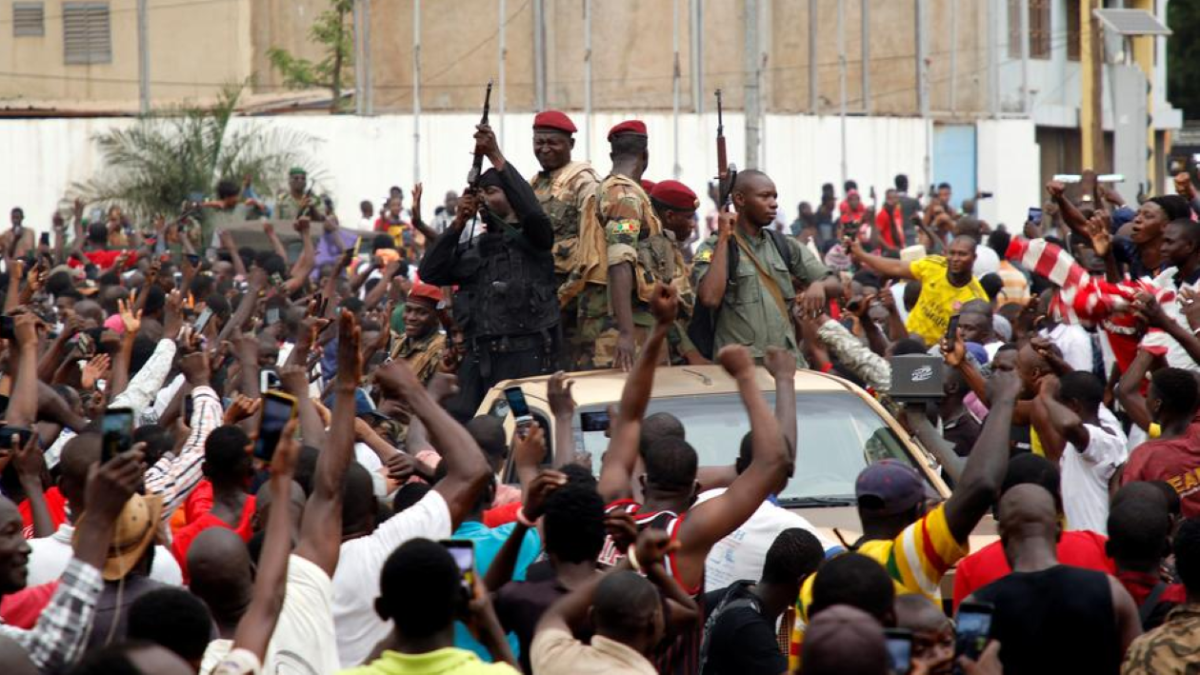
On 18 August 2020, a military coup marked the start of a new era of military rule in Mali. Following Keita’s ouster, his son’s home was ransacked, and thousands of Malians gathered in Bamako’s Independence Square on 21 August to celebrate.
Former defence minister and retired Colonel Bah Ndaw was appointed interim president on 21 September 2020, with junta leader Colonel Assimi Goita named vice president under a power-sharing agreement brokered to appease the Economic Community of West African States (ECOWAS).
Nine months later, soldiers loyal to Goita overthrew Ndaw, and Goita was sworn in as transitional president on 7 June 2021.
Following coups in Chad and Guinea, Burkina Faso President Roch Kabore was detained on 23 January 2022. The next day, the army announced Kabore’s removal, suspended the constitution, and dissolved the government and national assembly. Lieutenant Colonel Paul-Henri Sandaogo Damiba was declared transitional president.
Just a few months later on 2 October, 2022, Damiba was ousted by another group of soldiers, with Captain Ibrahim Traore appointed transitional president. Thousands took to the streets to celebrate.
Over in Niger, Niger President Mohamed Bazoum was detained on 26 July 2023 in his presidential palace and removed from office by a group of soldiers. Pro-coup supporters set fire to vehicles and buildings at his party office. ECOWAS imposed economic and travel sanctions on Niger’s new military leaders, warning that force could be used if Bazoum was not restored within a week.
Mali, Burkina Faso, and Niger later celebrated the full withdrawal of French troops from Niger and reaffirmed their commitment to a shared future under a military and economic alliance.
On 29 January 2025, ECOWAS officially confirmed the three countries’ exit from the bloc.
In Guinea-Bissau, voters lined up on 23 November 2025 for general elections, but on 26 November, a group of army officers seized power a day before the results were expected, suspended the electoral process, and formed the High Military Command for the Restoration of National Security and Public Order.
Major-General Horta Inta-a was installed as transitional president on 27 November 2025, with a one-year mandate.
On 1 December, ECOWAS leaders visited the country to urge the military to restore constitutional order and release the election results.
On 7 December 2025, a group of soldiers in Benin appeared on state television, announcing they had taken power, suspended the constitution, and criticised President Patrice Talon’s government. The interior minister later confirmed that the armed forces had foiled the coup attempt and retained control.
These events mark the latest in a series of military takeovers across West Africa in recent years, highlighting persistent challenges to democratic governance in the region.











What is your opinion on this topic?
Leave the first comment