Russian President Vladimir Putin said in an interview published on Thursday (4 December) that Russia would take full control of Ukraine’s Donbas region either by military or other means.
Putin made these remarks to news agency India Today ahead of a visit to New Delhi on Thursday (4 December) where he will be hosted by Indian Prime Minister Narendra Modi.
“Either we liberate these territories by force of arms, or Ukrainian troops leave these territories.”
The Russian President also disclosed in the interview that Kyiv was requested to pull back Ukrainian armed forces from Donbas but opted to continue hostilities.
“We immediately told Ukraine, the Ukrainian troops: the people do not want to live with you, they held a referendum and voted for independence — withdraw your troops, and there will be no military actions. No, they prefer the path of armed confrontation,” he said, to the news outlet.
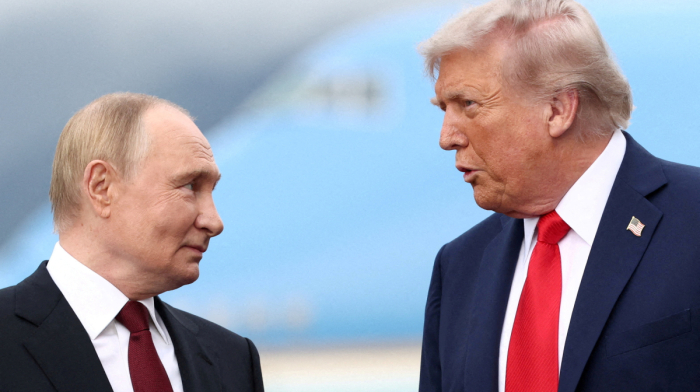
Meanwhile Putin called the dialogue with U.S. President Donald Trump's special envoy Steve Witkoff and son-in-law Jared Kushner in the Kremlin on Tuesday (2 December), “very useful” and added that it lasted five hours.
“What our U.S. colleagues brought us was based one way or another on our agreements from my meeting with President Trump in Alaska, as we discussed these issues at the meeting in Anchorage,” the Russian President said.
Peace plan
Vladimir Putin reiterated his belief that U.S. President Donald Trump is sincerely trying to find a consensus solution to the Ukrainian problem, but that “is no easy feat.”
He added that while a 28-point peace plan drafted by the United States earlier is still valid and being discussed, Washington has proposed breaking it into four separate packages.
“They just broke these 28 or 27 points into four packages. And they proposed discussing these four packages with us. But, in effect, they are the same points,” Putin said.
Earlier on Tuesday (2 December), Ukrainian President Volodymyr Zelenskyy said that the updated version of the peace plan now contains 20 points instead of 28 in the initial draft. The revisions were made after discussions in Geneva with Kyiv's European allies, together with Ukrainian and American officials on 23-24 November, and previously in Florida with U.S. and Ukrainian negotiators on Monday (1 December).
Claims of liberation
In 2022, Russia declared Luhansk, Donetsk, Kherson, and Zaporizhzhia part of its territory following referenda on 30 September, dismissed by Kyiv and the West as illegitimate.
Most countries continue to recognise these regions, along with Crimea, as part of Ukraine.
Currently, Russia claims to control roughly 19.2% of Ukraine, including Crimea, all of Luhansk, more than 80% of Donetsk, about 75% of Kherson and Zaporizhzhia, and smaller parts of Kharkiv, Sumy, Mykolaiv, and Dnipropetrovsk regions.
According to U.S. Secretary of State Marco Rubio the Russia-Ukraine war is now about the 20% - or just over 5,000 square km (1,900 square miles) of Donetsk that Russia does not control but wants.










What is your opinion on this topic?
Leave the first comment