Thousands of people across Mexico took to the streets on Saturday under the rallying cry of “Generation Z,” demanding an end to rising violence and expressing outrage over the killing of Uruapan Mayor Carlos Manzo earlier this month.
The coordinated demonstrations, led largely by young people, marked one of the most vocal nationwide expressions of frustration with insecurity in years.
Clashes Erupt in Mexico City
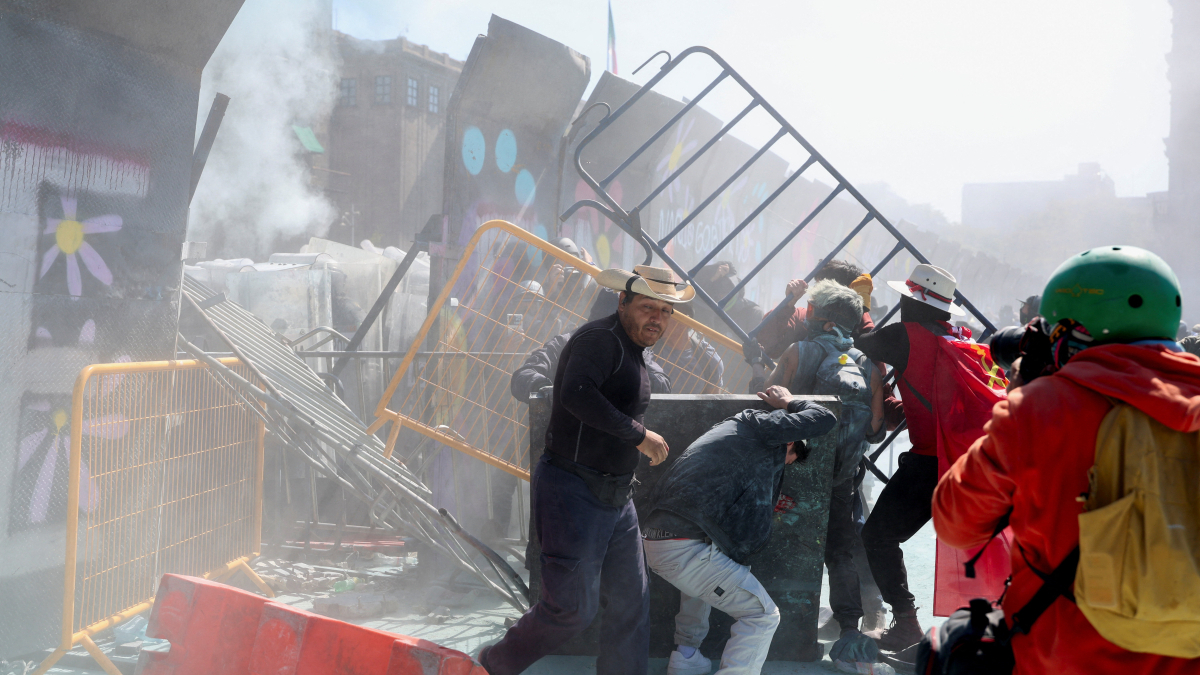
In the capital, tensions escalated when a masked group of protesters tore down barriers surrounding the National Palace — the residence of President Claudia Sheinbaum. Riot police responded with tear gas, resulting in clashes that left scores injured.
Mexico City’s public safety secretary, Pablo Vázquez, said that around 100 police officers were injured, including 40 who required hospitalisation. He also confirmed that 20 civilians were hurt and at least 20 people were arrested, with another 20 cited for administrative offences.
The scenes of violence highlighted the rising anger among segments of Mexico’s youth, who accuse the government of failing to address the country’s deteriorating security landscape.
A Nation on Edge After High-Profile Killing
Protests were not limited to the capital. Demonstrations unfolded in cities nationwide, including in the western state of Michoacán, where the killing of Uruapan Mayor Carlos Manzo has fuelled public outrage.
Manzo — known for his anti-crime stance — was shot dead on 1 November during a public Day of the Dead event, a murder that many see as emblematic of the growing boldness of criminal groups.
In Mexico City, some protesters channelled their anger at President Sheinbaum’s ruling Morena party, chanting “Out, Morena” and accusing the government of complicity or negligence with slogans such as “Carlos did not die, the government killed him.”
Who Is “Generation Z Mexico”?
The demonstrations were organised by a group calling itself “Generation Z Mexico,” which describes itself in a widely shared online manifesto as non-partisan and representative of young Mexicans disillusioned by violence, corruption, and abuses of power.
Generation Z — typically defined as people born between 1997 and 2012 — has emerged globally as a force for political and social mobilisation. In Mexico, Saturday’s marches suggest a growing willingness among younger generations to confront official institutions and demand accountability.
Government Questions Motives
The Sheinbaum administration has cast doubt on the authenticity of the protests, suggesting that right-wing political groups and automated social media accounts helped drive participation. Officials have argued that the demonstrations were amplified by political opponents seeking to undermine the government.
Despite the government’s attempt to frame the protests as politically motivated, the outpouring of anger from young people reflects deep-rooted concerns about Mexico’s security crisis — one that continues to claim lives across the country.
A Generation Demanding Change
As violence remains a leading issue in Mexico, the emergence of Generation Z as a vocal critic of the state’s security strategy poses new challenges for the Sheinbaum government. Whether the protests mark the start of a sustained youth movement or a momentary flare-up, one thing is clear: a generation tired of fear and frustration is demanding that the country chart a new course.












What is your opinion on this topic?
Leave the first comment