Forty years after the eruption of Nevado del Ruiz buried the town of Armero, Colombia, survivors, families, and officials gathered to remember one of Latin America’s deadliest natural disasters.
The catastrophe, which struck on November 13, 1985, claimed an estimated 25,000 lives, nearly 70% of the town’s population, and left hundreds of children missing.
During commemorative events on Thursday, lit candles and scapulars adorned the grave of 13-year-old Omaira Sanchez, whose desperate struggle to survive became an enduring symbol of the tragedy. Survivors shared their recollections of that night.
“That night I lived the tragedy firsthand. I heard the cries of all the children, elderly people, animals, and among them was sadly my little brother and my uncles, all my family and great friends. And it hurts a lot because I saw it happen at 11 at night,” said survivor Orlando Palacio Hernandez.
“That’s when the earth started to roar, and it was shaking. We went up to the second floor. When I looked back, I saw a huge black cloud—it was horrifying. That’s when we all fell to the ground and were separated,” recounted María Gladys Primo, a survivor who lost her two children in the disaster.
Acknowledging Failures and Rebuilding Memory
Officials took the opportunity to acknowledge historical gaps in state response. Astrid Eliana Caceres, director of the Colombian Family Welfare Institute (ICBF), unveiled a restored archive containing photos, records, and testimonies of children affected by the disaster.
“Family Welfare, like other state institutions, asks Armero residents today for forgiveness for 40 years of silence. Today we make available all our institutional strength to rebuild the memory of Armero residents who were there,” Caceres said while handing the red book to the National Archives director.
Tolima Governor Adriana Magali Matiz Vargas highlighted the scale of the loss:
“Today we remember our own and mourn our dead for the worst tragedy in Colombia’s history—and undoubtedly one of the most tragic in the world in the 20th century. A tragedy that stole families, friends, and neighbors. 25,000 souls taken from life.”
Searching for Missing Children and DNA Reunions
The eruption left hundreds of children missing. According to the Creating Armero Foundation, 583 children were reported missing, with only 150 rescued alive. Many were adopted abroad through irregular processes.
Francisco González, founder of the Armando Armero Foundation, whose father and brother perished in the catastrophe, said DNA testing is helping reunite families:
“The deepest wound in Armero is the missing children. A father or mother will never stop searching for a child, especially knowing their child was identified on live TV or there is evidence. Some children were adopted illegally abroad. We still haven’t found them all. We need more relatives to provide DNA samples and adoptees to come forward in countries such as the Netherlands, Sweden, Denmark, Canada, and the United States.”
Survivors like Jennifer de la Rosa, adopted as a baby after the tragedy, described the emotional reunions facilitated by DNA verification:
“The feeling of finding a sister was unbelievable. Seeing myself in the recordings, I said, ‘wow.’ For me, it was like the world suddenly shook, but for Angela it was a gift—her birthday was coming, and she told me, ‘you are the best gift I’ve ever had.’”
Symbolic Commemorations
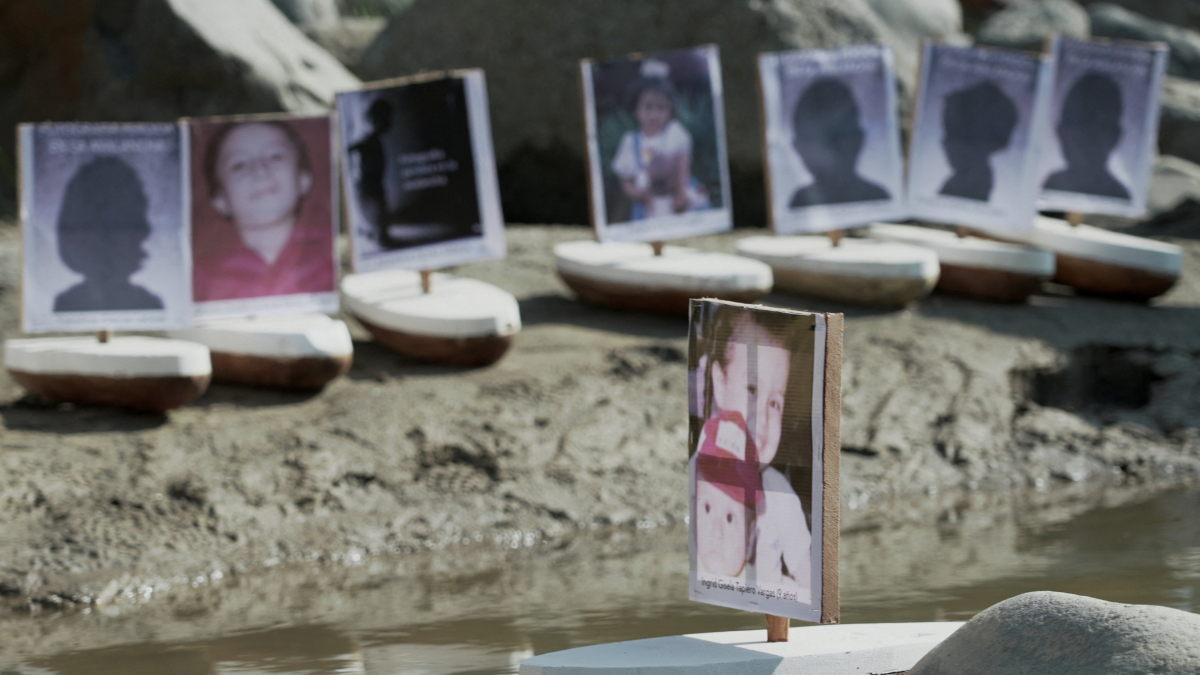
On November 12, participants launched small boats bearing photos of missing children into the Gualí River, symbolizing remembrance and the ongoing search for justice. Families and volunteers placed candles, crosses, and photographs at altars, while drones captured images of abandoned houses overtaken by nature, standing as stark reminders of the disaster.
“We committed to the Armero community to open a chapter on historical memory reconstruction, compiling valuable information for the families, and to engage in open dialogue about what happened,” said Adriana Velásquez, Deputy Director General of ICBF.
Continuing Legacy
Today, decades after the tragedy, survivors and families continue to seek answers, justice, and closure. DNA testing and historical records aim to reconnect the missing children with their families. Despite the passage of time, the Armero tragedy remains a profound wound in Colombian collective memory, with efforts ongoing to preserve the history and honor those lost.














What is your opinion on this topic?
Leave the first comment