IAEA reports damage at Zaporizhzhia's nuclear plant in Ukraine after drone strike
The International Atomic Energy Agency (IAEA) said on Monday (4 May) that meteorological monitoring equipment at the Zaporizhzhia...
Indonesian authorities say a 17-year-old suspected of carrying out last week’s bombing at a high school mosque in Jakarta assembled small explosive devices at home by following online instructions.
The teenager, who has not been named, was among 96 students injured in the blasts on Friday and remains hospitalised following two surgeries.
Police said he acted alone and had no links to militant networks. Investigators said he built seven devices, four of which detonated, using basic materials such as 6-volt batteries, plastic containers, remote controls and nails. The remaining unexploded devices have been secured.
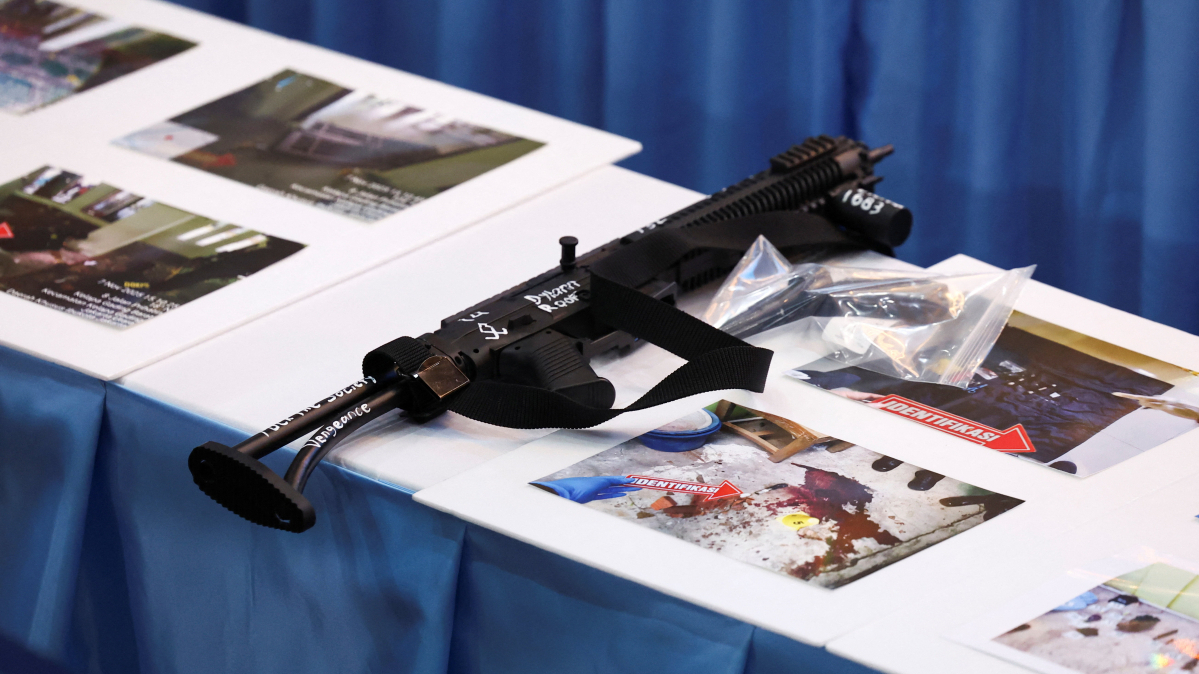
Officials also recovered a toy submachine gun belonging to the teen, inscribed with names and symbols associated with extremist figures, including convicted international neo-Nazis, the Christchurch mosque attacker, and the Columbine High School shooters.
Because of his age and the circumstances, the suspect cannot be charged under Indonesia’s anti-terrorism laws but may face premeditated serious assault charges, which carry a maximum prison sentence of 12 years.
Authorities report that more than half of the 96 injured students suffered hearing loss, including four with sudden deafness. Eleven students remain under treatment, including one in critical condition from burns.
Police continue to investigate the incident and monitor potential safety risks at schools and public spaces.

A 77-year-old man and a 63-year-old woman were killed on Monday (4 May), after a man drove a car into a crowd on a pedestrianised street in the the eastern German city of Leipzig, authorities said.
Iran warned Armerican forces on Monday (4 May) not to enter the Strait of Hormuz, after the U.S. said it had launched a mission to try and reopen the sea passage. Meanwhile, Iran's Foreign Minister said there was no military solution to the Middle East conflict.
Ukraine has launched a new wave of drone strikes on Sunday (3 May) across Russia, hitting key infrastructure and causing casualties in several regions, officials on both sides said.
Medics are working to evacuate two people with symptoms of the deadly respiratory illness, hantavirus, from a luxury cruise ship being held off West Africa, after three people died and several others fell ill, officials have said.
U.S. Secretary of State Marco Rubio is expected to travel to the Vatican and Italy this week for a series of meetings, according to Italian media reports, in a visit that comes amid strained relations between Washington and parts of Europe and heightened tensions involving Pope Leo XIV.
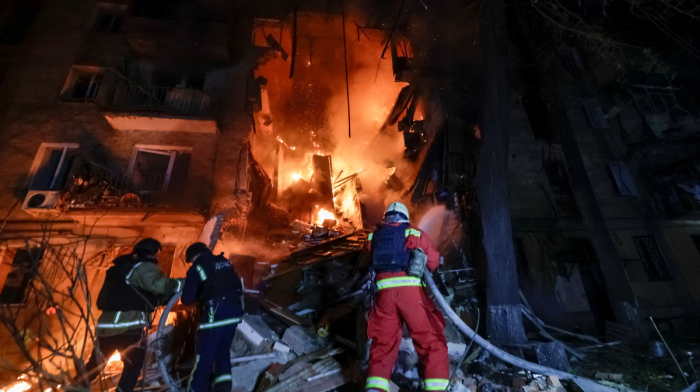
The International Atomic Energy Agency (IAEA) said on Monday (4 May) that meteorological monitoring equipment at the Zaporizhzhia nuclear power plant in south-eastern Ukraine had been damaged by a drone.
A blast at a fireworks factory in China's Hunan province has killed 21 people and injured 61, prompting President Xi Jinping to call for a thorough investigation, state media reported on Tuesday.
The UK is moving to join a €90 billion European Union loan scheme for Ukraine, with Prime Minister Keir Starmer saying the benefits outweigh the costs, as he pushes for closer ties with Europe at a summit in Armenia this week.
Ukrainian President Volodymyr Zelenskyy has announced a ceasefire with Russia until Wednesday (6 May), after Russian President Vladimir Putin ordered a pause in hostilities on 8-9 May to mark the 81st anniversary of Soviet Russia’s victory over Nazi German in World War II.
A 77-year-old man and a 63-year-old woman were killed on Monday (4 May), after a man drove a car into a crowd on a pedestrianised street in the the eastern German city of Leipzig, authorities said.
You can download the AnewZ application from Play Store and the App Store.
What is your opinion on this topic?
Leave the first comment