Afghanistan’s Foreign Minister, Amir Khan Muttaqi, returned to Kabul on Wednesday from an all important, week-long official visit to India.
This marks the first time a senior Afghan official has visited New Delhi since the Taliban took power in 2021. The visit is seen as both a diplomatic milestone and a geopolitical balancing act amid rising tensions with Pakistan.
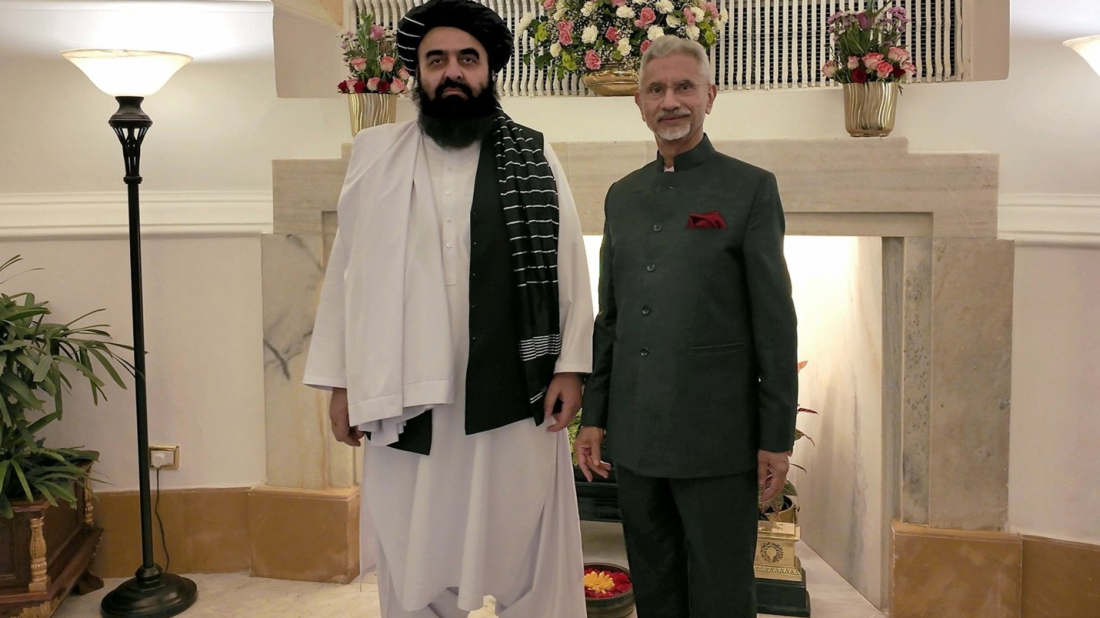
During the seven-day visit, Minister Muttaqi met with senior Indian officials, including India’s Minister for External Affairs, Dr Subrahmanyam Jaishankar.
In a bilateral meeting between the two counterparts, Dr Jaishankar welcomed the Afghan Foreign Minister and reaffirmed India’s long-standing partnership with Afghanistan.
Dr Jaishankar announced the upgrading of India’s technical mission in Kabul to a full-fledged embassy, signalling a renewed diplomatic engagement with Afghanistan.
He told his counterpart, “I am pleased to announce the upgrading of India’s technical mission in Kabul to the status of India’s Embassy in Kabul.”
In a statement, Dr Jaishankar said that both sides “discussed India’s support for Afghanistan’s development, our bilateral trade, territorial integrity and independence, people-to-people ties, and capacity building.”
The two sides pledged to expand trade, especially Afghan exports such as dry fruits, and agreed to ease medical travel for Afghans to India.
Flights between Kabul and New Delhi were also restored, as India pledged deeper cooperation in health, education, and overall development.
The visit comes at a time when Afghanistan’s relations with Pakistan are tense due to Pakistan’s allegations that Tehrik-e-Taliban Pakistan (TTP) militants are operating from Afghan soil, an allegation Kabul denies, maintaining that it does not allow anyone to threaten others from Afghanistan.
Analysts say Pakistan’s deep-rooted rivalry with India could make Kabul’s renewed outreach to New Delhi more complicated.
On the day Foreign Minister Muttaqi was visiting India, Pakistan allegedly conducted airstrikes in Afghanistan.
The Afghan Ministry of Defence accused Pakistan of violating Afghan airspace and carrying out strikes inside the country. The Pakistani military neither confirmed nor denied the violations or airstrikes.
The following weekend, Afghan forces attacked Pakistan’s military check-posts along the border, in what Afghan officials described as “retaliation for the airstrikes.”
For the next few days, Afghanistan and Pakistan sporadically exchanged fire along the border.
On Wednesday evening, both sides confirmed a 48-hour ceasefire, starting at 5:30 p.m. Afghan local time.
Kabul’s new outreach to New Delhi is being celebrated as a diplomatic milestone, even as calm tentatively returns to Afghanistan’s southern border.














What is your opinion on this topic?
Leave the first comment