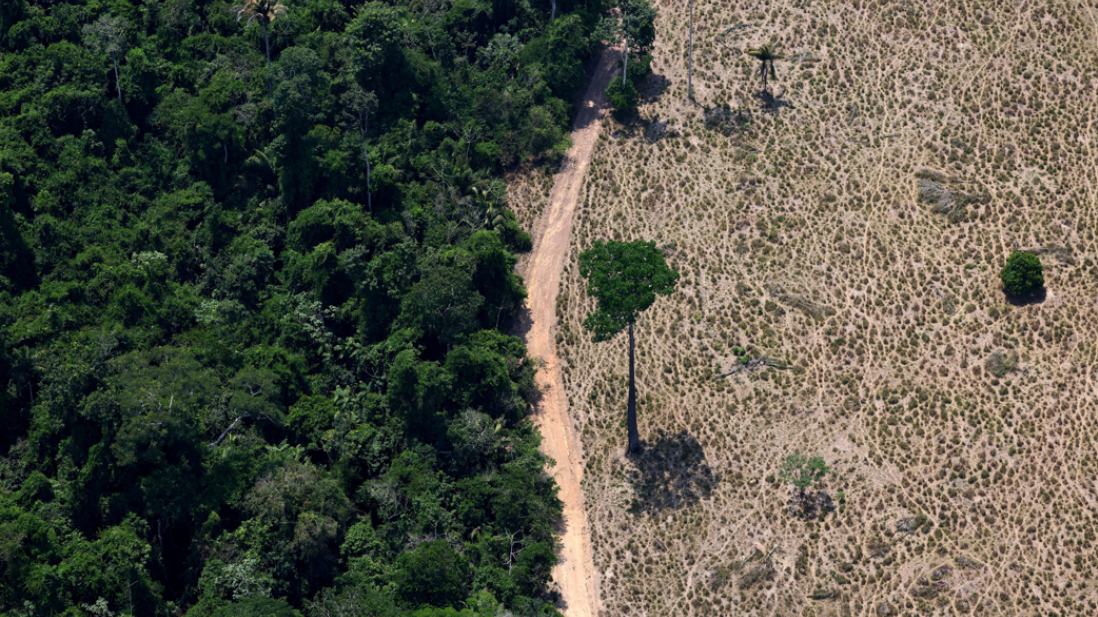
The world is falling far behind a global goal to reverse deforestation by 2030, with losses being largely driven by agricultural expansion and forest fires, according to the 2025 Forest Declaration Assessment.
The report said the world permanently lost 8.1 million hectares (20 million acres) of forest, an area about the size of England, in 2024 alone, putting the planet 63% behind the goal set by over 140 countries in the 2021 Glasgow Leaders' Declaration on Forests and Land Use.
The Forest Declaration Assessment brings together research organizations, think tanks, non-governmental organizations and advocacy groups, and the report was coordinated by advisory company Climate Focus.
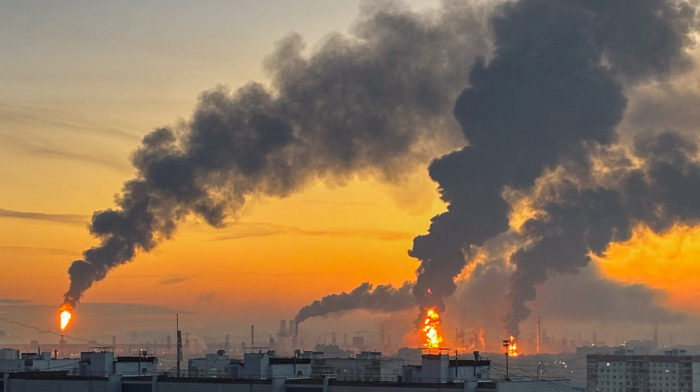
Fires were the leading cause of forest loss, accounting for 6.73 million of those hectares around the world, with the Amazon rainforest hit particularly hard, releasing nearly 800 million metric tons of CO2 from fires in 2024.
"Major fire years used to be outliers, but now they're the norm. And these fires are largely human-made," said Erin Matson, lead author of the Forest Declaration Assessment.
"They're linked to land clearing, to climate change-induced drought, and to limited law enforcement."
Earlier reports also found Amazon fires led to unprecedented forest loss, with Brazil leading tropical forest loss and Bolivia's forest loss surging by 200% in 2024.
This year's global forest assessment also found that on average, 86% of annual global deforestation over the last decade was caused by permanent agriculture. It also listed gold and coal mining as growing sources of deforestation.
"Demand for commodities like soy, beef, timber, coal, and metals keeps rising, but the tragedy is we don't actually need to destroy forests to meet that demand," Matson said, adding over $400 billion in agricultural subsidies are helping drive deforestation.
"The incentives are completely backwards," she said, noting international public finance for forest protection and restoration averaged just $5.9 billion a year. The report estimates that $117 billion to $299 billion in financing is needed to reach the 2030 goals.
With the COP30, the United Nations climate change conference, set to start in Brazil in November, Matson points to the country's proposed Tropical Forest Forever Facility, which aims to raise $125 billion in funding for long-term forest finance as a way to help stem forest loss.
The fund, which would be financed by governments and private investors, could disperse $3.4 billion a year with 20% going to indigenous and local communities.
"Looking toward COP30 in Belem, a successful launch of the Tropical Forest Forever Facility, TFFF, could start to channel long-term reliable finance to keeping forests standing," Matson said. "So looking at the global picture of deforestation, it is dark, but we may be in the darkness before the dawn."














What is your opinion on this topic?
Leave the first comment