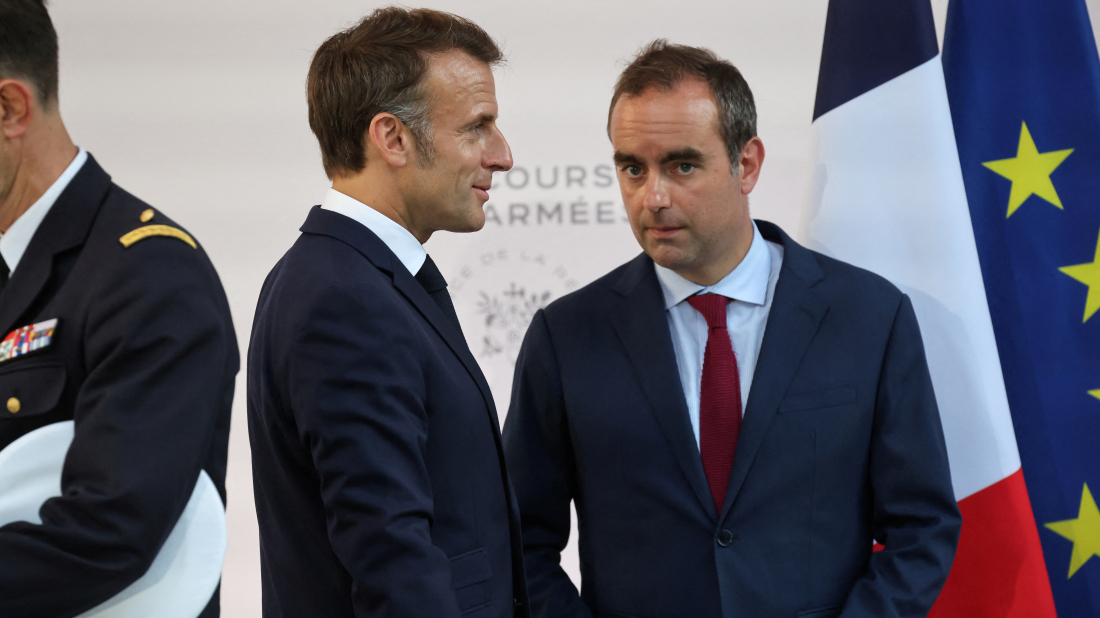
When Sebastien Lecornu gave his first prime-time television interview just hours after resigning as France’s prime minister on Wednesday, he described himself as a “soldier monk” — a man of duty ready to return to service if President Emmanuel Macron called him back to the front line.
The metaphor, recalling the austere warrior monks of the Crusades, suits the reserved Lecornu well, according to both allies and critics. On Friday, Macron reinstated his loyal lieutenant in a role few within the president’s circle appeared eager to accept — tasking him once again with the challenge that had cost him his position only days earlier: steering a reduced 2026 budget through a divided parliament.
“I don’t think there were many candidates, to be completely honest,” Lecornu told reporters during a visit to a police station in L’Haÿ-les-Roses, a suburb south of Paris, on Saturday. “I have no agenda, no other ambition than to get through this moment, which is objectively very difficult for everyone.”
Reappointment sparks backlash
Before his first term as prime minister, Lecornu, 39, was little known to most French citizens, despite having held several ministerial positions since 2017, including that of defence minister. His popularity rose sharply following his resignation speech, which many praised for its humility and sincerity.
However, Macron’s decision to bring Lecornu back just four days after his departure has drawn sharp criticism from opponents, who called the move “absurd”, “a bad joke”, and “a middle finger to the French”. Many vowed to oust him at the earliest opportunity.
“Even if people criticise the reappointment, there is little criticism of his character,” said Bernard Sananès of polling firm Elabe on BFM TV, noting that Lecornu’s approval rating had climbed 11 points, placing him among France’s ten most popular politicians. “Modesty and humility — qualities that contrast with Emmanuel Macron’s image.”
A discreet and loyal figure, Lecornu had long remained in the president’s shadow, unlike other ministers who openly harboured ambitions to succeed Macron.
At 16, he had even considered joining the priesthood, he once revealed — a detail friends cite as evidence of his self-sacrificing nature. “My prudence, my old-fashioned communication style protects me,” he said in an interview last year.
Pragmatist open to compromise
Behind the scenes, Lecornu is known as a skilful operator, ever available to the tireless president and occasionally easing tensions with impressions of former leaders Jacques Chirac and Nicolas Sarkozy, those close to him say.
A former mayor of a small Normandy town, he earned respect from both lawmakers and local officials for his pragmatic approach and willingness to engage across political lines.
Unlike many within Macron’s camp, Lecornu has shown openness to compromise on sensitive issues such as wealth taxation and pension reform — policies often regarded as untouchable by the president’s supporters.
“He has no ideology on these matters,” a former aide said.
That flexibility, at a time when securing at least Socialist abstentions will be vital to passing the budget and keeping the government afloat, is what prompted Macron to turn to him once more — viewing Lecornu as his last realistic chance to avert a snap election sought by Marine Le Pen’s far-right National Rally.










What is your opinion on this topic?
Leave the first comment