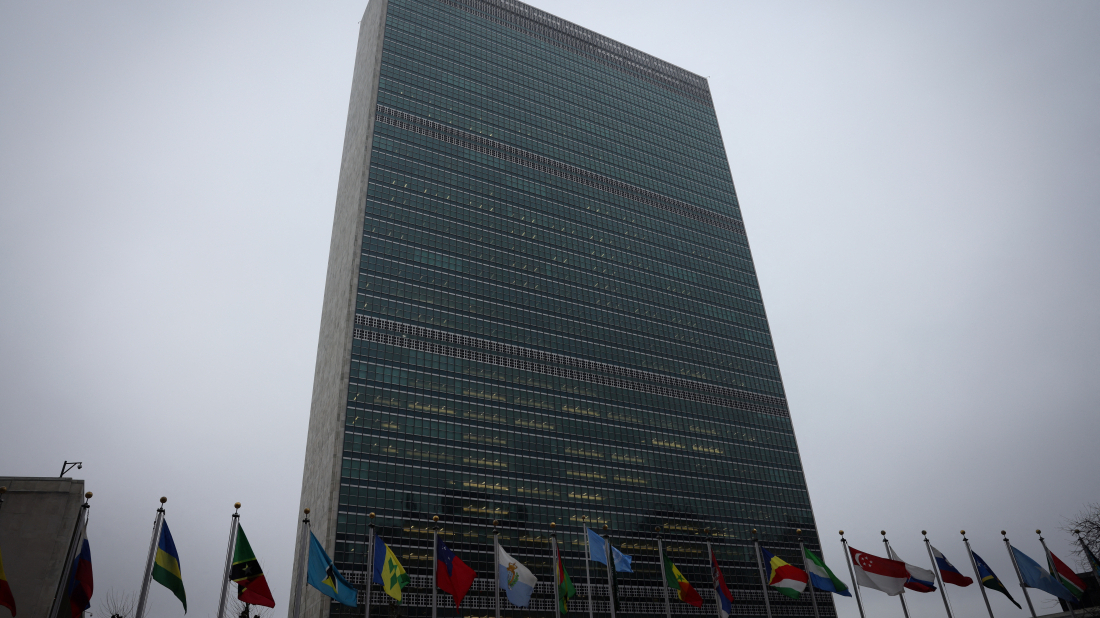
Members of the UN Security Council on Friday voiced concern over rising tensions between the United States and Venezuela, as Russia accused Washington of acting according to a “cowboy” doctrine of shooting first and asking questions later in its attacks on alleged drug-smuggling vessels.
Russia’s ambassador to the United Nations, Vassily Nebenzia, told the 15-member council that Venezuela had every reason to believe the United States was preparing to move from threats to direct action against it.
Several member states, including U.S. allies France, Greece, and Denmark, called for restraint, dialogue, and strict adherence to international law to ease the situation.
The United States has carried out several strikes in recent weeks on boats it claimed were transporting narcotics off Venezuela’s coast. US envoy John Kelly told the meeting that Washington “will not waver in our action to protect our nation from narco-terrorists.”
The operations — described by the Trump administration as part of its campaign against drug cartels — have unsettled Democratic lawmakers and sparked debate about their legality as Trump continues to broaden the scope of presidential authority.
Nebenzia denounced the U.S. strikes as flagrant breaches of international law and human rights, saying that “boats with people on board were simply fired upon on the high seas, without trial or investigation.” He said this was done “according to the cowboy principle of ‘shoot first’,” adding, “And now we are being asked to believe, after the fact, that there were criminals on board.”
Venezuela’s ambassador to the UN, Samuel Moncada, warned that the United States’ military build-up in the region and its “belligerent rhetoric and actions” had created a situation where it was “rational to anticipate that, in the very near term, an armed attack may be launched against Venezuela.”
Panama’s ambassador, Eloy Alfaro de Alba, acknowledged legitimate concerns about drug trafficking, piracy, and other illicit activities in regional waters but stressed that “beyond military responses, these challenges can be tackled through coordinated and sustainable strategies.”
“Panama believes that the transnational threats confronting our region require collective responses grounded in respect for international law and guided by a shared commitment to peace and stability in our hemisphere,” he added.
France’s deputy UN envoy, Jay Dharmadhikari, said Paris supported multilateral efforts to curb trafficking and reinforce border controls, but emphasised that such actions must comply with international and human rights law. “In this context,” he said, “states must refrain from any unilateral armed intervention.”











What is your opinion on this topic?
Leave the first comment