Kazakhstan boosts Caspian Sea research with $2.2 million to tackle biodiversity loss
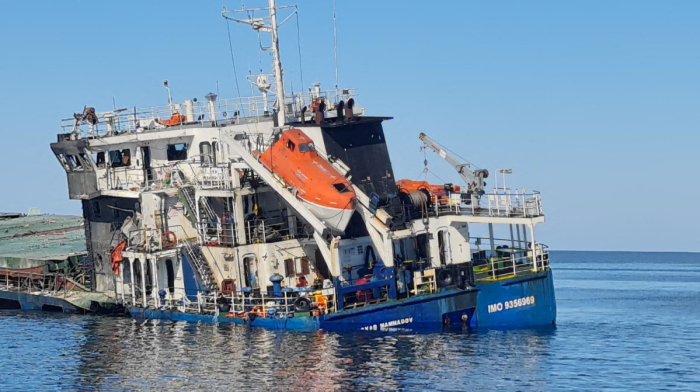
Kazakhstan says it's allocated $2.2 million to strengthen scientific monitoring of the Caspian Sea amid growing concern over falling water levels, bio...
Ecuadorian President Daniel Noboa’s vehicle was attacked on Tuesday as his convoy travelled through Cañar province, where protesters demonstrating against the government’s decision to lift fuel subsidies threw rocks and other objects at his car.
Environment and Energy Minister Inés Manzano said the president was unharmed, though the vehicle showed “possible bullet damage.” Authorities later confirmed that five individuals had been detained in connection with the incident, which officials described as an attempted assassination.
Noboa’s office said those arrested would face charges of terrorism and attempted murder. It remains unclear whether shots were actually fired, as the reports have not been independently verified.
Speaking later at a university event in the nearby city of Cuenca, Noboa condemned the attack and urged citizens to reject violence.
“Those who tried to stop us through aggression represent the past,” he said. “The law applies equally to everyone in Ecuador.”
Minister Manzano called the incident “criminal behaviour,” saying the government would not tolerate attacks against state officials or property.
The country’s main Indigenous organisation, CONAIE, accused security forces of responding with excessive violence against demonstrators gathered for Noboa’s visit. It claimed elderly women were among those injured and at least five people were detained “arbitrarily” during clashes with police and the military.
Protests over fuel subsidy removal
Tensions have risen across Ecuador since the government announced in mid-September that it would end long-standing diesel subsidies. The move, officials say, will save about $1.1 billion a year — money that will instead be redirected to social and agricultural support programmes.
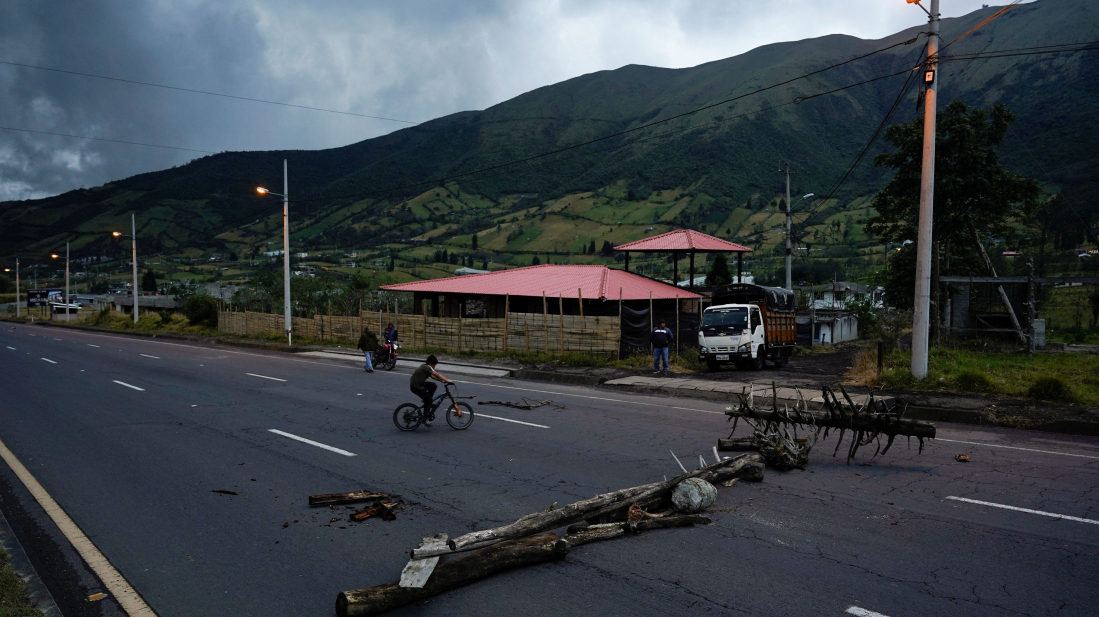
Opponents, led by Ecuador's largest indigenous rights organisation, the Confederation of Indigenous Nationalities of Ecuador (CONAIE), argue that removing subsidies will sharply raise living costs, particularly for farmers and Indigenous communities. The group has staged nationwide demonstrations and road blockades for more than two weeks.
President Noboa, who was re-elected earlier this year, has taken a firm stance on maintaining order, granting emergency powers to the armed forces and police in several provinces.
Photographs released by the presidency showed the 37-year-old leader standing beside a vehicle with shattered windows. Defence Minister Gian Carlo Loffredo shared the images on social media, writing that “nothing stops this president — and nothing will stop Ecuador.”
A fresh protest march was scheduled to take place in the capital, Quito, later on Tuesday evening.

Italy said a fond farewell to the Winter Olympics on Sunday with an open-air ceremony in the ancient Verona Arena that celebrated art and sporting achievement at a Games lauded as a model for how to stage such events.
The United States and Iran will hold a new round of nuclear negotiations in Geneva on Thursday as part of renewed diplomatic efforts to reach a potential agreement, Oman’s Foreign Minister Badr Albusaidi announced on Sunday.
Further Iran-U.S. nuclear talks are scheduled in Geneva on Thursday (26 February) as diplomacy resumes over Tehran’s nuclear programme following earlier mediation efforts. But will the talks move Iran-U.S. negotiations closer to a deal, and what should be expected from the meeting?
Mexican authorities said on Sunday that Nemesio Oseguera Cervantes, known as El Mencho and head of the Jalisco New Generation Cartel (CJNG), was killed during a military operation in the western state of Jalisco.
Syria has secured a $50 million financing package from the World Bank to support transport infrastructure projects as the country advances its economic recovery efforts, Syrian media reported on Sunday.
Following the full-scale invasion of Ukraine on 24 February 2022, Western governments significantly expanded sanctions targeting Russia’s finance, energy, trade and technology sectors. The measures built on restrictions first imposed in 2014 following Russia's illegal annexation of Crimea.
Britain imposed its largest package of sanctions on Russia in years on Tuesday (24 February), marking the fourth anniversary of Moscow’s invasion of Ukraine, as London also announced fresh military and humanitarian support for Kyiv.
U.S. President Donald Trump’s new 10% global tariffs have come into effect, hours after the Supreme Court blocked many of his sweeping import taxes in a 6–3 ruling. Allies around the world are weighing possible retaliation, while markets brace for further upheaval.
Torrential downpours have triggered deadly mudslides and widespread flooding in southern Peru, leaving at least seventeen people dead - including fifteen killed in a military helicopter crash - as hundreds of districts across the country remain under a state of emergency.
The U.S. ambassador to France, Charles Kushner, has been banned from meeting members of the French government after not showing up at the Foreign Affairs ministry, where he had been summoned over comments on the killing of a French far-right activist last week, diplomatic sources said on Monday.
You can download the AnewZ application from Play Store and the App Store.
What is your opinion on this topic?
Leave the first comment