A U.S.-sponsored ceasefire proposal for Gaza on Tuesday was hinging on Hamas's response to the 20-point plan which U.S. President Donald Trump has said was "beyond very close" to ending the two-year-old conflict in the region.
Mediators Qatar and Egypt shared the document with Hamas late on Monday after Israeli Prime Minister Benjamin Netanyahu stood alongside Trump at the White House and pledged his support for the proposal because he said it met Israel's war aims.
It was not clear what had allayed Netanyahu's earlier misgivings about elements of the proposal.
Hamas was not involved in the rounds of negotiations in the lead-up to Trump's plan, which calls on the Islamist militant group to disarm, a demand they have previously rejected.
A source close to Hamas told Reuters the plan was "completely biased to Israel" and imposed "impossible conditions" that aimed to eliminate the group.
However, an official briefed on the talks told Reuters early on Tuesday that Hamas negotiators "would review it in good faith and provide a response".
Hamas faces pressure from Muslim nations to accept
Trump warned Hamas that if it rejected his offer, Israel would have full U.S. support to take whatever action it deemed necessary.
The plan specifies an immediate ceasefire, an exchange of all hostages held by Hamas for Palestinian prisoners held by Israel, a staged Israeli withdrawal from Gaza, the disarmament of Hamas and the introduction of a transitional government led by an international body.
Many elements of the 20 points have been included in numerous ceasefire deals proposed over the last two years, including those accepted and then subsequently rejected at various stages by both Israel and Hamas.
One of Hamas’s main conditions since the outset of the war has been a full Israeli withdrawal from Gaza in return for the release of the remaining hostages. And while the group has indicated its readiness to relinquish administrative authority, it has consistently ruled out disarming.
"What Trump has proposed is the full adoption of all Israeli conditions, which do not grant the Palestinian people or the residents of the Gaza Strip any legitimate rights," a Palestinian official, who asked not to be named, told Reuters.
However, Hamas faces considerable pressure to accept the plan, with the foreign ministers of Saudi Arabia, Jordan, United Arab Emirates, Qatar and Egypt all welcoming the initiative.
Turkey's head of intelligence will join Qatari and Egyptian mediators in Doha to discuss the peace proposal later on Tuesday, a spokesperson for Qatar's foreign ministry said. Turkey has not previously been involved as a key mediator during efforts over the last two years to bring peace to Gaza.
It was unclear if Hamas officials would join Tuesday's meeting. The last time Hamas leaders gathered to discuss a U.S. peace plan in Qatar, Israel tried, and failed, to kill them with a missile strike.
Netanyahu apologised on Monday to his Qatari counterpart for the 9th September attack, the White House said.
Although he initially backed the Trump plan, Netanyahu later expressed doubts about elements of the proposal, including the prospects for eventual Palestinian statehood, something he has repeatedly ruled out.
Netanyahu is under mounting pressure from a war-weary Israeli public to end the conflict. But he also risks the collapse of his governing coalition, if far-right ministers believe he has made too many concessions for a peace deal.
Israeli forces push further into Gaza city
In Gaza itself, some Palestinians hailed Trump's peace plan, saying it could end the bombardment and deaths, but they wondered whether it would end Israel's control of the city.
"We want the war to end, but we want the occupation army that killed tens of thousands of us to get out and leave us alone," said Salah Abu Amr, 60, a father of six from Gaza City.
"We hope the plan will end the war, but we are not sure it will, neither Trump nor Netanyahu can be trusted," he told Reuters via a chat app.
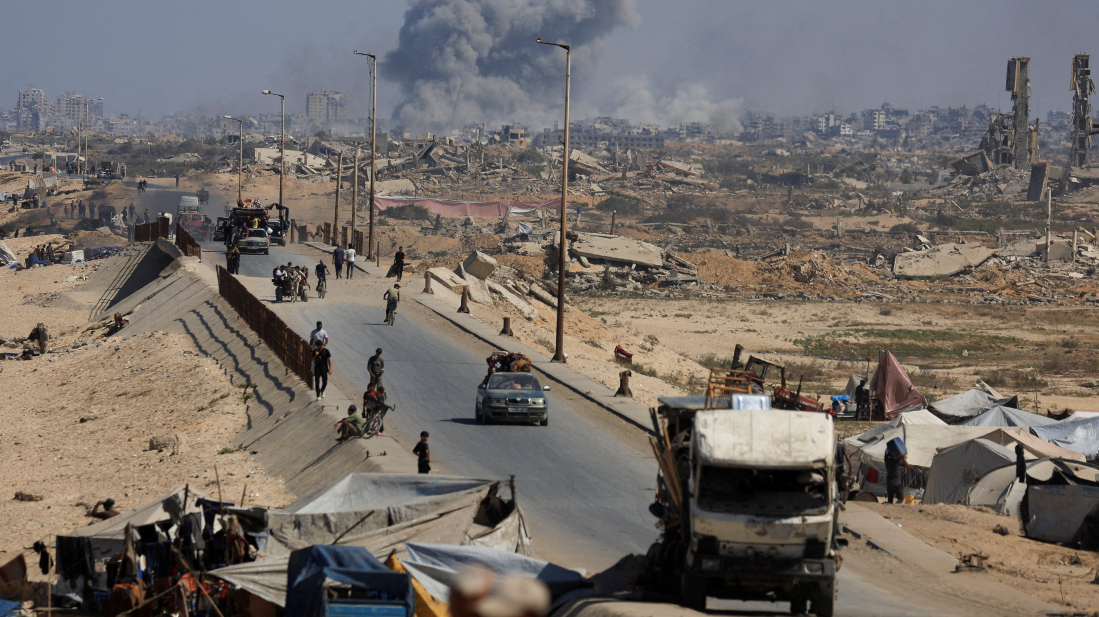
Israeli forces pushed deeper into Gaza City on Tuesday, reaching the centre of the territory, which Netanyahu has described as the last Hamas bastion.
Israeli planes also dropped new leaflets over the city ordering Palestinians to immediately leave and head south.
"The battle against Hamas is decisive and will not end until it is defeated," the leaflet said in red writing.

















What is your opinion on this topic?
Leave the first comment