Pakistan announces school closures due to rising fuel costs
Schools across Pakistan are being forced to close for a fortnight from next week with government departments down to a four-day week, accordin...
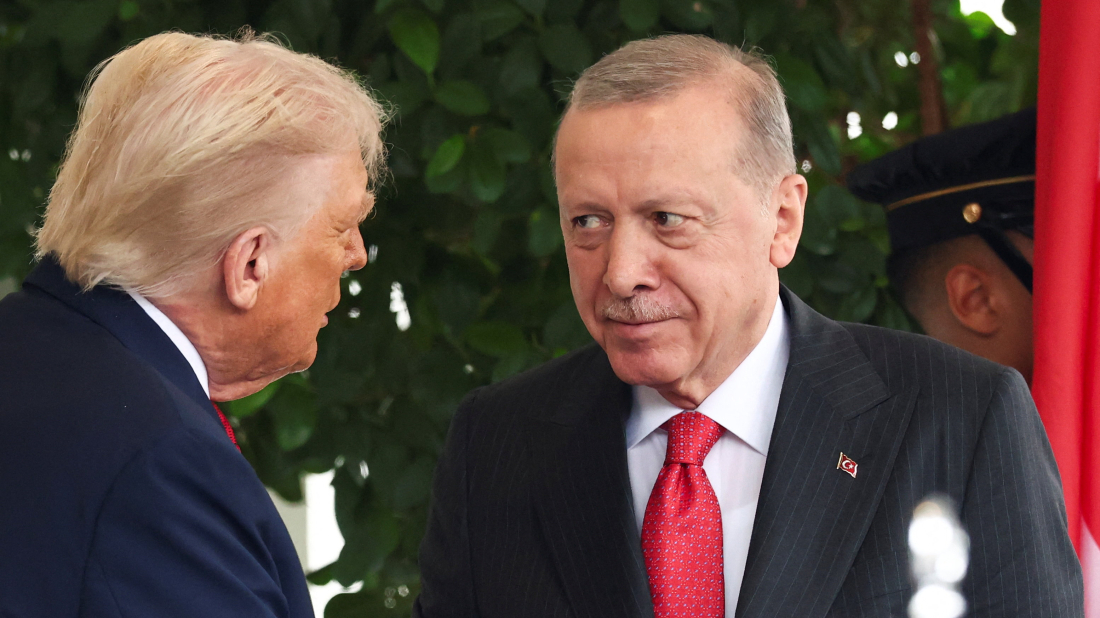
U.S. President Donald Trump said on Thursday he could lift sanctions against Türkiye’s defence industry “very soon,” depending on the outcome of his Oval Office meeting with Turkish President Recep Tayyip Erdoğan.
“Against sanctions against Türkiye? Could be very soon. If we have a good meeting, almost immediately,” Trump told reporters before praising Ankara’s rising defence contributions within NATO.
“They’re paying now 5% of GDP. Nobody thought that was possible … The relationship is very good. NATO, with us, is the strongest it’s ever been,” added President Trump.
The restrictions were imposed after Türkiye’s 2019 purchase of Russian S-400 missile systems, which Washington deemed incompatible with NATO’s defences. Erdoğan is pushing for a breakthrough to ease the measures, encouraged by Trump’s warmer approach toward Moscow and his personal rapport with the Turkish leader.
The atmosphere contrasts sharply with former President Joe Biden’s stance of keeping Ankara at a distance over its close ties to Russia. Under Trump, both sides have found new common ground in Syria, where they now back the central government after years of dispute.
However, frictions remain. Ankara has accused Israel of committing genocide in Gaza, a position strongly rejected by Washington. Analysts warn that while Trump and Erdoğan’s pragmatic, leader-to-leader diplomacy could deliver short-term results, deeper strategic tensions continue to cast uncertainty over the partnership.

Mojtaba Khamenei, son of the late Ayatollah Ali Khamenei, is a hardline cleric with strong backing from the Islamic Revolutionary Guard Corps. His rise signals continuity in Tehran's anti-Western policies.
Global oil prices surpassed $119 a barrel on Monday (9 March, 2026), an almost four year high, as the Middle East conflict rumbled on.
China has urged Afghanistan and Pakistan to resolve their dispute through dialogue after Chinese envoy Yue Xiaoyong met Afghan Foreign Minister Amir Khan Muttaqi, as fighting between the two neighbours entered its eleventh day.
Iran named Mojtaba Khamenei to succeed his father Ali Khamenei as supreme leader on Monday (9 March), signaling that hardliners remain firmly in charge, as the week-old U.S.-Israeli war with Iran pushed oil above $100 a barrel.
Entry and exit across the state border between Azerbaijan and Iran for all types of cargo vehicles, including those in transit, will resume on 9 March, according to a statement by the Cabinet of Ministers of Azerbaijan.
Australia has granted humanitarian visas to five Iranian women footballers who sought asylum, fearing persecution after refusing to sing their national anthem at an Asia Cup match.
Start your day informed with AnewZ Morning Brief. Here are the top news stories for the 10th of March, covering the latest developments you need to know.
U.S. President Donald Trump called his recent phone conversation with Russian President Vladimir Putin “very good.” The two leaders spoke on Monday about the situation in Iran and other international issues.
Welcome to our live coverage as the conflict involving Iran enters its 11th day. Tensions in the region remain high as the United States and Iran exchange increasingly sharp warnings over the strategic Strait of Hormuz, a critical artery for global oil supplies.
U.S. President Donald Trump and UK Prime Minister Keir Starmer spoke by phone on Sunday as tensions between Washington and Westminster deepened over the conflict involving Iran. The call came less than a day after Trump criticised Britain’s response to U.S. strikes on Iranian targets.
You can download the AnewZ application from Play Store and the App Store.
What is your opinion on this topic?
Leave the first comment