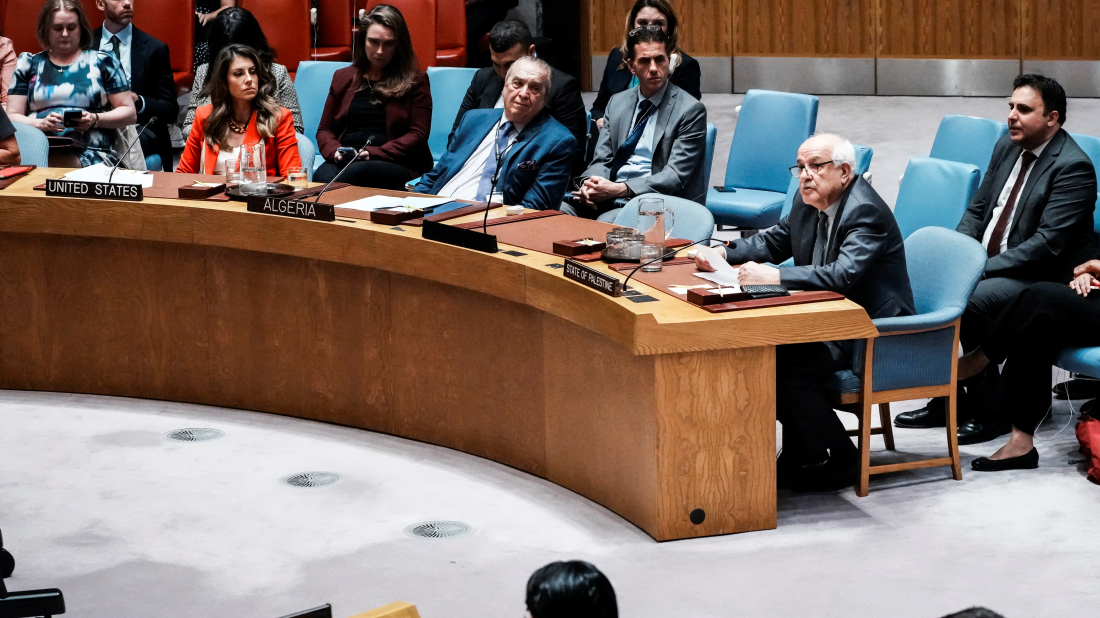
The United States vetoed on Thursday a draft United Nations Security Council resolution that would have demanded an immediate, unconditional and permanent ceasefire in Gaza and that Israel lift all restrictions on aid deliveries to the Strip.
The text, drafted by the elected 10 members of the 15-member council, would also have demanded the immediate, dignified and unconditional release of all hostages held by Hamas and other groups.
It received 14 votes in favour. It was the sixth time the U.S. had cast a veto in the Security Council over the nearly two-year war between Israel and Palestinian militants Hamas.
"Famine has been confirmed in Gaza - not projected, not declared, confirmed," Denmark's U.N. Ambassador Christina Markus Lassen told the council before the vote.
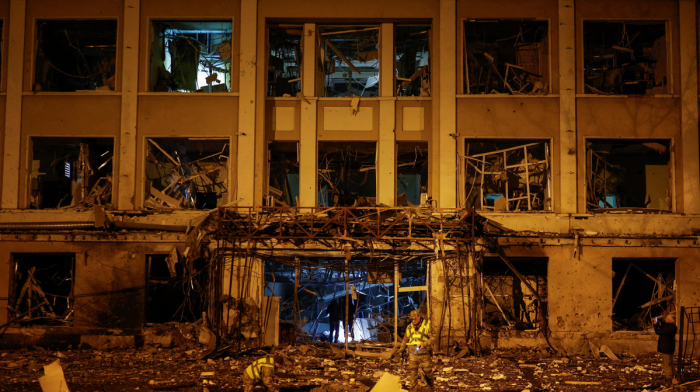
"Meanwhile, Israel has expanded its military operation in Gaza City, further deepening the suffering of civilians. As a result, it is this catastrophic situation, this humanitarian and human failure, that has compelled us to act today," she said.
Gaza City and surrounding areas are officially suffering from famine, and it will likely spread, a global hunger monitor determined last month.
The Palestinian Ambassador to the UN, Riyad Mansour said the move was heartbreaking.
''This draft resolution represents the bare minimum that humanity, legality and morality dictate. It is deeply regrettable and painful that it has been blocked, preventing the Security Council from playing its rightful role in the face of these atrocities and to protect civilians in the face of genocide.''
U.S. shields Israel
The United States traditionally shields its ally Israel at the United Nations. But in a rare move last week it backed a Security Council statement condemning recent strikes on Qatar, though the text it did not mention Israel was responsible.
The move reflected U.S. President Donald Trump's unhappiness with the attack ordered by Israeli Prime Minister Benjamin Netanyahu. However, the U.S. veto on Thursday showed that just a week later Washington was again staunchly giving diplomatic protection to Israel.
"Hamas is responsible for starting and continuing this war. Israel has accepted proposed terms that would end the war, but Hamas continues to reject them. This war could end today if Hamas freed the hostages and laid down its arms," U.S. diplomat Morgan Ortagus told the council before the vote.
Israel was not happy with the Security Council statement on the strikes on Qatar, Israel's U.N. Ambassador Danny Danon told reporters on Thursday, adding, "But I think, overall, the level of cooperation with the U.S. is so high that we were OK with that."
Danon said that after Netanyahu addressed the annual U.N. General Assembly gathering of world leaders next week the prime minister would travel to Washington to meet with Trump on 29 September. Netanyahu said earlier this month he had been invited by Trump to visit the White House.
The U.N. Security Council is also due to hold a high-level meeting on Gaza on Tuesday while world leaders are in New York.












What is your opinion on this topic?
Leave the first comment