More than 100,000 return to Afghanistan from Iran and Pakistan in two weeks
More than 100,000 people entered Afghanistan from Iran and Pakistan between 19 July and 1 August, increasing pressure on communities and humanitarian ...
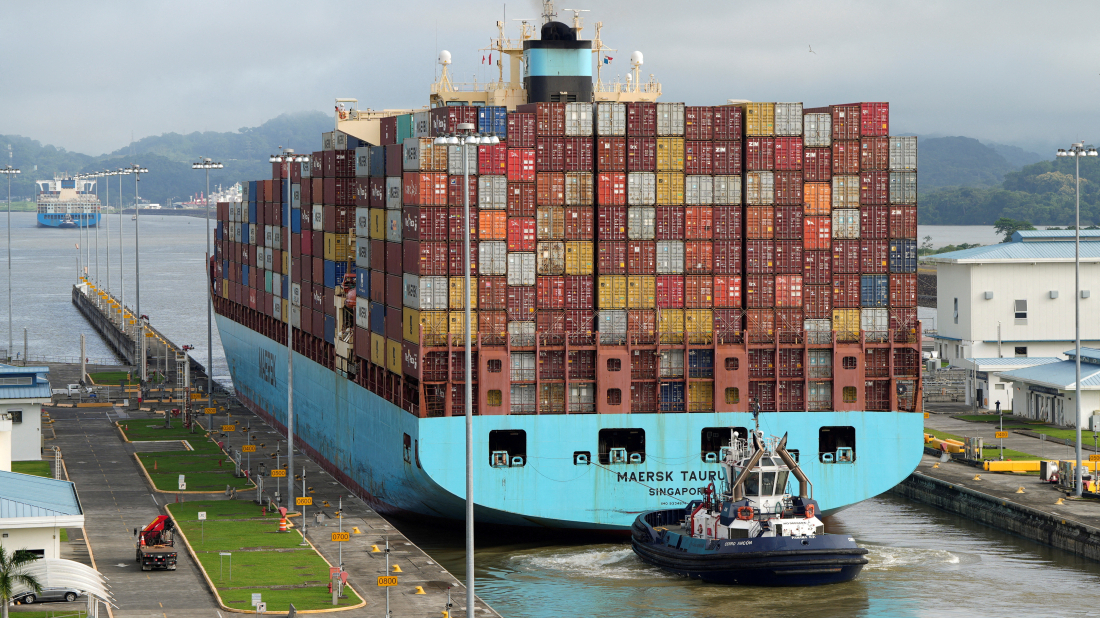
Trump's call to reclaim Panama Canal sparks controversy, raising concerns over U.S. diplomacy, China influence, and international law amid criticism of Panama's canal fees.
President-elect Donald Trump threatened to reassert U.S. control over the Panama Canal, accusing Panama of charging excessive rates to use the Central American passage, which allows ships to cross between the Pacific and Atlantic oceans.
In a Saturday evening post on Truth Social, Trump also warned that he would not let the canal fall into the "wrong hands," and he seemed to warn of potential Chinese influence on the passage, writing that the canal should not be managed by China.
China does not control or administer the canal. However, a subsidiary of Hong Kong-based CK Hutchinson Holdings manages two ports located on the Caribbean and Pacific entrances to the canal, respectively.
The post was an exceedingly rare example of a U.S. leader saying he could push a sovereign country to hand over territory. It also underlines an expected shift in U.S. diplomacy under Trump, who has not historically shied away from threatening allies and using bellicose rhetoric when dealing with counterparts.
"The fees being charged by Panama are ridiculous, especially knowing the extraordinary generosity that has been bestowed to Panama by the U.S.," Trump wrote in his Truth Social post.
"It was not given for the benefit of others, but merely as a token of cooperation with us and Panama. If the principles, both moral and legal, of this magnanimous gesture of giving are not followed, then we will demand that the Panama Canal be returned to us, in full, and without question," he wrote.
The Panamanian embassy in Washington did not respond to a request for comment.
The waterway, which allows up to 14,000 ships to cross per year, accounts for 2.5% of global seaborne trade and is critical to U.S. imports of autos and commercial goods by container ships from Asia, and for U.S exports of commodities, including liquefied natural gas.
It is not clear how Trump would seek to regain control over the canal, and he would have no recourse under international law if he decided to make a play for the passage.

Start your day informed with AnewZ Morning Brief. Here are the top news stories for the 5th of August, covering the latest developments.
U.S. President Donald Trump said there was an "all-day negotiation" on Tuesday with Iran, characterising the talks positively while also threatening to hit Iran "really hard" if a deal was not reached.
Shipping traffic through the Strait of Hormuz and the Bab el-Mandeb Strait, two key maritime chokepoints in the region, decreased significantly from the previous day, according to shipping data.
Start your day informed with AnewZ Morning Brief. Here are the top news stories for the 6th of August, covering the latest developments.
Kazakhstan’s main oil export corridor was disrupted by drone strikes near Russia’s Black Sea coast in July, forcing a temporary suspension of crude loadings and raising fresh concerns over the vulnerability of regional energy infrastructure to the war in Ukraine.
Türkiye's ruling alliance on Wednesday (5 August) submitted a bill to parliament aimed at advancing peace with the outlawed PKK by offering legal protections to former militants who disarm.
Ukraine has warned that its ability to defend against Russian missile attacks is weakening as Moscow appears to be expanding its missile arsenal ahead of a possible winter campaign targeting critical infrastructure.
Azerbaijan and Ukraine are seeking to deepen cooperation in energy, reconstruction and trade, with Baku signalling its readiness to supply natural gas to Ukraine and expand its role in rebuilding projects following high-level talks in Kyiv.
The UK government announced a new package of sanctions on Thursday (6 August) aimed at disrupting Russia's financial sector and oil exports, expanding pressure on Moscow more than four years after its full-scale invasion of Ukraine.
Ukraine’s National Security and Defense Council (NSDC) has approved Kyiv’s Resilience Plan for the autumn-winter season, aimed at strengthening the capital’s ability to withstand continued Russian attacks and ensuring the uninterrupted operation of critical services.
You can download the AnewZ application from Play Store and the App Store.
What is your opinion on this topic?
Leave the first comment