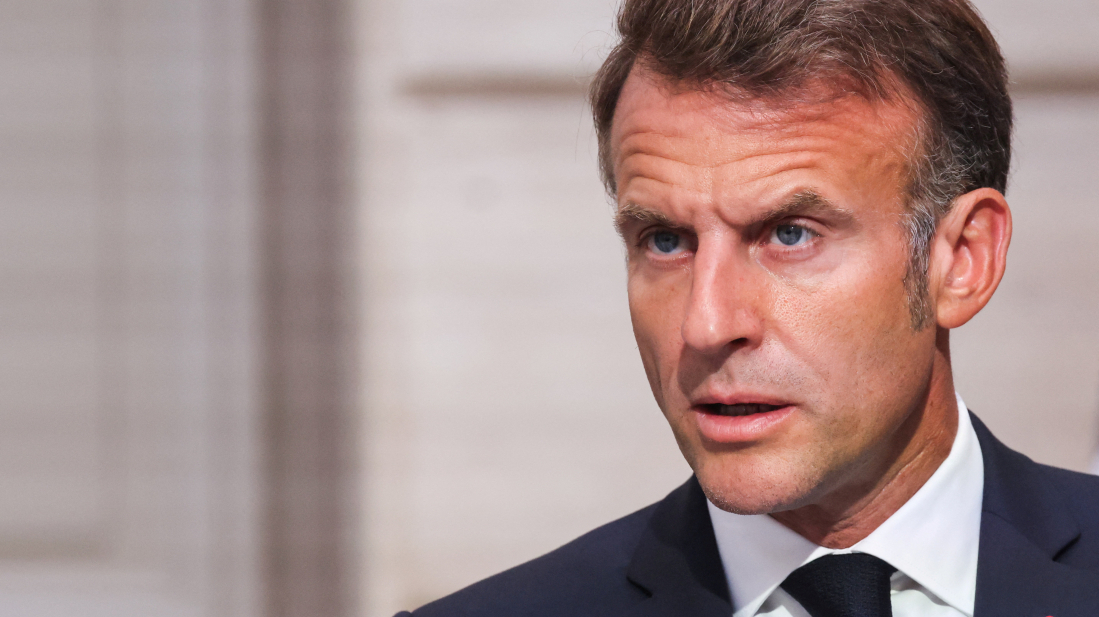
French President Emmanuel Macron faces a deepening political crisis as he searches for his fifth prime minister in under two years, following the expected resignation of Francois Bayrou on Tuesday after parliament rejected his budget plans.
His predecessor, Michel Barnier, faced the same fate just nine months ago, highlighting the challenges of passing fiscal policies in a divided legislature.
Bayrou cautioned lawmakers that his departure “would not erase the reality of France's fiscal largesse,” but like Barnier, he had little protection without a parliamentary majority.
Political analysts say navigating the deeply divided parliament is a daunting challenge for Macron, especially after a failed snap election in 2024 weakened his position.
As Kevin Arceneaux, director of political research at Sciences Po, noted, "There's no easy way out of here. The president is really in a difficult position."
Since the creation of the Fifth Republic in 1958, France has rarely faced a crisis of this magnitude. The constitution aimed to give the president a strong parliamentary majority, but Macron now faces a divided legislature dominated by the far-right and hard-left. France, unlike other countries, is not accustomed to coalition-building or consensus politics.
In search of support
Ahead of the confidence vote, analysts suggested Macron’s options were limited. He could appoint another premier from his own ranks, names such as Defence Minister Sébastien Lecornu were mentioned, but such a move risks public backlash.
Some expect him to turn to a Socialist to lead a minority government. However, the centre-left seeks a 'non-aggression pact' to advance its own agenda, including taxing the rich and reversing unpopular pension reforms, which clashes with Macron’s pro-business approach.
Lawmaker Eric Coquerel said, "Changing his economic policy, even slightly, is out of the question for Macron."
Political wildcard
Calling another snap election could backfire. Polls indicate Marine Le Pen’s far-right National Rally would likely emerge as the largest single force in the National Assembly, weakening Macron further.
Le Pen, banned from running for office herself, has urged Macron to trigger an "ultra-fast dissolution" and offered to "sacrifice" herself politically. Sources close to Macron note that while he is reluctant to call elections, “you can't rule out anything with him, he is really unpredictable.”
Some voices are advocating a constitutional overhaul to establish a Sixth Republic, though critics argue that reverting to a more parliamentary system as seen in the unstable Third and Fourth Republics — may not improve governance.
With no mechanism to force a presidential resignation, Macron faces mounting pressure amid simmering public discontent, recalling the year-long Yellow Vest crisis of 2018 and 2019.
















What is your opinion on this topic?
Leave the first comment