Azerbaijan cannot yet provide a timeline for the large-scale return of internally displaced persons (IDPs) due to extensive landmine contamination in former conflict zones, the country’s presidential representative on special assignments, Elchin Amirbayov, said on Thursday.
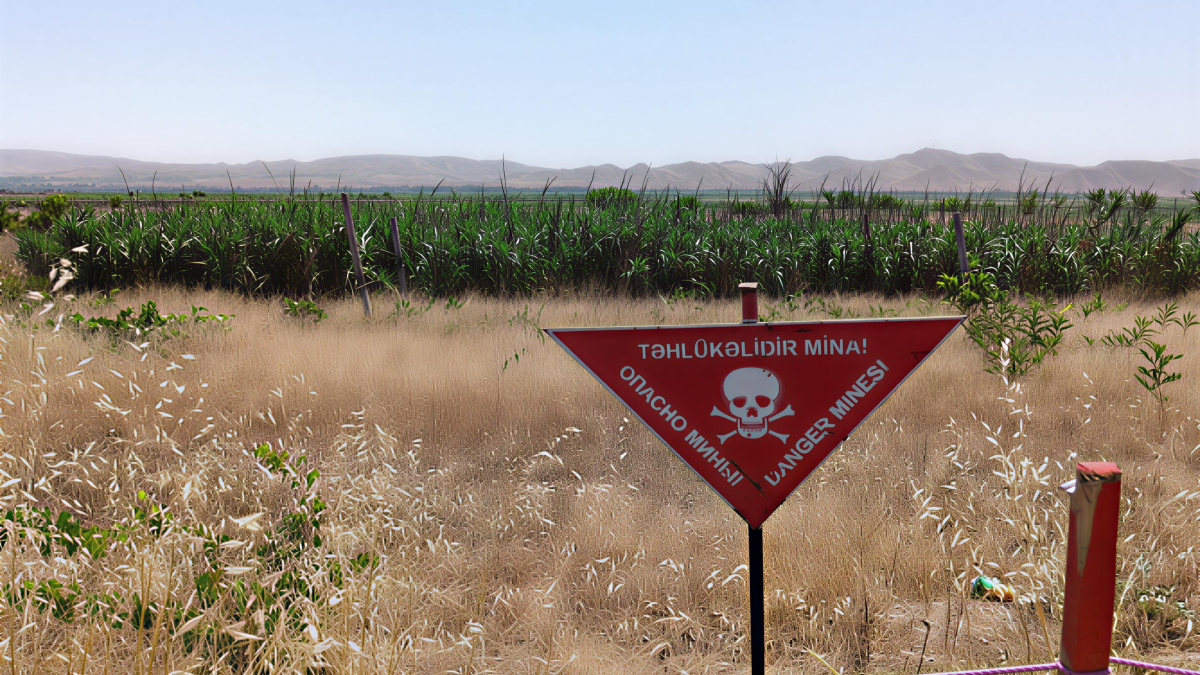
Speaking at a media briefing hosted by the Association of Accredited Correspondents at the United Nations (ACANU) in Geneva, Amirbayov said Azerbaijan is “one of the top five countries in the world contaminated by landmines and unexploded ordnance.”
He added that over 1 million mines have been planted across roughly 20% of Azerbaijani territory, but only 20% of contaminated land has been cleared since 2020. Authorities have detected more than 232,000 explosive devices, yet only 23,000 IDPs have returned over the past five years. The remaining 800,000 cannot safely return due to the persistent mine threat, which affects 13.4% of Azerbaijan’s land.
Since 2020, the Azerbaijani government has spent $464 million on demining, compared with just $23.9 million in foreign aid. Amirbayov noted that “95% of the financial burden is on Azerbaijan’s shoulders,” with support coming from 13 international donors, including the United States, the UAE, Saudi Arabia, Italy, the UK and France.
He also highlighted the human cost of the contamination: 412 Azerbaijani citizens have been injured or killed by mines since the ceasefire, with nearly 3,400 incidents recorded since the start of the conflict.
Amirbayov stressed that the mine threat remains the main obstacle to returns. “The reason why we were able to bring back only 23,000 IDPs in the last five years is because of the remaining difficulties and the challenges posed by the mines,” he said. Reconstruction, however, is progressing, with several towns and dozens of villages being rebuilt from scratch, including smart village and smart city projects.
Peace deal could be signed in 2026
Amirbayov described 2025 as “a historic year,” saying Armenia and Azerbaijan have finalised negotiations on a draft peace agreement and hope to sign it next year.
He outlined two key conditions that must be met before signing: the dissolution of the OSCE Minsk Group, which he described as “obsolete and dysfunctional since 2020,” and amendments to Armenia’s constitutional framework. The current Armenian constitution, he said, references the annexation of the Karabakh region, which must be aligned with the peace agreement to ensure it is “sustainable and irreversible.”
On timing, Amirbayov said: “It is very difficult to say exactly when this will happen. It may occur next year, and the sooner it does, the better for both countries. We need to seize this window of opportunity to build on the progress we have made in recent months.”











What is your opinion on this topic?
Leave the first comment