Afghanistan’s Ministry of Economy has urged United Nations agencies and humanitarian organisations to speed up the delivery of aid to survivors of the recent earthquakes that struck several eastern provinces.
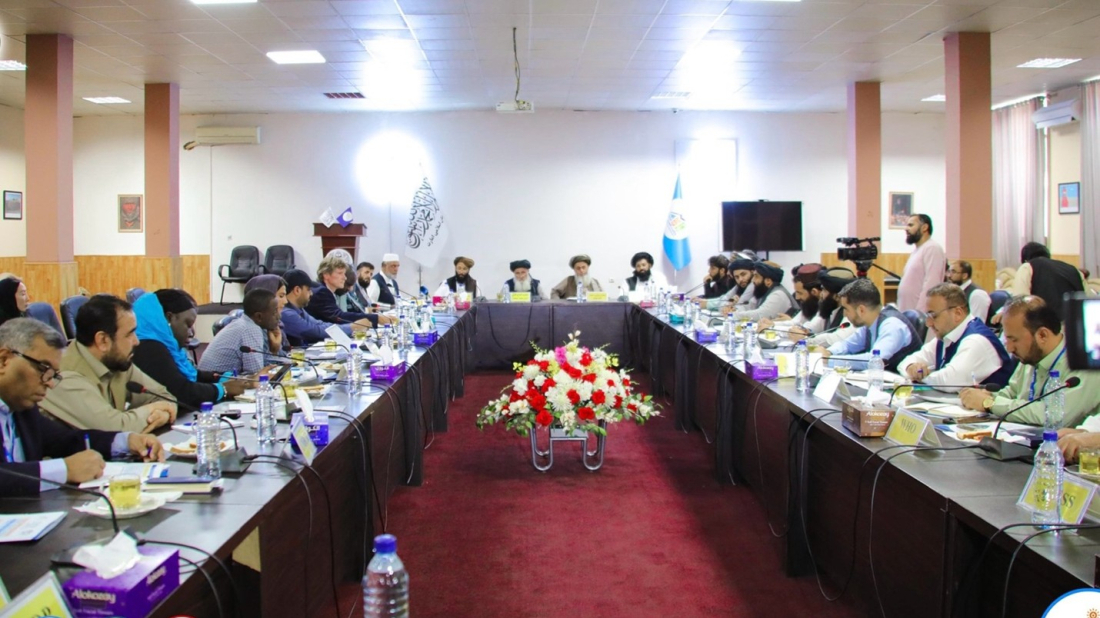
Din Mohammad Hanif, Minister of Economy and head of the Aid Coordination Committee, said casualties were “rapidly increasing” in Kunar, Nangarhar, Laghman, Nuristan, and Panjshir. Speaking at a meeting with UN officials in Kabul, he called for immediate support.
“We appeal to UN agencies and both domestic and international non-governmental organisations to provide any form of assistance as quickly as possible, and in full coordination with the aid committee,” Hanif told participants.
The Afghan government has released updated figures from Kunar province, the area worst affected by the tremors on Sunday night. Zabihullah Mujahid, spokesperson of the government, wrote on X that at least 1,411 people have been killed, 3,124 injured, and 5,412 homes destroyed. He said the districts of Nurgal, Suki, Chapa Dara, Pech Dara, Watapur, and Asadabad were among the hardest hit.
The United Nations confirmed that $5 million has been released from its Central Emergency Response Fund. UN Secretary-General António Guterres’ spokesperson, Stéphane Dujarric, said in New York on Tuesday that the allocation would “kickstart the response” in Afghanistan.
Dujarric added that the country’s challenges extend beyond the earthquakes. “Afghanistan is already facing drought, food insecurity and the crisis of returnees,” he said. According to the UN Refugee Agency (UNHCR), some of those killed were families who had only recently returned from neighbouring countries.
Aid groups warn that the situation is worsening. According to the UN Office for the Coordination of Humanitarian Affairs (OCHA), more than 23 million Afghans are in need of humanitarian assistance in 2025, with earthquakes compounding existing crises. Local residents say the destruction has left entire villages without shelter.
Mohammad Rahim, a shopkeeper from Laghman, told AnewZ, “We are still pulling people from the rubble, we need tents, food and medicine urgently.”
International relief agencies say logistical access and funding remain major obstacles. Médecins Sans Frontières (MSF) said it is scaling up its medical teams in the east, but warned that supplies are “stretched thin.”


















What is your opinion on this topic?
Leave the first comment