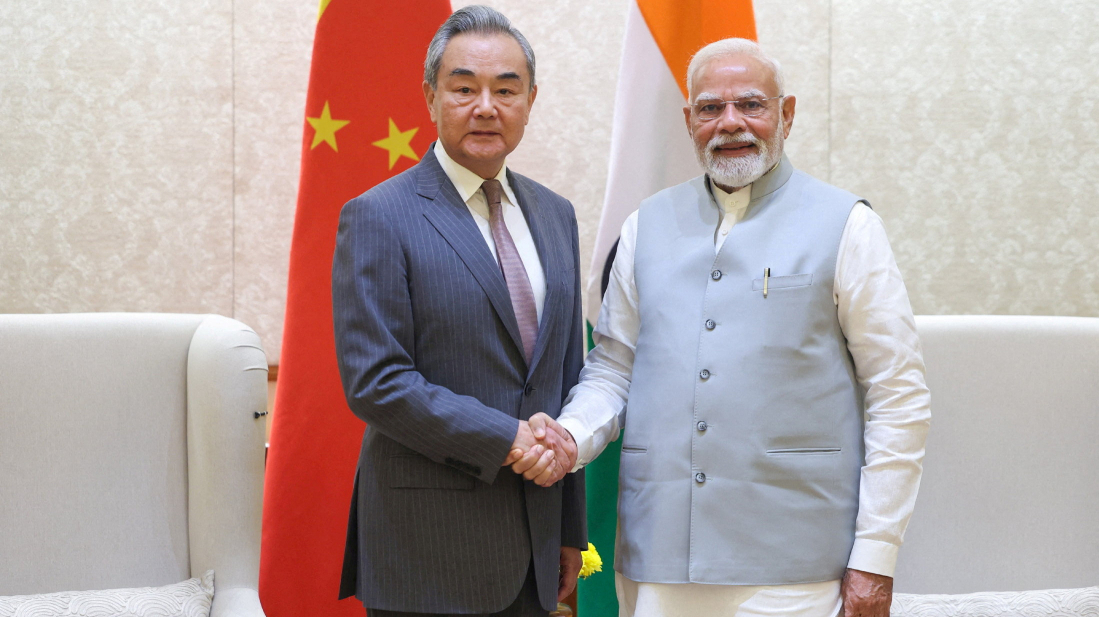
Indian Prime Minister Narendra Modi is due to meet Chinese President Xi Jinping on Sunday, as relations between the two Asian powers show signs of warming thanks to U.S. President Donald Trump’s imposition of steep tariffs on New Delhi.
The trip will be PM Modi’s first trip to China in seven years, where he will attend the Shanghai Cooperation Organisation (SCO) summit, alongside other members including Russia and Iran.
It is also his first visit since the deadly 2020 clash between Indian and Chinese troops along their disputed Himalayan frontier. The two neighbours share a 3,800 km (2,400 mile) border, which has been contested since the 1950s.
Timeline of easing tensions
June 2020
In June, at least 20 Indian soldiers and four Chinese troops were killed during hand-to-hand fighting in the Galwan Valley, Ladakh. Following the incident, New Delhi tightened scrutiny of Chinese investments, banned popular mobile applications, and cut direct passenger flights.
December 2022
Minor clashes broke out in the Tawang sector of Arunachal Pradesh, which Beijing claims as part of southern Tibet.
August 2023
Modi and Xi met in Johannesburg at the BRICS summit and agreed to step up efforts to disengage and reduce tensions.
September 2024
Indian Foreign Minister Subrahmanyam Jaishankar said about 75% of disengagement issues along the border had been resolved. India’s aviation minister also revealed talks on resuming direct flights.
October 2024
Both countries reached a deal on frontier patrols to end the standoff. On 23 October, Modi and Xi held their first formal talks in five years at a BRICS summit in Russia, agreeing to strengthen communication and cooperation.
December 2024
Indian National Security Adviser Ajit Doval travelled to Beijing for border talks with Foreign Minister Wang Yi, with both designated as special representatives.
January 2025
Wang met Indian Foreign Secretary Vikram Misri in China. Both sides agreed to restart direct air links and to work on trade and economic differences.
April 2025
A Chinese embassy spokesperson called for India and China to unite in facing U.S. tariffs.
July 2025
Jaishankar visited China for the first time in five years, urging both countries to resolve border friction, withdraw troops, and avoid restrictive trade practices. Reuters reported India was considering easing restrictions on Chinese investments.
August 2025
During a visit to New Delhi, Wang told his Indian counterpart that the two nations should develop a “correct strategic understanding” and treat one another as partners.
Later in the month, Chinese Ambassador Xu Feihong said China opposed U.S. tariffs on India and would “firmly stand with India”.












What is your opinion on this topic?
Leave the first comment