Storm Goretti blacks out homes and disrupts travel across northern Europe
Storm Goretti has brought gale-force winds, heavy snow and freezing temperatures to parts of northern Europe, causing widespread power outages, flight...
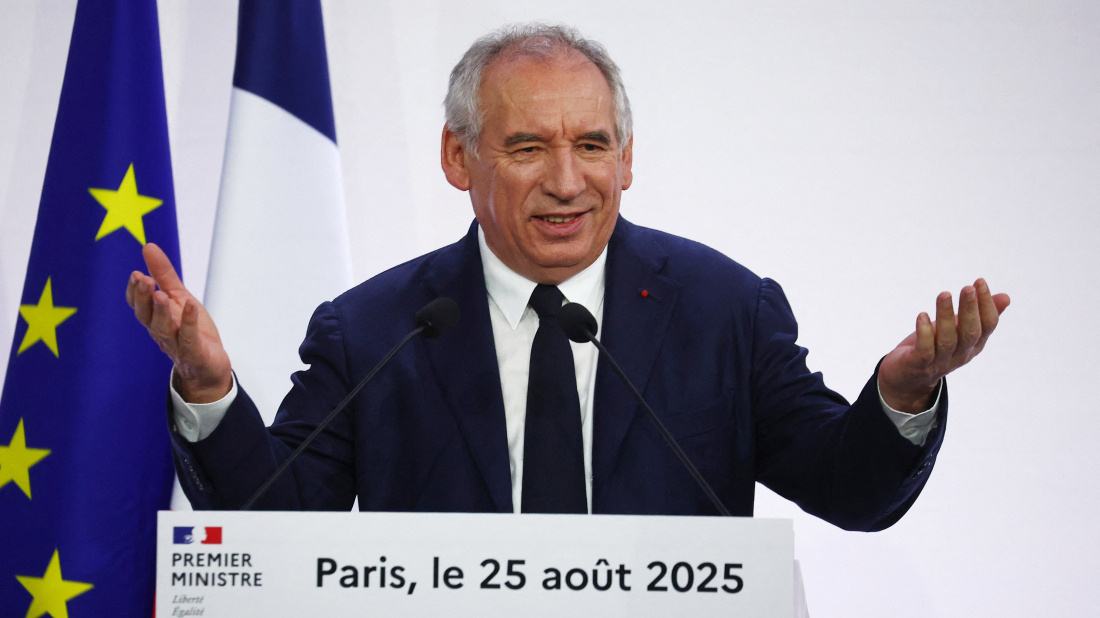
France's minority government looks increasingly likely to be ousted next month after three main opposition parties said they would not back a confidence vote which Prime Minister Francois Bayrou announced for 8 September over his plans for sweeping €44 billion budget cuts.
The far-right National Rally (RN), the Greens and later the Socialists, on whose vote Bayrou's fate largely lies, said they did not see how they could back him.
If he loses the confidence vote in the National Assembly, Bayrou's government will fall.
If that happens, President Emmanuel Macron could name a new prime minister immediately or ask Bayrou to stay on as head of a caretaker government, or he could call a snap election.
Macron lost his last prime minister, Michel Barnier, to a no-confidence vote over the budget in late 2024, after just three months in office following another snap election in July that year.
Bayrou acknowledged seeking the confidence of a very fragmented parliament was a risky bet but defended the budget as necessary to tackle France’s deficit, which hit 5.8% of GDP last year, nearly double the EU’s 3% limit.
"Yes, it's risky, but it's even riskier not to do anything," he told a press conference, referring to what he said was the major danger the country faced due to its huge debt pile.
Bayrou has also proposed scrapping two public holidays and freezing welfare spending and tax brackets in 2026 at 2025 levels, not adjusting them for inflation. He said his proposal to scrap the bank holidays could be tweaked.
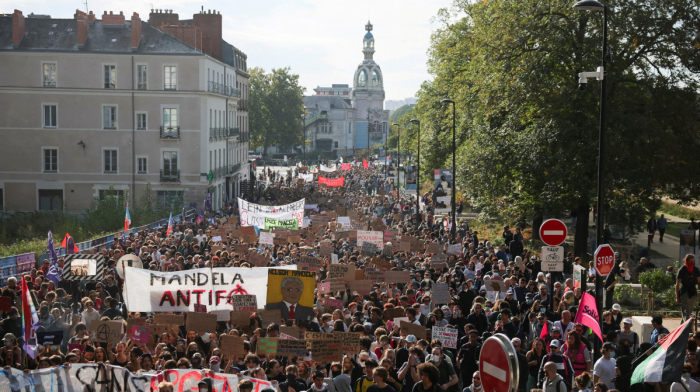
The vote comes two days before planned nationwide protests on 10 September, supported by leftist parties and unions, echoing the 2018 Yellow Vest movement over cost-of-living pressures.
Opposition leaders framed the confidence vote as the government’s end.
“The RN will never vote in favour of a government whose decisions are making the French people suffer,” said Jordan Bardella, far-right party chief.
Even if Bayrou wins, the vote only signals parliamentary support for his approach. The actual budget vote is still pending later this year.

Snow and ice stalled travellers in northwest Europe on Wednesday, forcing around a thousand to spend the night in Amsterdam's Schiphol airport but delighting others who set out to explore a snow-blanketed Paris on sledges and skis.
U.S. President Donald Trump has warned that Iran could face a strong response from the United States if its authorities kill protesters amid ongoing unrest.
Iran is now facing a near‑total internet blackout as anti-government protests sweep the country. Major cities including Tehran have seen connectivity drop sharply, leaving millions of residents isolated from online communication.
New York City parents could soon have access to free childcare for two-year-old children following a joint announcement made by Mayor Zohran Mamdani and Governor Kathy Hochul on Thursday (8 January).
Tens of thousands of Iranians have taken to the streets in Tehran and across at least 28 cities in a wave of anti-government demonstrations, now entering their twelfth day.
The United Nations has described footage of the fatal ICE shooting in Minneapolis as deeply disturbing, urging a thorough investigation and reaffirming the right to peaceful protest.
Italy aims to begin testing a delayed cable car project in January as it seeks to ease transport pressure at the Milan–Cortina 2026 Winter Olympics, despite the challenges of construction in mountainous terrain.
Storm Goretti has brought gale-force winds, heavy snow and freezing temperatures to parts of northern Europe, causing widespread power outages, flight cancellations and major transport disruption.
Minnesota officials have launched their own investigation into the fatal shooting of a woman by a U.S. Immigration and Customs Enforcement (ICE) officer, as protests spread across several U.S. cities and tensions grow between state and federal authorities.
Russia’s crude oil production experienced its most significant decline in 18 months in December, as Western sanctions and escalating Ukrainian drone attacks on the country's energy infrastructure took a toll.
You can download the AnewZ application from Play Store and the App Store.
What is your opinion on this topic?
Leave the first comment