Israeli airstrike kills at least 10 near Gaza school, as fragile ceasefire falters
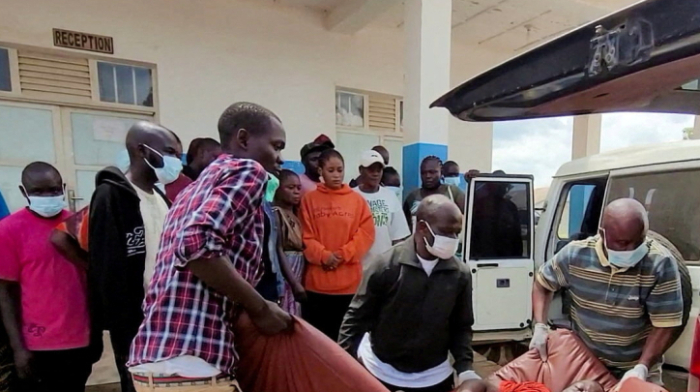
At least 10 people have died and several others were wounded after an Israeli airstrike on a neighbourhood outside a school sheltering displaced Pa...
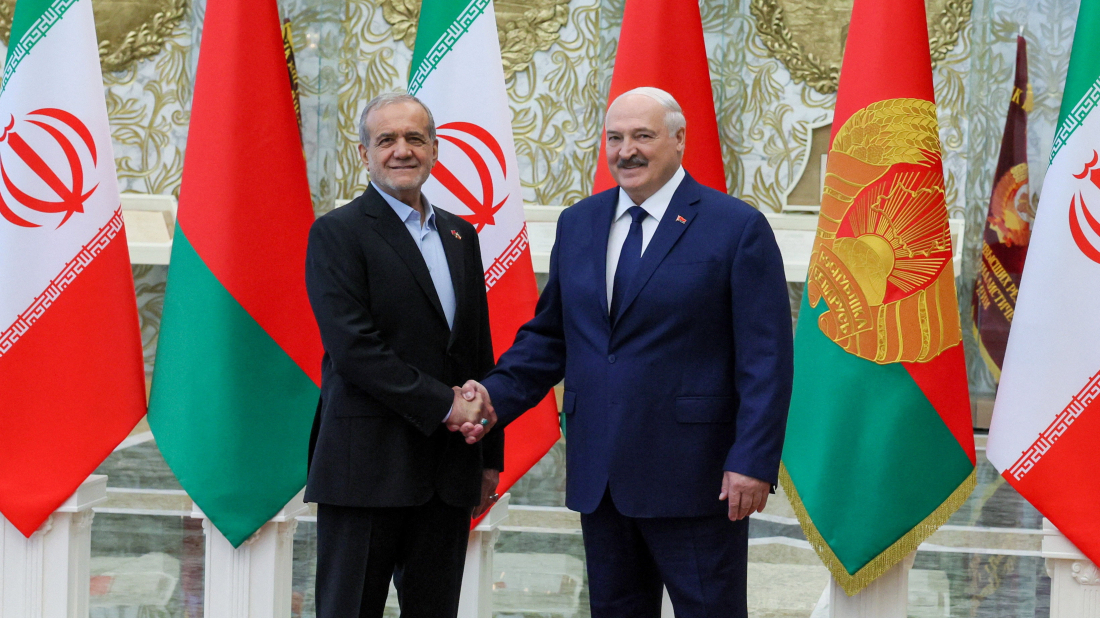
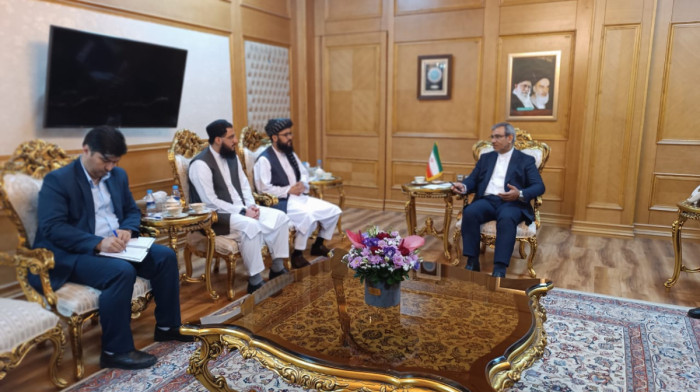
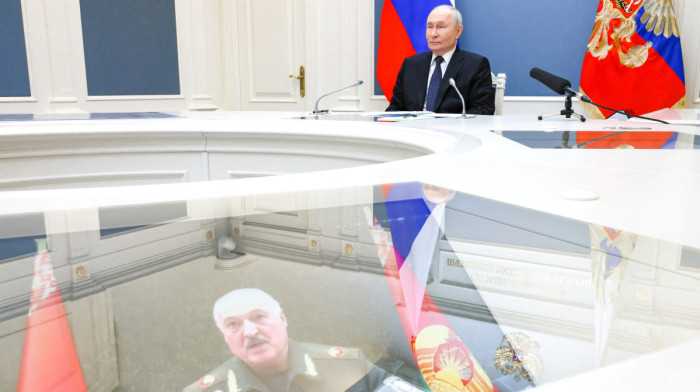
Belarus and Iran, both under Western sanctions, announced plans to intensify bilateral cooperation during a meeting in Minsk on Wednesday.
Belarusian President Alexander Lukashenko and his Iranian counterpart Masoud Pezeshkian said they would begin work on a strategic partnership treaty covering multiple areas, including military-technical cooperation.
He made this statement at the meeting in Belarusian capital saying that the two nations are keen on strengthening their partnership.
According to Belta, the state news agency, Lukashenko said "In conditions of geopolitical turbulence, Minsk and Tehran are undertaking consistent and balanced steps to further develop cooperation. We ready to discuss any issues, we have no closed topics."
Lukashenko reaffirmed that the countries would expand collaboration in defence and other domains.
Belarus is facing sanctions for allowing Russia to use its territory as a base for launching military operations in Ukraine and is hosting Russian tactical nuclear weapons.
Iran for its part has supplied drones to Russia and signed a strategic agreement with President Vladimir Putin earlier this year, though the deal did not contain a mutual defence clause.
Pezeshkian told Lukashenko that Iran would share its experience in handling sanctions, stating that "Iran is ready to help Belarus neutralise such measures." He added that their shared political trust should now be translated into practical economic and cultural ties.
"Of course, our common views should be implemented in the economic and cultural spheres, in the development of tourism... and also... in the development of military-technical cooperation," Pezeshkian was quoted as saying.
The talks underscore both countries’ aim to deepen alliances beyond the West, using shared isolation as a platform for long-term strategic engagement.
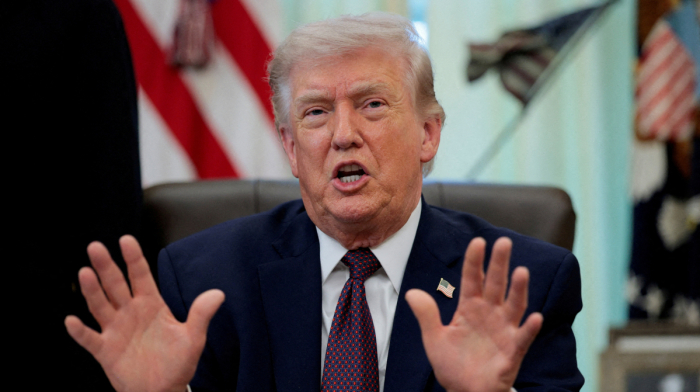
U.S. President Donald Trump on Monday told reporters that Iran could be taken out in one night, "and that night might be tomorrow night," warning Tehran it had to make a deal by Tuesday night or face wider bombing raids.
The crew of Artemis II mission are entering a pivotal phase of their journey, as they prepare to swing around the Moon and head back towards Earth. Now on the fifth day of their 10-day mission, the four astronauts are already witnessing views no human has ever seen.
U.S. President Donald Trump threatened Iran's energy and transport infrastructure in a social media post containing expletives on Sunday (5 April), as he seperately gave Iran a deadline of Tuesday to reopen the Strait of Hormuz.
A new proposal to end hostilities between the United States and Iran could come into effect as soon as Monday, potentially reopening the vital Strait of Hormuz, a source familiar with the plan said on Monday.
Oil prices rose sharply on Monday as fears deepened over potential supply shortages caused by the ongoing conflict in the Middle East, unsettling global energy markets and the row over the Strait of Hormuz, raising concerns for consumers and businesses alike.
U.S. Vice President JD Vance has travelled to Hungary in a show of support for Prime Minister Viktor Orbán, as the country prepares for what is expected to be a tightly fought parliamentary election.
As Hungary approaches a crucial vote, younger citizens who grew up under Prime Minister Viktor Orbán are increasingly backing the opposition, with some saying they may leave if he secures another term.
Greek Prime Minister Kyriakos Mitsotakis has urged EU prosecutors to speed up their probe into politicians from his party who are under investigation for fraud. The EU has asked to investigate 11 conservative MPs who are currently protected by parliamentary immunity.
In a move highlighting growing friction between global trade and digital retail, China on Monday issued new guidance for its rapidly expanding e-commerce sector.
North Korea's test of a solid-fuel rocket engine is intended for intercontinental ballistic missiles (ICBM) built with carbon fibre to extend range and allow for delivery of heavier and possibly multiple warheads, South Korean lawmakers said on Monday.
You can download the AnewZ application from Play Store and the App Store.
What is your opinion on this topic?
Leave the first comment