live Ukraine-Russia war: Sweden, Finland scramble jets to intercept Russian aircraft
Finland and Sweden deployed fighter aircraft on Thursday after a group of Russian military planes was detected over the Gulf of Finland, the Finnis...
As temperatures soared past 40°C in late July, Chongqing residents sought relief in subway stations, rivers, and bomb shelters, prompting a red alert amid record-breaking heat.
Temperatures above 40°C (104°F) have scorched Chongqing, the southwestern Chinese city famed for its spicy hotpot and neon-lit skyline, prompting residents to find creative ways to stay cool.
“It’s just getting hotter,” said 60-year-old Liu Fengying, who spent the afternoon playing cards and sharing snacks with around 100 retirees inside a cool, air-conditioned subway entrance.
“There’s no better way to escape the heat. Even with the AC set to 17°C last night, it was still unbearable,” she added.
The extreme heat gripping China has pushed electricity demand to record highs, surpassing 1.5 billion kilowatts, with July alone seeing four new records set.
Chongqing raised its heat alert to the highest red level on Thursday after a full week of 40°C-plus days. Forecasters say 21 of the city's 38 districts could see temperatures reach 43°C, with 44°C expected on Sunday.
Normally, the city of nearly 32 million rarely experiences July temperatures above 39°C – already considered extreme by global standards. This year, the number of days above 35°C since May has been twice the usual average.
Still, many locals are taking it in stride.
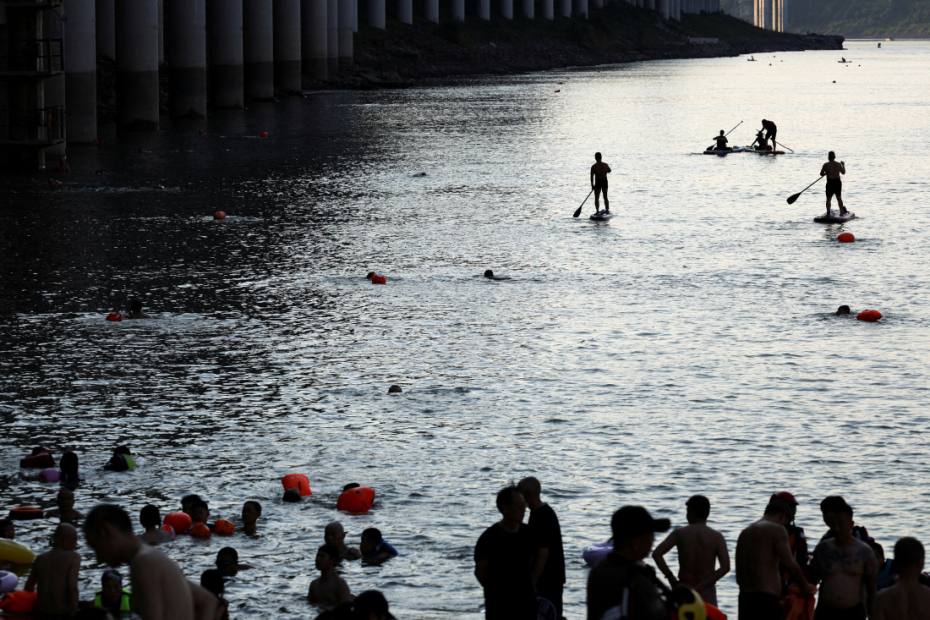
Xie, a 79-year-old resident, was among a group of swimmers cooling off in a Yangtze River tributary at sunset.
“Chongqing has always been one of China’s furnace cities, but we have the river,” he said before diving in.
Elsewhere, 36-year-old Qiu Xianhui and his friends braved the heat for a hotpot dinner in a former bomb shelter-turned-restaurant, where the underground air stays naturally cool.
“We’re used to temperatures above 40°C. This is nothing new for us,” he said.

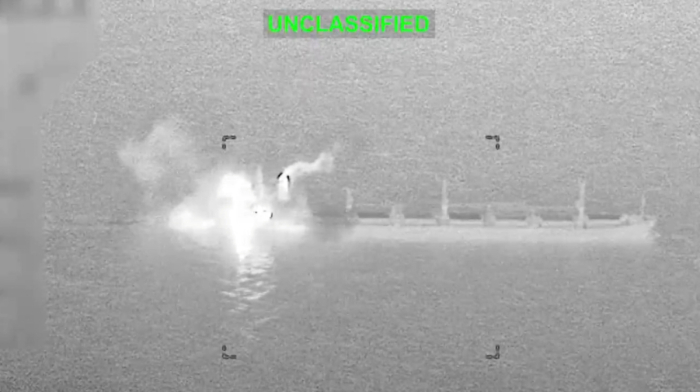
Shipping traffic through the Strait of Hormuz remained low on Thursday, as Iran reiterated that it will neither enter into new negotiations with the United States nor re-open the Strait as long as its conditions are not met, despite recent indirect talks in New York mediated by Qatar.
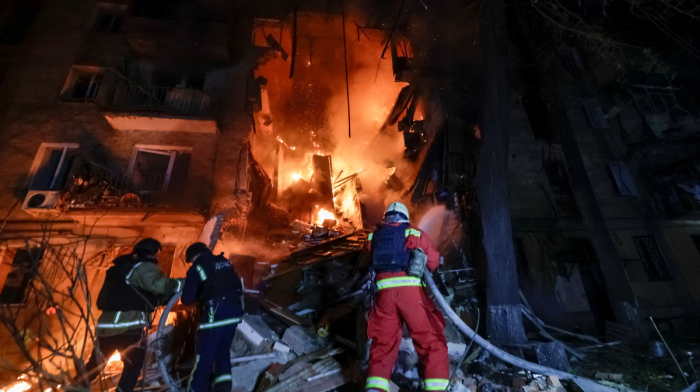
As the Ukraine war is highlighted by some leaders during the United Nations' 81st General Assembly meeting in New York, Russian forces attacked the Ukrainian capital Kyiv early on Thursday with ballistic missiles, killing two people and injuring six, Mayor Vitali Klitschko said.
The 81st UN General Assembly continues in New York on Wednesday, with another day of high-level speeches and diplomatic meetings. The wars in the Middle East and Ukraine, global security and international cooperation remain at the centre of discussions.
The 81st UN General Assembly has wrapped up its third day in New York on Thursday, with world leaders delivering high-level speeches and holding diplomatic meetings.
Saudi Arabia, Türkiye and Pakistan will hold an urgent high-level meeting under a joint defence pact to discuss ways to support the kingdom amid attacks by Yemen's Iran-aligned Houthis. The meeting comes as Tehran seeks to distance itself from the rapid advance of its Houthi allies.
Finland and Sweden deployed fighter aircraft on Thursday after a group of Russian military planes was detected over the Gulf of Finland, the Finnish Air Force reported on Friday (25 September).
The Middle East arrived at the United Nations this week with the consequences of a war that is no longer contained to one front. From Israel and Iran to Syria and Yemen, leaders have used the General Assembly to set out competing positions on the situation in the region.
Here’s your AnewZ Daily Brief for 25 September 2026, with five key developments from the third day of the 81st United Nations General Assembly in New York.
Xi Jinping touched down at Joint Base Andrews in Maryland on Wednesday evening to a welcome that was fairly unprecedented. President Donald Trump was there on the tarmac to greet him personally, which is something no sitting U.S. president had done for a visiting foreign leader in six decades.
The U.S. Senate narrowly rejected a resolution on Thursday that would have required President Donald Trump to end the war in Iran or seek congressional authorisation, as Democrats sought to put Republicans on the record over the increasingly unpopular conflict ahead of November's midterm elections.
You can download the AnewZ application from Play Store and the App Store.
What is your opinion on this topic?
Leave the first comment