Ukraine-Russia war: Marco Rubio set to meet Russian Foreign Minister Lavrov
U.S. Secretary of State Marco Rubio is set to meet Russian Foreign Minister Sergey Lavrov in New York on Wednesday, as Washington pushes for an end...
Tensions between Thailand and Cambodia have eased after a ceasefire ended five days of deadly border clashes, but military talks remain delayed and Bangkok plans to report violations to the U.S. and China.
The Thai and Cambodian militaries have agreed to halt any further troop deployments along their shared border, following a ceasefire that brought an end to five days of intense conflict, a Cambodian official confirmed on Tuesday.
Lim Menghour, Director-General of the Commission on Foreign Affairs and International Cooperation of Cambodia's National Assembly, told Reuters that deploying international observers will be essential to ensuring the ceasefire holds.
Thailand intends to brief the U.S. and China—key mediators of the unconditional truce about alleged ceasefire violations by Cambodian forces at five locations along the border. These reports have emerged since the truce took effect at midnight on Monday, according to government spokesperson Jirayu Huangsap.
Although the Thai military responded in kind to Cambodian provocations, acting Prime Minister Phumtham Wechayachai emphasized that the situation is no longer escalating.
“There is no escalation,” he told reporters. “Right now things are calm.”
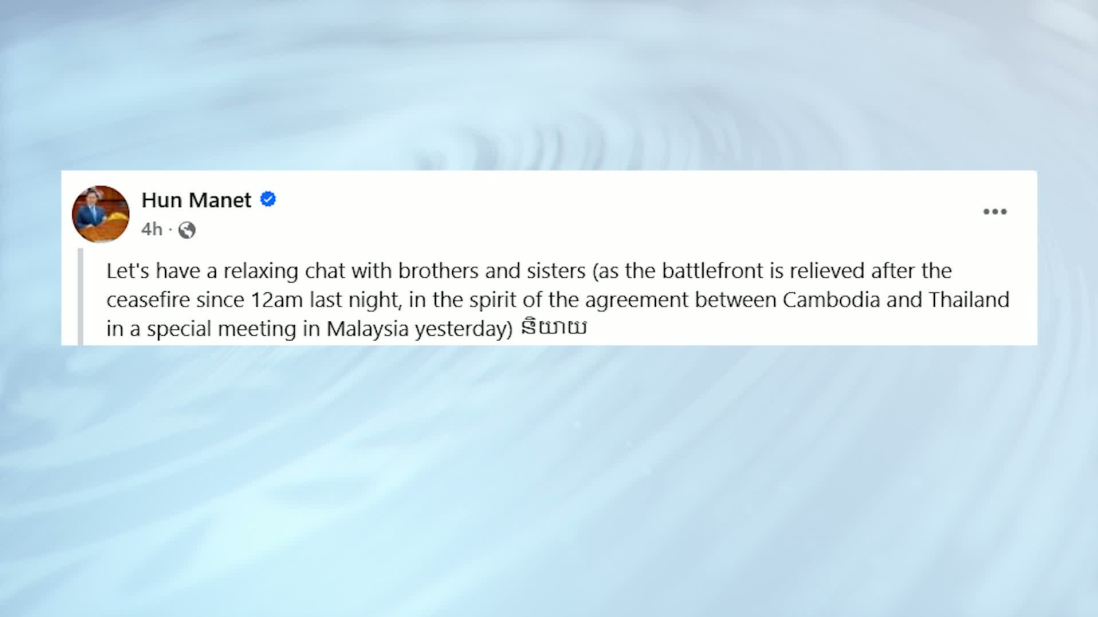
On the Cambodian side, Prime Minister Hun Manet stated in a Facebook post that “the frontline has eased since the ceasefire at 12 midnight.”

While some regional commanders held initial talks, military leaders from the most heavily contested border zones have not yet met. A meeting scheduled for Tuesday morning was delayed with no new time set.
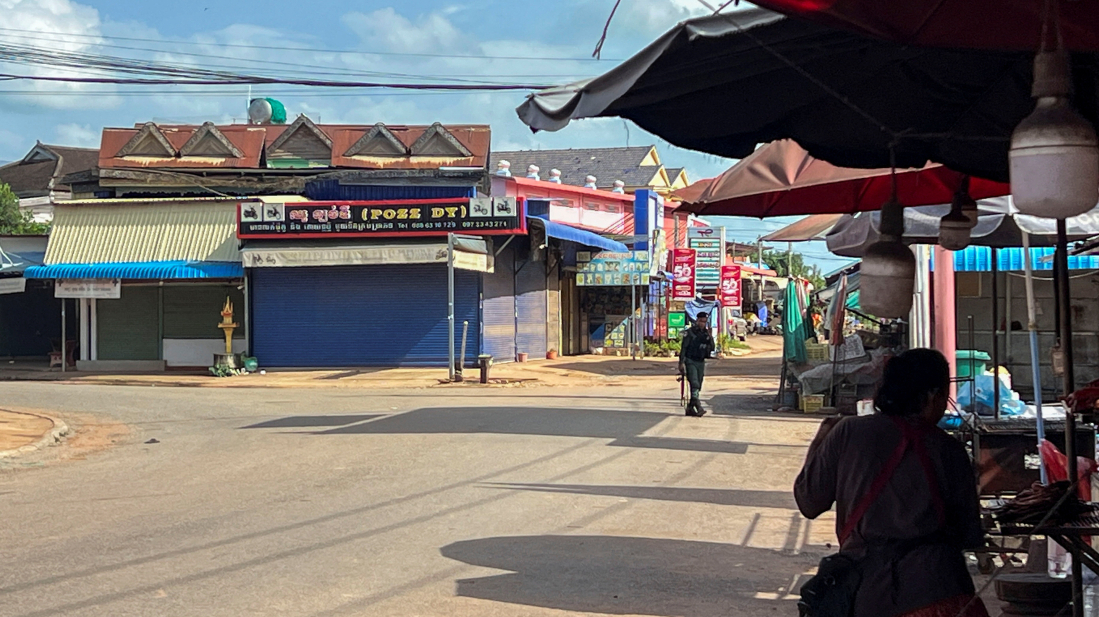
Despite the tension, daily life resumed in areas near the conflict zone. Streets in Thailand’s Sisaket province reopened, and locals like shop owner Chaiya Phumjaroen expressed relief at the ceasefire, hoping it would bring long-term stability.
"I am very happy that a ceasefire happened," he said. "If they continue to fight, we have no opportunity to make money."
Meanwhile, U.S. President Donald Trump warned that ongoing conflict would stall U.S. trade talks, which are crucial as both countries face 36% tariffs on exports.
Thailand’s finance minister, Pichai Chunhavajira, announced that trade talks with Washington are expected to conclude before 1 August, and that the final tariffs may be lower than the originally proposed rate.

U.S. President Donald Trump is addressing the UN General Assembly as world leaders gather in New York for the 81st session. Conflicts in the Middle East and Ukraine, global security and diplomacy set to dominate the event.
Ukrainian President Volodymyr Zelenskyy said Kyiv was ready to halt strikes on Russian energy facilities if Moscow stops targeting Ukraine’s energy sector, critical infrastructure, and food exports, as he prepared to meet U.S. President Donald Trump in New York.
While addressing the 81st session of the UN General Assembly, U.S. President Donald Trump said he believes Washington and Tehran will reach a deal after the U.S. midterm elections.
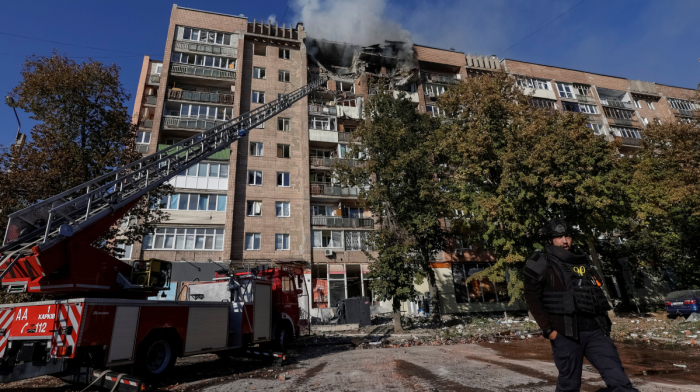
U.S. Secretary of State Marco Rubio is set to meet Russian Foreign Minister Sergey Lavrov in New York on Wednesday, as Washington pushes for an end to the war in Ukraine and Kyiv and Moscow continue to strike energy infrastructure.
U.S. President Donald Trump said his team held a three-hour meeting with an Iranian delegation in New York that he described as “very good” and “productive”, with another round of talks scheduled soon.
U.S. Secretary of State Marco Rubio is set to meet Russian Foreign Minister Sergey Lavrov in New York on Wednesday, as Washington pushes for an end to the war in Ukraine and Kyiv and Moscow continue to strike energy infrastructure.
South Korean President Lee Jae Myung and U.S. President Donald Trump welcomed “significant progress” in discussions on strategic investment projects on the sidelines of the United Nations General Assembly, Seoul's presidential office said on Wednesday.
Here’s your AnewZ Daily Brief for 23 September 2026, featuring five key highlights from the first day of the 81st United Nations General Assembly in New York.
Taiwan and human rights are “red lines” for China that cannot be crossed, the country's ambassador to the U.S. warned on Wednesday, striking a firm tone ahead of this week's leadership summit in Washington.
The Trump administration plans to set a refugee admissions ceiling of 17,500 over the next 12 months, with the programme expected to consist primarily of South Africans from the white Afrikaner minority, according to a notice sent to Congress on Tuesday, 22 September.
You can download the AnewZ application from Play Store and the App Store.
What is your opinion on this topic?
Leave the first comment