France calls fight against Islamic State ‘absolute priority’ during Syria talks
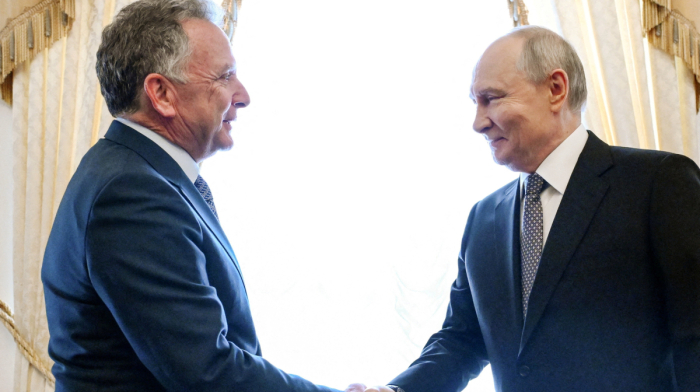
France’s “absolute priority” remains the fight against the Islamic State (IS) group, Foreign Minister Jean-Noël Barrot said on Thursday (5 Febr...
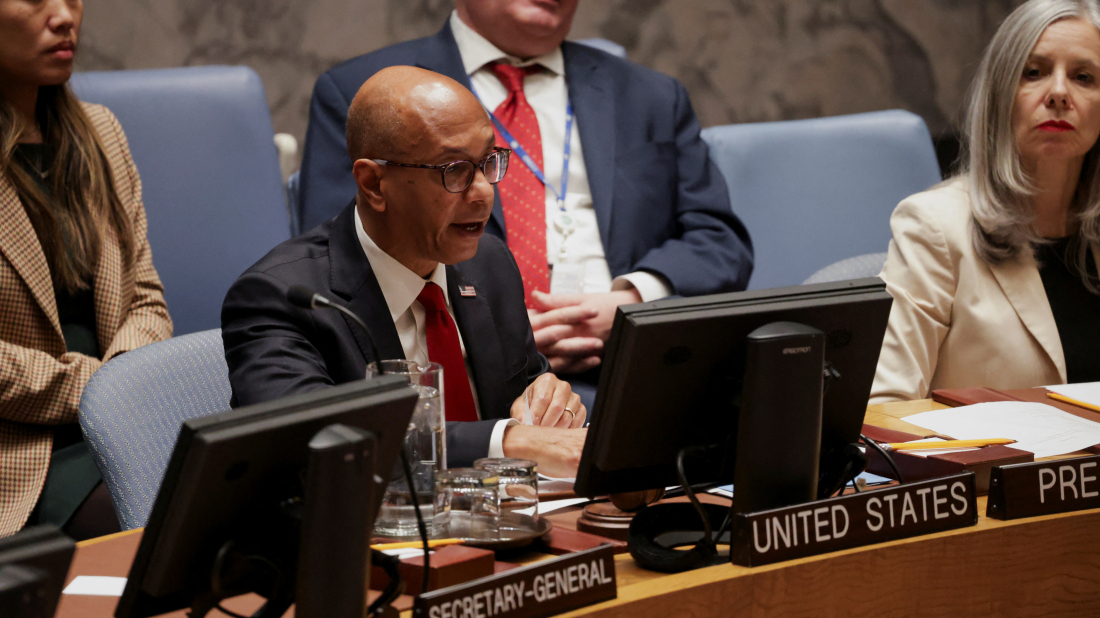
The United Nations Security Council met to address the worsening crisis in Syria, urging for a swift political resolution. Representatives from China and the UK emphasized the need for global cooperation and an inclusive process to prioritize the interests of the Syrian people following the collapse
At the request of Russia, the United Nations Security Council convened on Monday for a closed-door meeting to address the rapidly escalating situation in Syria. Prior to the meeting, several council members shared their nations' positions, emphasizing the urgency of a political resolution to the crisis.
Fu Cong, China’s permanent representative to the United Nations, stressed the importance of stabilizing Syria as soon as possible.
"We are following the situation very closely and we want to see the situation stabilize as soon as possible. And we do hope that an inclusive political process can be initiated as soon as possible. And the factions and parties in Syria should take the interests of the people as their priority," Fu stated.
In addition to China's concerns, James Kariuki, the United Kingdom’s Deputy Permanent Representative to the UN, highlighted the significant diplomatic efforts underway. He underscored the importance of collaboration among key global and regional actors. Kariuki emphasized that these efforts are crucial for supporting the Syrian people’s aspirations for a better future.
"All of these things require a lot of actors, so there's been a huge amount of diplomacy over the weekend with phone calls and meetings. So I think there's a lot of diplomacy going on. It needs to include the Big Five, it needs to include countries of the region. Ultimately, it's about Syrian people and getting behind them and their aspirations for a better future," Kariuki explained.
The collapse of President Bashar al-Assad's regime marks the end of a prolonged civil war in Syria. However, despite this significant shift, the path to peace remains uncertain.

Iran’s Islamic Revolutionary Guard Corps (IRGC) unveiled a new underground ballistic missile base on Wednesday (4 February), just over a day before the start of mediated nuclear negotiations with the United States, slated for Friday in Oman.
Rivers and reservoirs across Spain and Portugal were on the verge of overflowing on Wednesday as a new weather front pounded the Iberian peninsula, compounding damage from last week's Storm Kristin.
Morocco has evacuated more than 100,000 people from four provinces after heavy rainfall triggered flash floods across several northern regions, the Interior Ministry said on Wednesday.
The World Health Organization has added the Nipah virus to its list of the world’s top 10 priority diseases, alongside COVID-19 and the Zika virus, warning that its epidemic potential highlights the global risk posed by fast-spreading outbreaks.
Uzbekistan is accelerating plans to expand uranium production and deepen international nuclear cooperation, positioning the sector as a pillar of long-term industrial growth and resource security.
Security services say they have now rescued all 166 worshippers who were kidnapped by gunmen during attacks on two churches in northern Nigeria last month, a Christian group said on Thursday (5 February).
The U.S. military said Washington and Moscow have agreed to reestablish high-level military-to-military dialogue following talks in Abu Dhabi. The move could signal a step toward normalising some ties between the United States and Russia.
U.S. President Donald Trump gave his “complete and total endorsement” of Japanese Prime Minister Sanae Takaichi on Thursday (5 February) ahead of Japan’s national election on Sunday, backing the country’s first female premier as she seeks a fresh mandate for controversial spending plans.
Diplomacy remains U.S. President Donald Trump’s first choice in dealing with Iran, and he is prepared to wait and see whether a deal can be reached at the high-stakes talks, the White House said on Thursday (5 February).
The U.S. and China are locked in a growing struggle over critical minerals, the materials that power everything from electric vehicles and microchips to missiles and advanced radar systems, as both sides move to secure control over supply chains that underpin economic and military power.
You can download the AnewZ application from Play Store and the App Store.
What is your opinion on this topic?
Leave the first comment