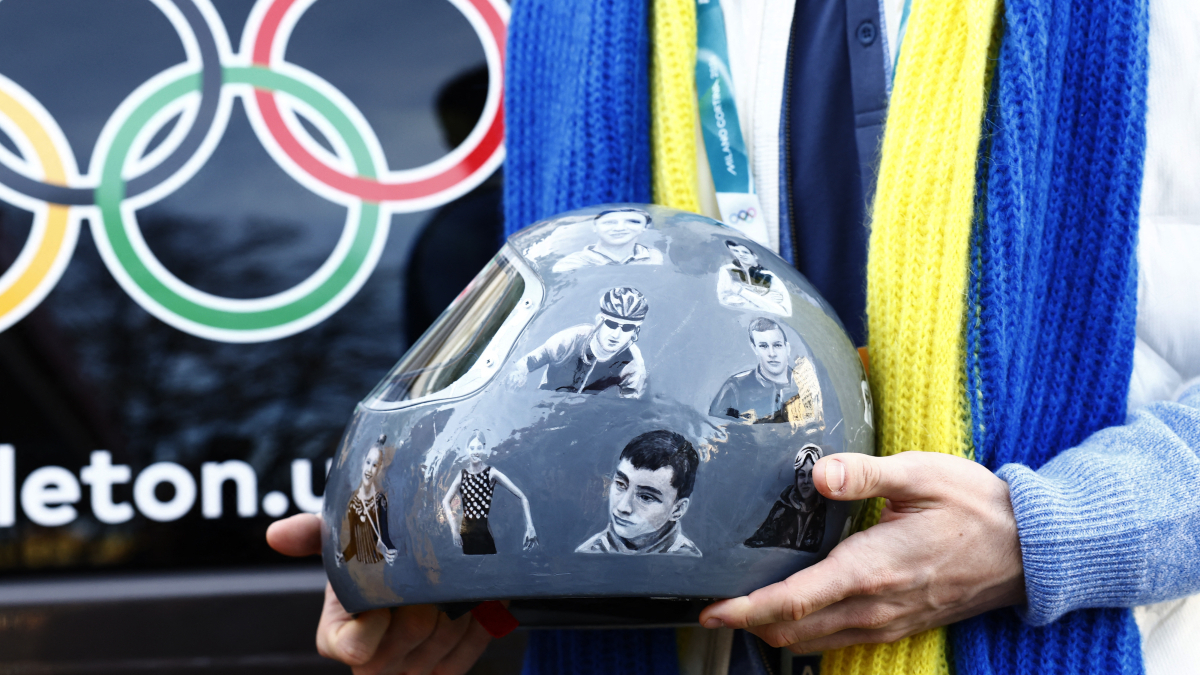
Ukrainian President Volodymyr Zelenskyy has awarded skeleton racer Vladyslav Heraskevych the Medal of Freedom. The athlete was disqualified from the Winter Olympics over his “helmet of remembrance” honouring Ukrainian sportsmen killed since Russia’s invasion.
Zelenskyy and Heraskevych met on the sidelines of the Munich Security Conference, where the president praised the athlete’s stance and described it as the “correct Ukrainian position”.
“With great respect to you and, of course, to all the Olympians who supported you and your position,” Zelenskyy said. “Medals are important for Ukraine and for you. But it seems to me that the most important thing is who you are.”
Footage from the meeting showed Zelenskyy examining the helmet before presenting Heraskevych with the state honour. The two later shook hands following the ceremony.
Olympic controversy
The 27-year-old athlete had been training in Italy with a helmet displaying the names of more than two dozen Ukrainian athletes who have died since the start of Russia’s full-scale invasion.
He was barred from competing in the Olympic skeleton event and was initially informed minutes before the competition that he would be stripped of his accreditation by the International Olympic Committee (IOC).
Heraskevych described the IOC’s decision as discriminatory.
“It was a purely discriminational decision by the IOC, and I should be there,” he said. “But at the same time, I understand that this scandal has united people around the world about our problem and about the sacrifice of these great athletes, and I believe this goal is much more important than any medal.”
He added that he had not violated any rules.
“I know that I didn’t violate any rules, so I’m not violating the Olympic Charter or something else. I really value the Olympic Charter,” he said.
The athlete stressed that the Olympic movement has traditionally stood for peace and humanity.
“The main focus and main goal of the Olympics has always been peace and humanity,” he said. “Ukrainians, like many other people around the world, want to have joy from sports. They want friendship in their lives and peace.”
Heraskevych said he did not understand why the situation had escalated into a scandal, but vowed to continue defending his position.
“Definitely we will fight for our truth,” he said.










What is your opinion on this topic?
Leave the first comment