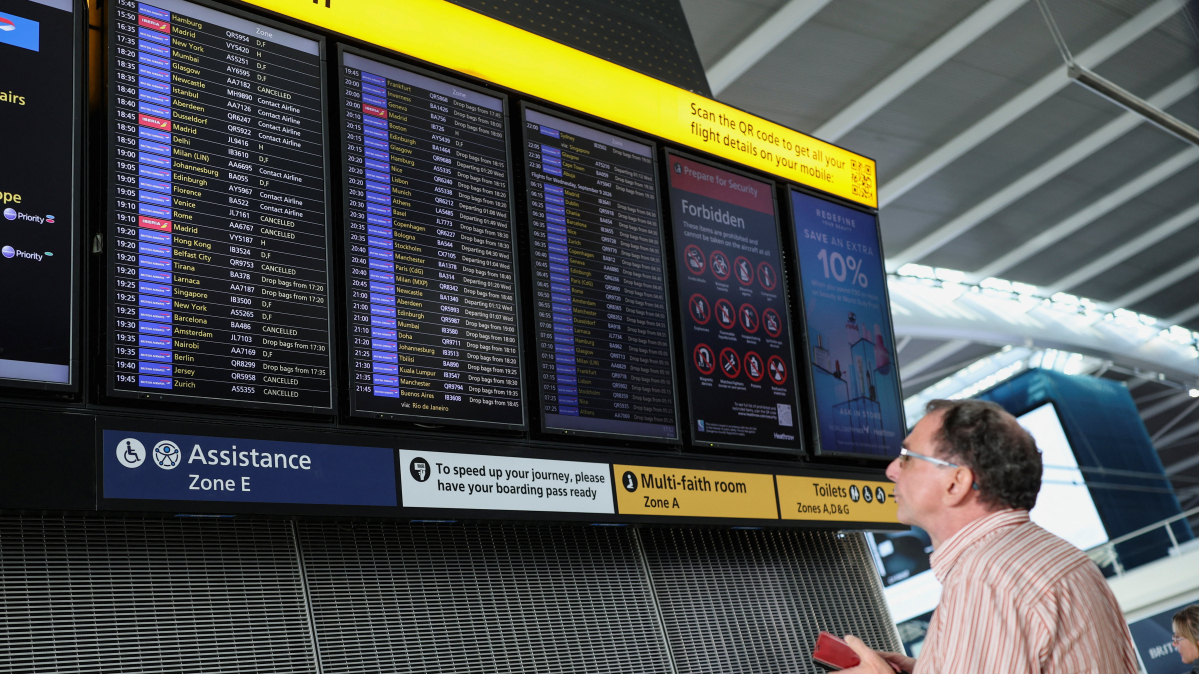
Flights across some of Britain's busiest airports were thrown into chaos on Tuesday after a technical failure at air traffic control provider NATS disrupted the system used to process flight data.
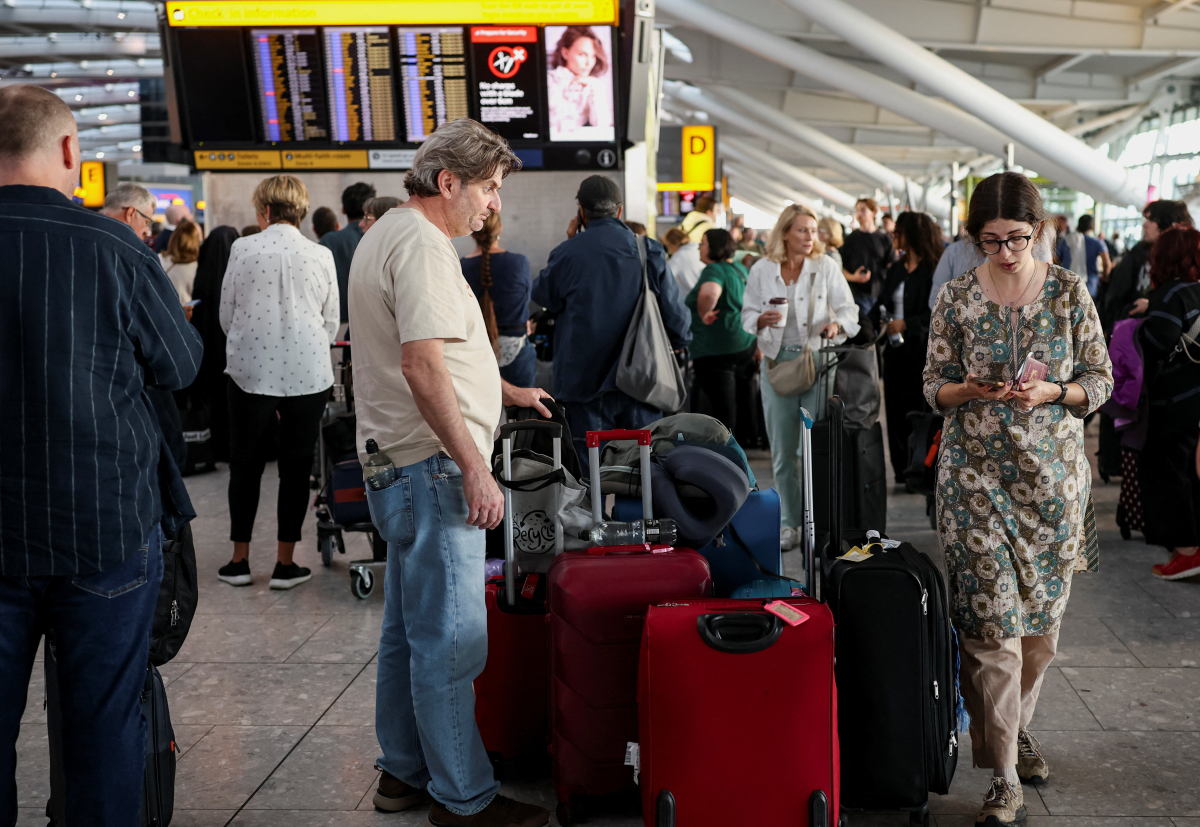
More than 1,000 flights were cancelled and hundreds more delayed, leaving passengers facing long waits and uncertain travel plans.
The disruption also reignited concerns over the resilience of Britain's aviation infrastructure, three years after a separate NATS failure caused widespread disruption across the country.
NATS said the problem had been fixed by 9:34 pm local time and stressed that “safety was not compromised”. But the knock-on effects continued long after the system was restored.
Heathrow bears the brunt
Flight-tracking data showed about 1,300 flights to and from UK airports were cancelled on Tuesday, according to Flightradar24. A further 177 cancellations had already been recorded for Wednesday, almost all at Heathrow.
Heathrow, Britain's largest airport, said it had suspended arrivals for the rest of Tuesday, although departures later resumed. The airport warned passengers that disruption would continue as airlines worked through the backlog.
British Airways was among the carriers worst affected at Heathrow, cancelling 16 of its 333 scheduled departures, according to aviation analytics company Cirium.
”The severity of the issue means there will be a significant knock-on impact for customers and colleagues,” the airline said.
Other major airports, including Gatwick, London City, Luton, Edinburgh and Bristol, also reported significant delays and cancellations.
Airlines turn up pressure on NATS
The disruption prompted an unusually sharp response from airlines, with some questioning whether NATS was capable of reliably managing a critical part of Britain's transport infrastructure.
Ryanair said around 150,000 passengers were affected by delays of up to eight hours and that it cancelled more than 200 flights.
The airline called for NATS chief executive Martin Rolfe to resign, accusing the company of repeated failures.
”How many more failures do passengers have to suffer before ... Martin Rolfe accepts responsibility for his repeated mismanagement and resigns?” Ryanair Chief Operating Officer Neal McMahon said.
Wizz Air also called for urgent reform, arguing that passengers and airlines should not repeatedly have to absorb the cost of failures in the air traffic control system.
”A critical national infrastructure provider should not repeatedly bring the aviation system to a standstill. NATS is simply not fit for purpose in its current form,” the airline said.
Investigation is underway - NATS
NATS said its flight data processing system had been affected by the fault and that restoring normal operations had taken longer than expected.
”Recovery from today’s system issue has taken longer than we had hoped. Our system issue is now resolved, we are operating normally and working as hard as possible to clear the backlog of flights,” NATS said.
The company later described the recovery as “very complex” and said it had created difficulties across the wider aviation network.
Rolfe told Sky News that investigators had not yet established the precise cause of the failure.
”We don't have an idea yet of exactly what went wrong,” he said.
Tuesday's incident comes three years after a major NATS flight-plan processing failure brought much of Britain's aviation network to a standstill.
The 2023 outage caused extensive delays and cancellations, with airline bosses later estimating that it had cost carriers more than £100 million ($136 million) in refunds and compensation.
The Civil Aviation Authority said in 2024 that NATS needed to review its contingency arrangements following that incident.
There was another disruption in July last year, when a radar-related technical problem affected air traffic control operations for more than four hours at Heathrow and other major airports.
The CAA has said it would expect NATS to provide a full report on Tuesday's incident before deciding whether further action was needed to strengthen the reliability of the country's air traffic control system.
Read more travel news:


















What is your opinion on this topic?
Leave the first comment