UK, Canada, Germany and others condemn Israel's West Bank settlement plan
Countries including Britain, Canada, Germany and others on Wednesday condemned the Israeli security cabinet's approval of 19 new settlements in the oc...
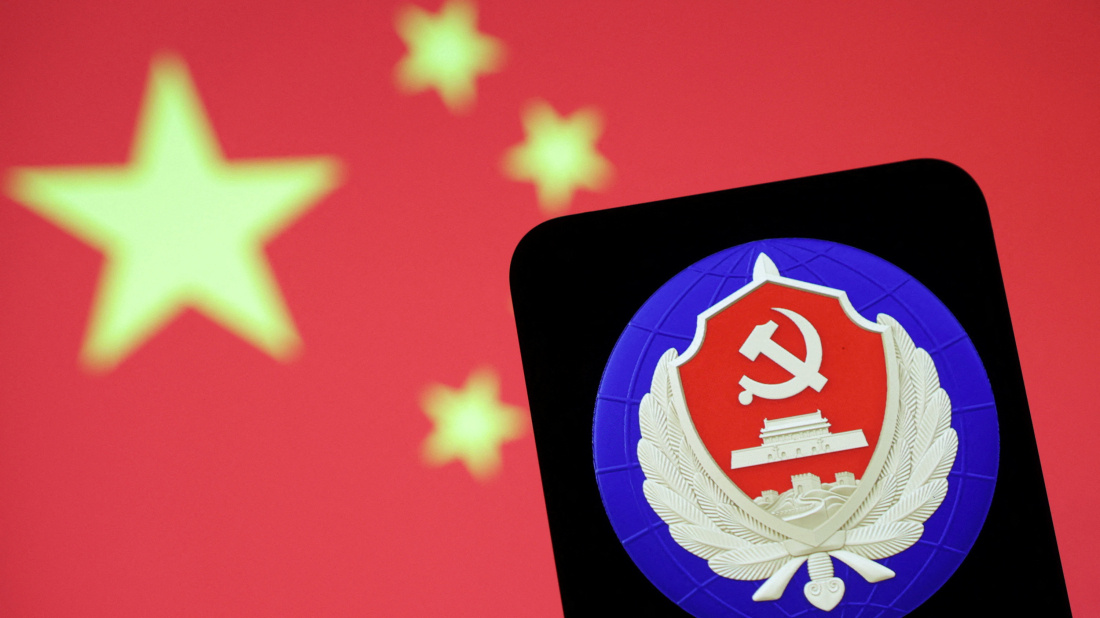
China has accused the United States of stealing sensitive data and infiltrating its National Time Service Centre, warning that such breaches could have disrupted communications, financial systems, power supplies, and the international standard time network.
In a statement posted on its WeChat account on Sunday, China’s Ministry of State Security alleged that the U.S. National Security Agency (NSA) had conducted a prolonged cyberattack against the National Time Service Centre.
According to the ministry, investigators uncovered evidence of stolen data and login credentials dating back to 2022, which were allegedly used to monitor staff mobile devices and network systems at the centre.
The ministry claimed that the NSA “exploited a vulnerability” in the messaging app of an unnamed foreign smartphone brand to gain access to employees’ devices in 2022.
The National Time Service Centre, part of the Chinese Academy of Sciences, is responsible for producing, maintaining, and distributing China’s official standard time.
The ministry also said that the U.S. carried out further attacks on the centre’s internal networks and attempted to target its high-precision ground-based timing systems in 2023 and 2024.
The U.S. embassy in Beijing did not respond directly to the allegations but countered that China-based cyber actors have compromised major American and global telecommunications networks to conduct extensive espionage operations.
“China remains the most active and persistent cyber threat to U.S. government, private-sector, and critical infrastructure networks,” a spokesperson for the embassy said in an email to Reuters.
The two countries have increasingly exchanged cyber-espionage accusations in recent years, each branding the other as its principal digital adversary.
The latest claims come amid escalating trade tensions, following China’s tighter controls on rare earth exports and Washington’s warning that it could impose additional tariffs on Chinese products.

Thailand and Cambodia both reported fresh clashes on Wednesday, as the two sides prepared to hold military talks aimed at easing tensions along their shared border.
Libya’s chief of staff, Mohammed Ali Ahmed Al-Haddad, has died in a plane crash shortly after departing Türkiye’s capital, Ankara, the prime minister of Libya’s UN-recognised government has said.
The U.S. State Department has authorised a potential Foreign Military Sale of Advanced Medium Range Air‑to‑Air Missiles (AMRAAM) to Denmark, aimed at bolstering the Scandinavian nation’s air defence capabilities, the Pentagon’s Defence Security Cooperation Agency said on Monday.
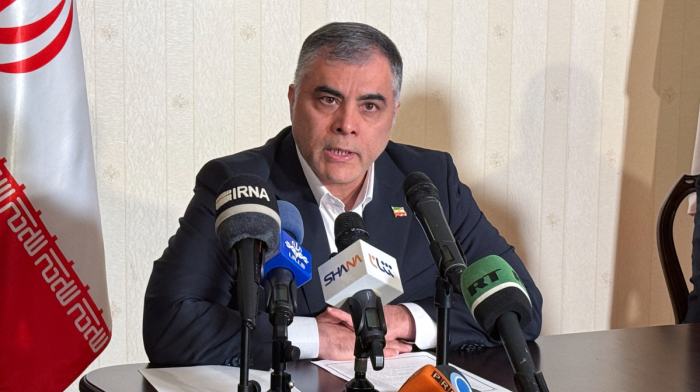
Afghanistan and Iran have signed an implementation plan to strengthen regulation of food, medicine, and health products based on a 2023 cooperation agreement.
Negotiations conducted with the United States and European nations, aimed at ending the nearly four-year war with Russia, were "very close to a real result," Ukrainian President Volodymyr Zelenskyy said on Monday.
China’s core artificial intelligence (AI) industry is projected to surpass 1.2 trillion yuan in 2025 (about $170 billion), up from more than 900 billion yuan in 2024, according to a new industry assessment.
Time Magazine has chosen the creators behind artificial intelligence as its 2025 Person of the Year, highlighting the technology’s sweeping impact on global business, politics and daily life.
Children are forming new patterns of trust and attachment with artificial intelligence (AI) companions, entering a world where digital partners shape their play, their confidence and the conversations they no longer share with adults.
The International Robot Exhibition (IREX) opened in Tokyo on 3 December, bringing together visitors to explore robotics applications for industry, healthcare, logistics, and everyday life.
A bipartisan group of U.S. senators, including prominent Republican China hawk Tom Cotton, introduced the SAFE CHIPS Act on Thursday, aiming to prevent the Trump administration from easing restrictions on China’s access to advanced artificial intelligence (AI) chips for a period of 2.5 years.
You can download the AnewZ application from Play Store and the App Store.
What is your opinion on this topic?
Leave the first comment