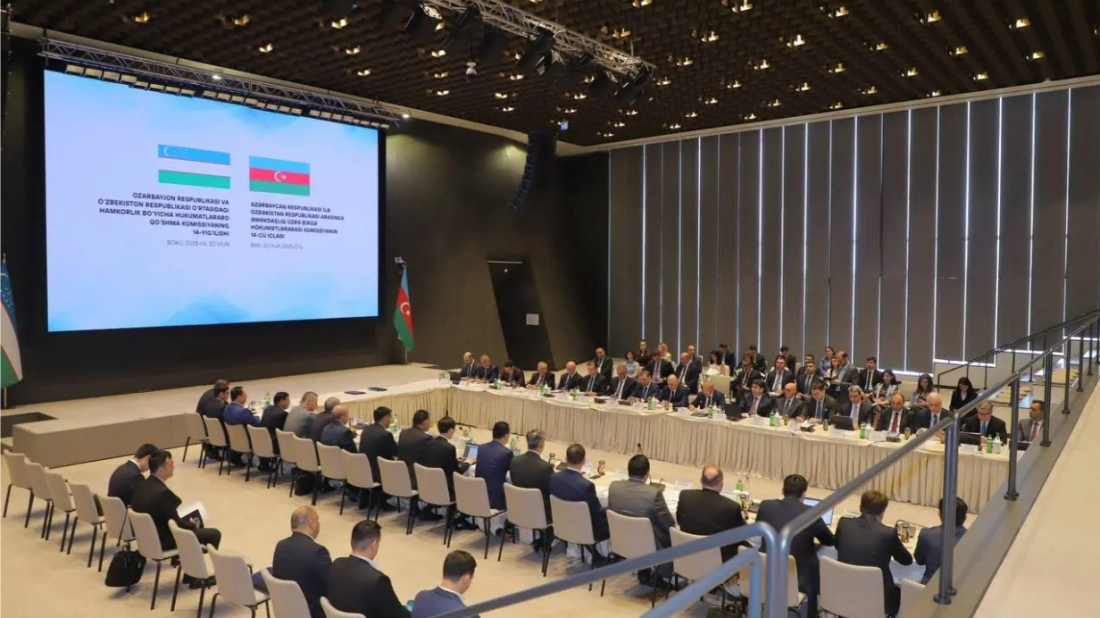
Baku hosted 14th meeting of the Joint Intergovernmental Commission on Cooperation between the Republic of Uzbekistan and the Republic of Azerbaijan. The delegations were headed by Uzbekistan’s Minister Laziz Kudratov and Azerbaijan’s Minister of Economy Mikayil Jabbarov.
On Friday, Minister Laziz Kudratov participated in series of events focused on strengthening and expanding bilateral trade, economic, and investment cooperation between Uzbekistan and Azerbaijan.
President of the Republic of Azerbaijan Ilham Aliyev received the Uzbek delegation and noted that Laziz Kudratov’s visit provided a valuable opportunity to discuss key issues on the bilateral agenda. The head of state praised the numerous joint projects underway between Azerbaijan and Uzbekistan, emphasizing that they reflect the strong and friendly relations between the two countries across all sectors.
Minister Kudratov said that President Mirziyoyev was preparing for an upcoming visit to Azerbaijan and has instructed the government to ensure the visit delivers concrete and practical outcomes.
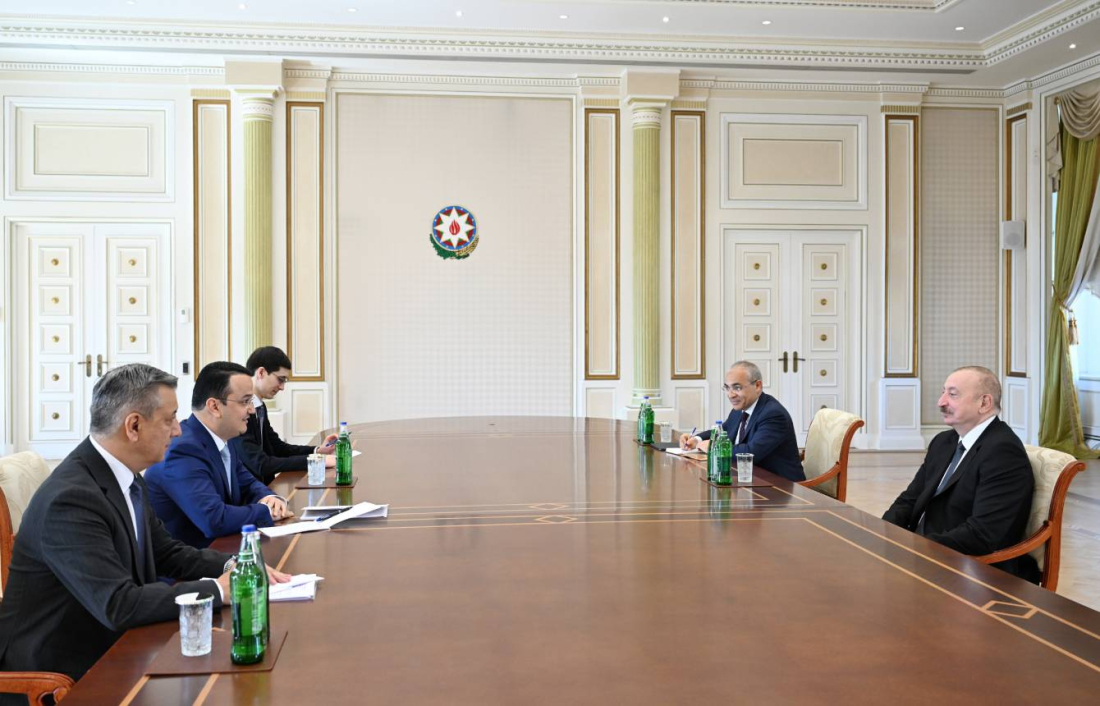
The talks highlighted the positive momentum in economic and trade relations, with discussions centered on deepening cooperation in industry, transport, and logistics, as well as exploring new joint projects.
As part of the business agenda, the 14th meeting of the Joint Intergovernmental Commission on Cooperation between Uzbekistan and Azerbaijan, along with the 3rd Azerbaijan-Uzbekistan Interregional Forum, took place in Baku on Friday.
The events were supported by the Ministry of Economy of Azerbaijan and the Ministry of Investment, Industry and Trade of Uzbekistan, and organized by the Export and Investment Promotion Agency of Azerbaijan (AZPROMO).
Discussions focused on key areas of collaboration, including trade and economic ties, industrial partnerships, and joint projects in transport, agriculture, and the food industry—core pillars of the strategic partnership between the two countries.
Mikayil Jabbarov stated that from January to May 2025, a trade turnover between Azerbaijan and Uzbekistan exceeded $200 million. He emphasized that efforts are continuing to boost exports, expand joint investment activities, and strengthen direct business ties. Jabbarov also highlighted plans to establish a Trade Representative Office of Azerbaijan in Uzbekistan.
The minister emphasized the broad potential for enhancing cooperation in key sectors, including trade, investment, industry, energy, transport, and transit, as well as business development in the Alat Free Economic Zone and the liberated territories. During the forum, Uzbek business representatives were invited to actively explore and capitalize on the business opportunities available in Azerbaijan.
The two sides highlighted the progress of joint projects in residential and tourism infrastructure development, as well as the establishment of a logistics center, and cotton and dairy clusters. The Azerbaijan-Uzbekistan Investment Company was commended for actively financing 15 projects totaling over $360 million.
A number of new initiatives were agreed upon, including: a Joint Action Plan to boost bilateral trade; an Industrial Cooperation Program for 2025–2026; a two-year schedule of mutual trade missions; the opening of trade houses and showrooms in Tashkent and Baku; the creation of a bilateral Business Council; and measures to enhance interregional transport corridors. Additional areas of cooperation will include sericulture, cotton production, and dairy processing.













What is your opinion on this topic?
Leave the first comment