U.S. announces $3.6m in aid for flood-hit Nepal as rescue efforts continue
The United States has announced more than $3.6 million in humanitarian assistance for Nepal following devastating floods that have killed at least ...
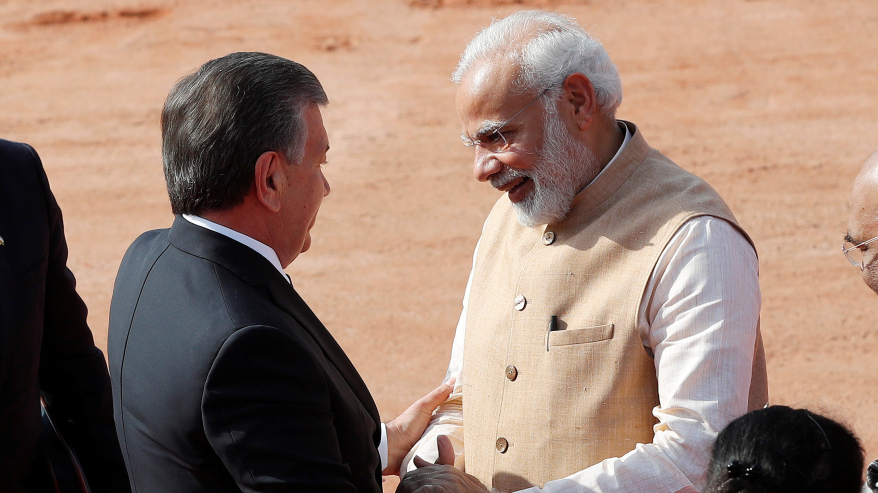
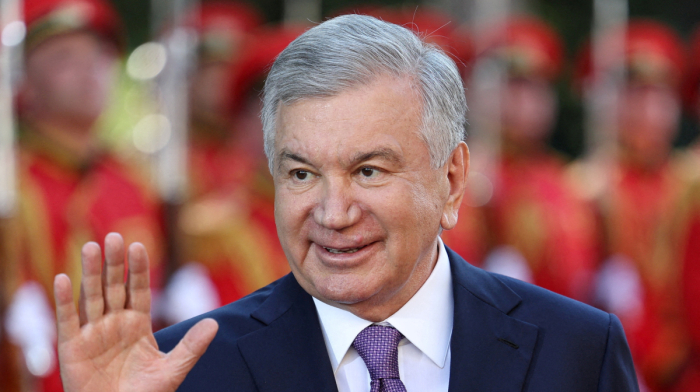
Indian Prime Minister Narendra Modi arrived in Uzbekistan on Saturday for a two-day state visit aimed at strengthening economic and strategic ties before travelling to neighbouring Kyrgyzstan for a Shanghai Cooperation Organization summit.
Uzbek President Shavkat Mirziyoyev welcomed Modi at Tashkent-Humo International Airport, where a guard of honour was held. The two leaders later visited Yangi Uzbekistan Park and laid flowers at the Independence Monument.
Modi and Mirziyoyev are due to hold delegation-level talks on Sunday, focusing on trade and investment, defence, digital connectivity, energy, education and people-to-people ties. Uzbekistan has said the talks will also cover healthcare, pharmaceuticals, agriculture, geology and other economic sectors, with a package of bilateral agreements expected to be signed.
The visit is Modi’s fourth to Uzbekistan and comes as the two countries seek to expand their strategic partnership.
Bilateral trade reached $1.3 billion in 2025, up around 33 per cent from the previous year, according to Indian government figures. The two sides agreed earlier this year to work towards doubling trade over the next three years.
Uzbekistan has also emerged as an important partner in India’s wider push to strengthen its presence in Central Asia, including through cooperation on energy, critical minerals, connectivity and security.
From Tashkent, Modi will travel to Bishkek for the 26th SCO summit on 31 August and 1 September, marking the organisation’s 25th anniversary.
Modi said ahead of the trip that India would promote its priorities of “security, connectivity and opportunity” and work with SCO members against terrorism, separatism and extremism.
The SCO includes India, China, Russia, Iran and several Central Asian states. Modi is also expected to hold bilateral meetings with other leaders on the sidelines of the gathering.
Iran is setting conditions for reopening the Strait of Hormuz, including an end to the war, the lifting of the U.S. blockade and sanctions. At the same time, Washington is stepping up economic pressure on Tehran through what the White House calls “Operation Economic Outcast.”
Mail sorting centres used by Nova Poshta, Ukraine's largest private postal company, were destroyed in Russian strikes overnight, the firm said. Elsewhere, four people were injured after drones struck an apartment building in Sevastopol, Crimea, according to the Moscow-installed governor.
Iranian Foreign Minister Abbas Araghchi accused U.S. government and Israel-aligned actors of manipulating energy markets to promote the war with Iran.
Russian strikes on the Kyiv region overnight killed 37 people, Ukrainian President Volodymyr Zelenskyy has said. Zelenskyy added that the Ukrainian capital was under "virtually nonstop attack" from drones.
The Israeli-U.S. invasion of Iran, which began on 28 February, entered its seventh month on Friday, as Tehran wrapped up a week of high-level visits the region, with officials from Pakistan, Oman and Qatar helping to negotiate a way out of the current stalemate in the conflict.
Central Asia is moving towards a more connected digital financial system, as rising cashless payments, expanding digital wallets and growing cross-border trade create demand for faster and cheaper ways to move money across the region.
Around five years ago, British prosecutors reportedly decided against pursuing war crime charges against Asma al-Assad, the then First Lady of Syria, because she was unlikely to return to the UK.
Central Asia is emerging as a new market for fintech investment, with Uzbekistan and Kazakhstan leading the region’s push to attract venture capital, develop startups and build digital financial infrastructure.
Russian President Vladimir Putin will travel to Kyrgyzstan next week to attend the Shanghai Cooperation Organization summit, where he is expected to hold a series of bilateral meetings with regional leaders.
Kazakhstan’s government has stepped down as the newly elected unicameral parliament, known as the Kurultai, begins its first session, marking the next stage of political restructuring under the country’s new Constitution.
You can download the AnewZ application from Play Store and the App Store.
What is your opinion on this topic?
Leave the first comment