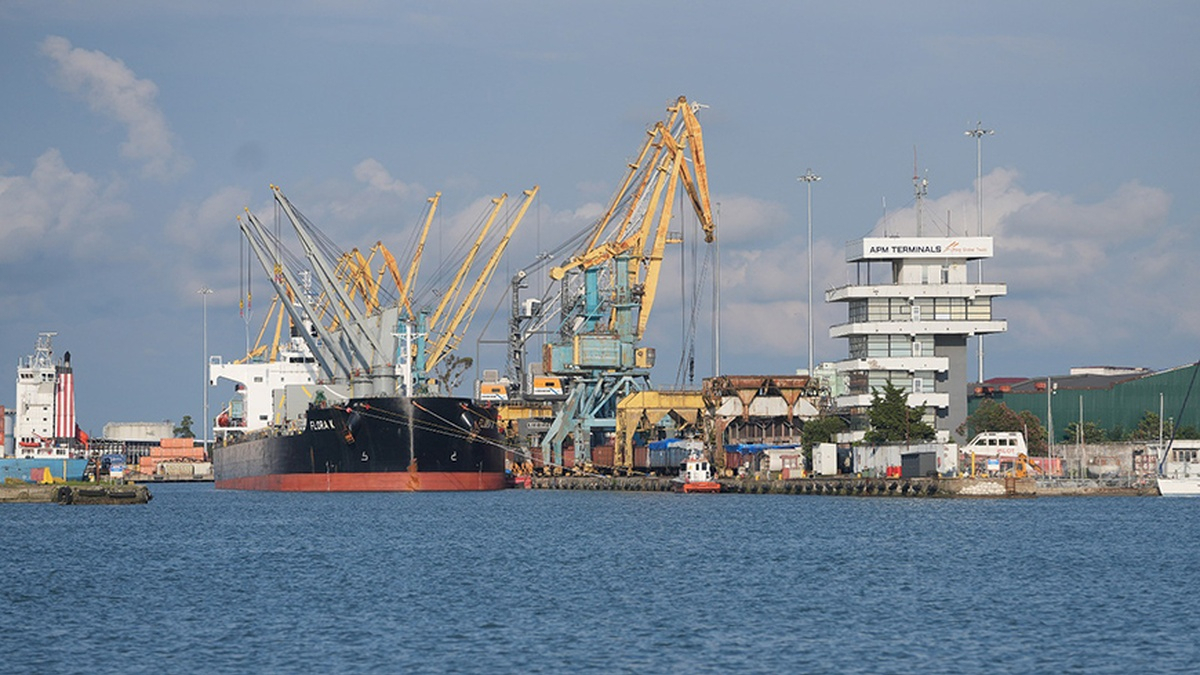
Georgian officials have returned from Rotterdam with new ideas for multimodal logistics, but after years of delays, the Anaklia Deepwater Port still faces significant challenges before it becomes a reality.
A working visit with a familiar backdrop
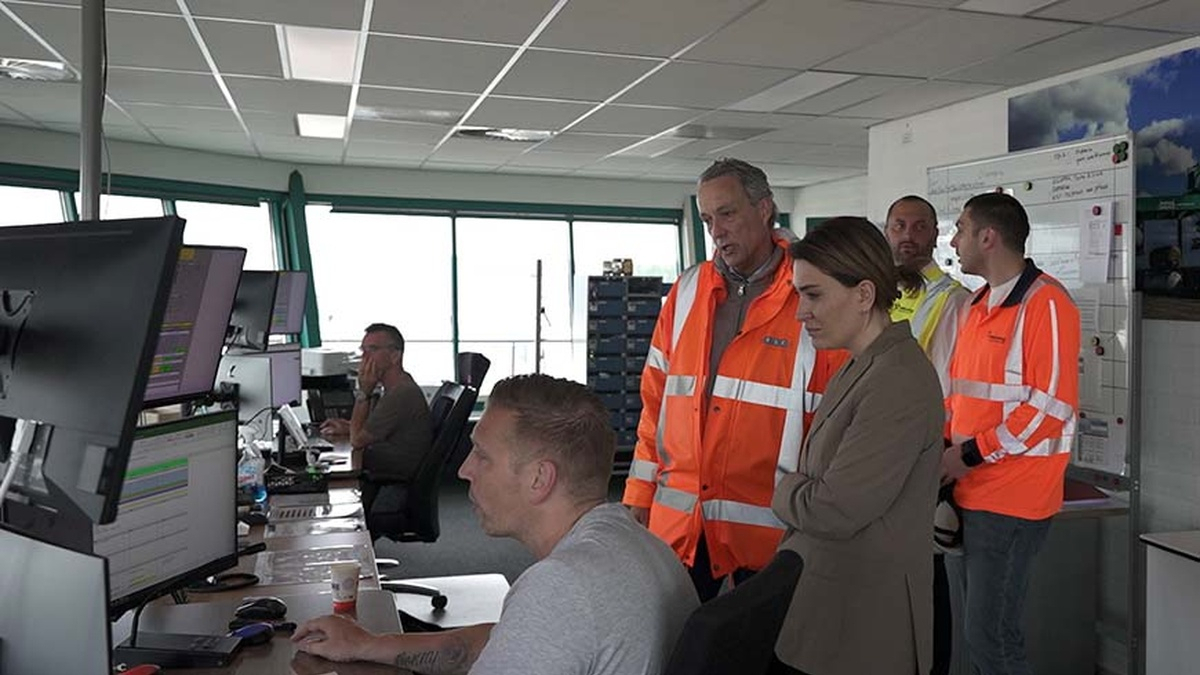
A delegation from Georgia's Ministry of Economy and Sustainable Development, led by Deputy Minister Tamar Ioseliani, visited the Port of Rotterdam to study how Europe's largest port operates its multimodal terminals. The delegation also included Ivane Abashidze, Director of the Maritime Transport Agency, and Zurab Sichinava, Director of Anaklia Sea Port.
The message from the Georgian side was clear: Anaklia should be more than just a seaport. Abashidze described the ambition as creating a hub where sea, rail and road transport are "effectively integrated" — a model he argued would strengthen Georgia's role on the Middle Corridor, the trade route linking Europe and Asia via the Caspian Sea and the South Caucasus.
Rotterdam operates under the so-called "Landlord" model, in which the port authority owns and manages the infrastructure while private operators run the terminals. Officials said learning from this system is central to reshaping Anaklia's master plan.
What was actually discussed?
Beyond the broader exchange of ideas, the visit focused on specific aspects of the project. The delegation met Royal HaskoningDHV, the engineering firm responsible for Anaklia's marine infrastructure design, to review progress on construction already under way, including the breakwater and dredging works designed to achieve an 18-metre depth.
Officials also met Port Consultants Rotterdam (PCR), the firm updating Anaklia's master plan. Discussions covered terminal layout, cargo flow forecasting, rail-port integration and a phased development strategy aligned with market demand rather than fixed capacity targets.
Ioseliani said the port's success depends on getting the master plan right so the site can be "effectively utilised" and aligned with market needs.
The other side of the story
Not everyone believes the latest developments represent meaningful progress. Tazo Datunashvili of the Strong Georgia–Lelo coalition used a briefing to challenge the government's latest timetable, which reportedly envisages construction being completed by 2029.
He pointed to a long record of missed deadlines, citing official commitments dating back to 2022. These included promises that work would begin in 2023, followed by revised targets of October 2023, March–April 2024 and June 2024, none of which were met.
Datunashvili also referred to the original Anaklia Development Consortium proposal, led by Mamuka Khazaradze and Badri Japaridze, which envisioned a 52-year development programme, up to 20,000 jobs and tens of billions of U.S. dollars in economic value.
He argued the repeated delays reflected a lack of political will rather than technical obstacles and called on the government to explain who is accountable for the project's lack of progress.
Reading between the two narratives
Both perspectives can hold true. Studying Rotterdam's operating model is a sensible and relatively low-cost step for a government seeking to modernise port planning. Multimodal integration is a defining feature of successful international ports, and Georgia stands to benefit from adopting proven practices.
However, study visits and consultancy meetings are not construction milestones, and Anaklia's history explains why scepticism remains. A project originally expected to open in 2020 is now centred on an updated master plan and a 2029 completion target, with active construction still largely confined to marine infrastructure.
For a project of such geopolitical importance, positioned at the heart of the Middle Corridor and central to Georgia's ambition of becoming a regional logistics hub, credibility will ultimately be measured by completed berths and moving cargo rather than overseas delegations and design reviews.














What is your opinion on this topic?
Leave the first comment