Pashinyan wins strong mandate as Armenia faces constitutional limits on peace process
People attend a campaign rally of the Civil Contract party, led by Prime Minister Nikol Pashinyan, ahead of the June 7 parliamentary election in Yerevan, Armenia, 5 June, 2026.
Armenia’s parliamentary election has strengthened Prime Minister Nikol Pashinyan’s mandate, with analysts linking the result to his post-Garabagh agenda and pro-Western direction. However, constitutional constraints remain a key obstacle to peace efforts with Azerbaijan.
Speaking to AnewZ, political analyst Eldar Hamzali said the vote was particularly significant as Armenia’s first regular parliamentary election in eight years, following a series of snap elections since 2018.
He said the election also reflected public support for Prime Minister Nikol Pashinyan’s post-Garabagh vision, after Yerevan effectively declared the conflict over.
“It was a test for Nikol Pashinyan and for Armenian society as well,” Hamzali said, adding that “at least half of the voters who went to polling stations have voted for this future.”
Election officials count ballots after voting concluded in the parliamentary elections in Yerevan, Armenia, on 7 June, 2026.
Anadolu Agency
Recounts unlikely to shift power balance
While some opposition groups have challenged results in individual precincts and filed complaints with the Central Electoral Commission, Arsen Kharatyan, founder of AliQ Media, told AnewZ's Guy Shone on Primetime that major changes remain unlikely.
Kharatyan added that even if a fourth party enters parliament after recounts, the ruling Civil Contract party would lose only a small number of mandates alongside other parties.
He also noted that discussions on constitutional change and referendums extend beyond parliament, arguing there are multiple mechanisms within Armenian society to initiate such processes.
“I’m not even sure that a referendum is part of or should be part of the discussion with regards to the peace agreement. [...] We have far more reaching goals as parties besides the constitutional change.”
The election result has also renewed attention on efforts to finalise a peace agreement between Armenia and Azerbaijan.
Kharatyan said the outcome removes uncertainty over political representation in negotiations.
“I don't see any challenge for the Armenia-Azerbaijan peace agreement signing,” he said, adding that Pashinyan has a governing majority and “has all the legal rights to sign the agreement.”
However, Hamzali pointed to constitutional constraints as a key obstacle in the process. He said Azerbaijan has repeatedly called for the removal of references to Armenia’s Declaration of Independence from the constitution’s preamble, arguing it contains territorial claims.
He added that “Armenia’s constitution requires a two-thirds parliamentary majority to initiate a referendum on constitutional amendments,” a threshold the ruling party currently lacks.
Azerbaijan’s Foreign Minister Jeyhun Bayramov has previously stressed the need to remove territorial claims from Armenia’s constitution.
Analysts say the election gives Pashinyan space to continue balancing closer ties with Europe while maintaining pragmatic relations with Russia.
Hamzali said Armenia remains economically dependent on Russia and cannot rapidly shift toward Europe. “Armenia needs time,” he said, noting that EU integration requires extensive reforms and standards alignment.
He added that Moscow is likely to tolerate Armenia’s current direction as long as core interests are not challenged.
“I think Russia will tolerate” Armenia’s current trajectory, he said, provided Yerevan avoids crossing major Russian red lines.
Reuters
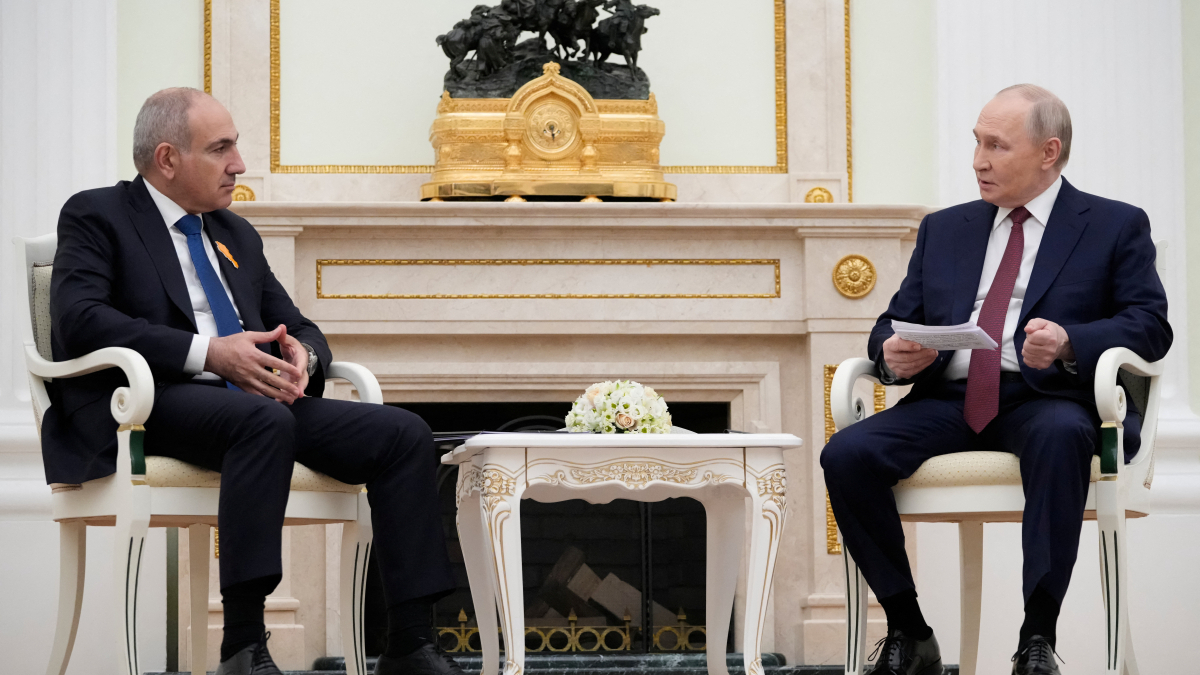
Russian President Vladimir Putin and Armenian Prime Minister Nikol Pashinyan attend a meeting at the Kremlin in Moscow, Russia, 1 April, 2026.
Reuters
Türkiye normalisation tied to regional peace
The future of Armenia’s normalisation process with Türkiye is expected to depend largely on progress between Yerevan and Baku.
“The Armenian-Turkish normalisation is much dependent on Armenia-Azerbaijan normalisation,” Hamzali said, noting that Turkish officials have linked border opening to broader peace progress.
Domestic focus shifts to economy
Beyond foreign policy, economic issues are expected to dominate the Armenian government’s agenda following the election.
Hamzali said security concerns remain important but are gradually being overtaken by economic priorities. “The second concern is, of course, the economy,” he said.
With a renewed mandate, Pashinyan’s government is expected to prioritise economic reform while managing complex regional dynamics and constitutional limitations.
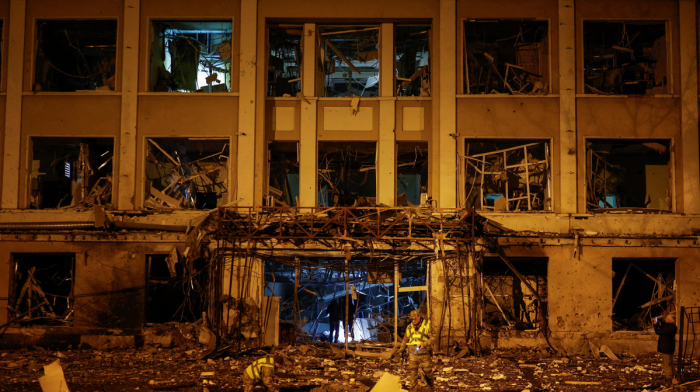
U.S. President Donald Trump has criticised Ukrainian President Volodymyr Zelenskyy for continuing to target Russia's energy infrastructure, while Russian strikes on Kyiv overnight killed at least one person and damaged a metro station.
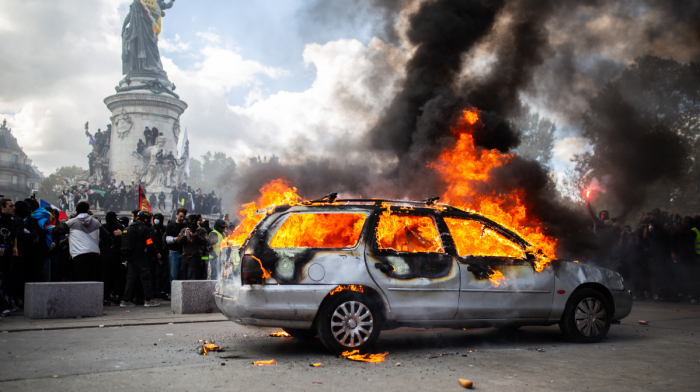
What started out as planned protests against the cost of living, declining public services and education funding in France, quickly devolved into violent riots across the country on Saturday.
The day after waiving sanctions and tariffs related to Russian exports, U.S. President Donald Trump said on Saturday he has yet to announce a final decision on the matter as Secretary of State Marco Rubio said officials want more time to evaluate the situation.
A Saudi AH-6i helicopter crashed in the Najran region of Saudi Arabia due to a technical malfunction, killing its two crew members, the Saudi-led coalition's spokesman Brigadier General Turki al-Maliki said in a statement on Sunday.
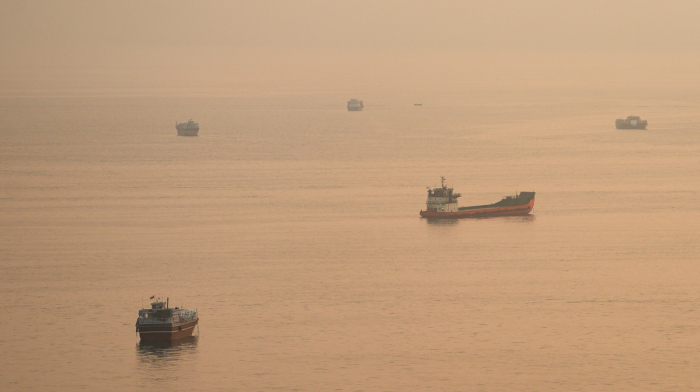
An oil tanker caught fire after striking a naval mine in the southern part of the Strait of Hormuz, Iran’s Islamic Revolutionary Guard Corps (IRGC) Navy said late Sunday.
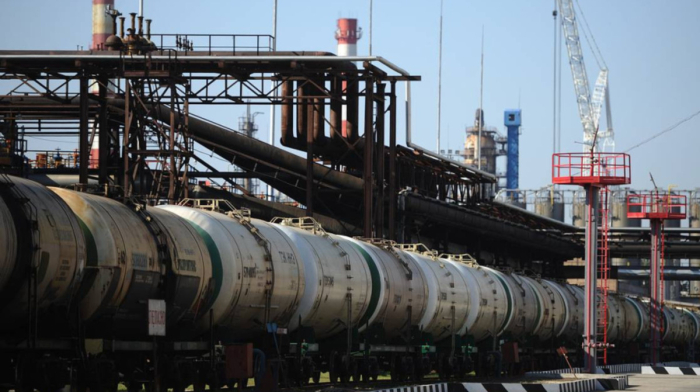
Türkiye is set to receive Russian diesel under a U.S.-backed agreement, Energy Minister Alparslan Bayraktar said on Sunday, as Ankara pushes ahead with plans to boost domestic gas production and reduce its reliance on imported energy.
An oil tanker caught fire after striking a naval mine in the southern part of the Strait of Hormuz, Iran’s Islamic Revolutionary Guard Corps (IRGC) Navy said late Sunday.
Azerbaijan exported $23.45 million worth of goods to Armenia between January and September 2026, according to data released by the State Customs Committee on 19 October.
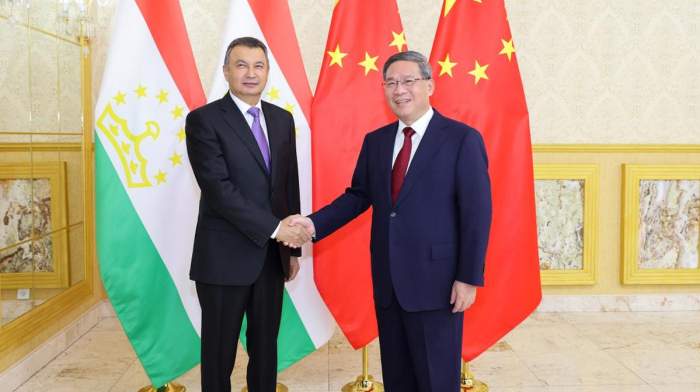
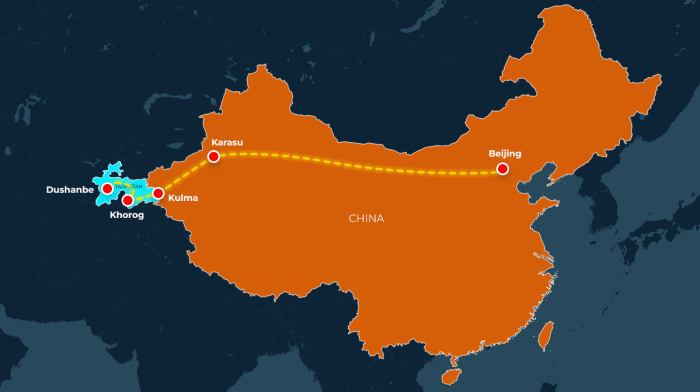
Tajikistan and China have launched a high-capacity digital corridor across the Pamir Mountains, creating a direct telecommunications link that could strengthen Tajikistan’s internet connectivity and turn the country into a key transit route for data between Central and South Asia.
A Saudi AH-6i helicopter crashed in the Najran region of Saudi Arabia due to a technical malfunction, killing its two crew members, the Saudi-led coalition's spokesman Brigadier General Turki al-Maliki said in a statement on Sunday.
Download the AnewZ app
You can download the AnewZ application from Play Store and the App Store.















What is your opinion on this topic?
Leave the first comment