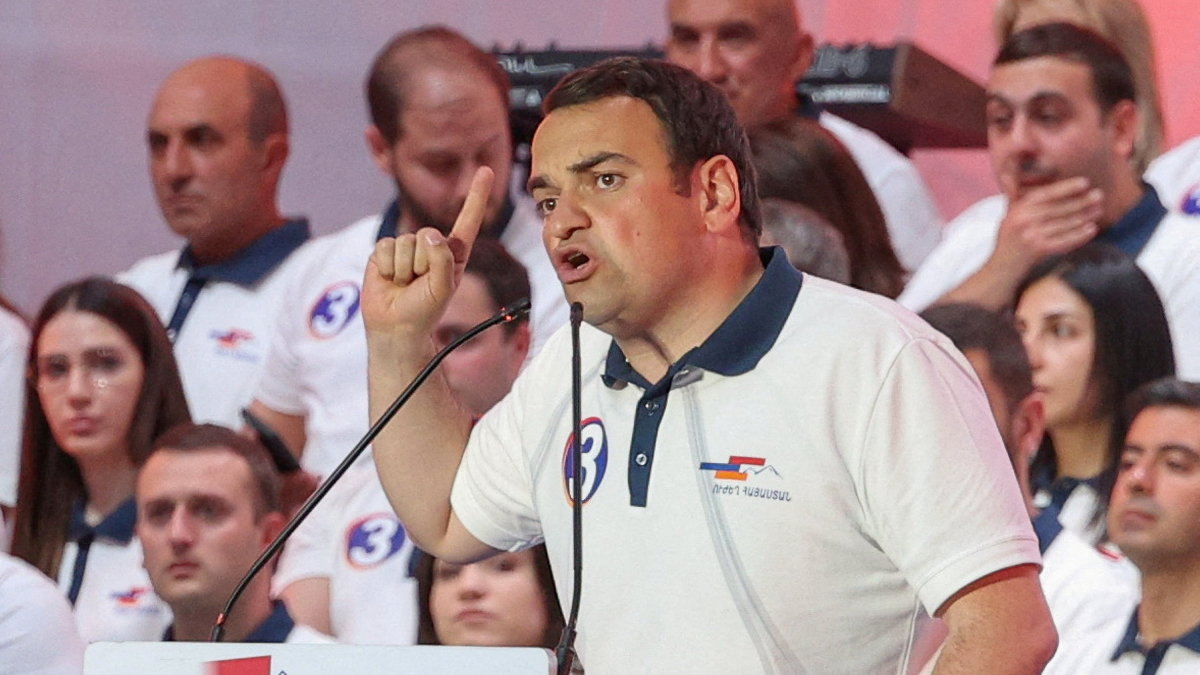
Armenian authorities arrested six candidates from the pro-Russian Strong Armenia bloc on Saturday, one day before voters were due to take part in parliamentary elections.
State media reported that the Central Election Commission authorised criminal proceedings against the candidates as part of an investigation into alleged money laundering and material inducement. Under Armenian law, investigators require the commission’s consent before charging or arresting registered parliamentary candidates.
The Strong Armenia party is led by Russian-Armenian billionaire Samvel Karapetyan, who is under house arrest on charges of calling for the overthrow of the government. He denies the allegations and says the case is politically motivated.
Election shaped by Russia-West tensions
The arrests come as Armenia prepares for a vote shaped by the country’s changing foreign policy direction.
Relations between Yerevan and Moscow have deteriorated as Prime Minister Nikol Pashinyan’s government has sought closer ties with Western partners. Russia has imposed restrictions on some Armenian exports, a move widely viewed as pressure on Yerevan over its westward shift.
Around 2.4 million Armenians are eligible to vote in Sunday’s election.
Opinion polls suggest Strong Armenia has between 6% and 11% support, placing it behind Pashinyan’s ruling Civil Contract party, which is projected to receive between 24% and 32%.
The election is widely seen as a test of Pashinyan’s leadership, particularly his efforts to pursue a peace agreement with Azerbaijan and reduce Armenia’s reliance on Russia.
Concerns over election integrity
Armenian civil society organisations have raised concerns about alleged Russian state-backed disinformation campaigns ahead of the vote. Moscow has denied such accusations.
Armenia’s Investigative Committee, which carried out the arrests, did not immediately respond to requests for comment.
Strong Armenia has not yet issued an official statement on the latest arrests. The party has previously criticised Pashinyan’s government, accusing it of worsening ties with Russia and arguing for continued economic and political relations with Moscow.
Authorities have also reported broader concerns about election integrity. The Interior Ministry said earlier this week that it had identified at least 78 cases of pre-election violations and detained 44 people, without specifying political affiliations.









What is your opinion on this topic?
Leave the first comment