The name Ruben Vardanyan has become a focal point of international headlines following his high-profile arrest by Azerbaijani authorities in late 2023. He has many titles, billionaire, philanthropist, and formerly so-called State Minister of the unrecognised Republic of Nagorno-Karabakh.
The territory known locally as Garabagh, is internationally recognised as part of Azerbaijan.
Origins
Born in Yerevan in 1968, he moved to Moscow following the collapse of the Soviet Union, a period of chaotic transition that offered immense opportunities for those with the right connections and acumen.
In the early 1990s, as Russia transitioned from communism to capitalism, Vardanyan positioned himself as a key intermediary between Western capital and Russian business. He co-founded Troika Dialog with his wife, an entity that eventually grew into Russia’s largest private investment bank.
By 2012, the bank was sold to Sberbank for more than $1 billion, a massive deal that seemingly cemented his status on global rich lists and allowed him to pivot toward soft power.
While he gained recognition for philanthropic initiatives such as the Aurora Prize and the United World College Dilijan, his financial legacy faced significant challenges.
Financial controversy and the Troika laundromat
The turning point in his reputation came in 2019, when the Organized Crime and Corruption Reporting Project (OCCRP), along with international partners, released an investigation known as the ‘Troika Laundromat.’
The OCCRP findings suggested that the infrastructure he helped build was instrumental in facilitating capital flight and money laundering for Russia’s elite.
The report also detailed an underground network that allegedly moved between $4 billion and $9 billion out of Russia. The network comprised of offshore front companies intrinsically linked to Troika Dialog, the investment bank Vardanyan led at the time.
Reporting showed that the bank issued loans and channelled cash through a maze of shell firms. These mechanisms allowed Russian oligarchs and influential political figures to secretly acquire real estate, purchase luxury goods, and hide assets from regulatory bodies.
Azerbaijan’s charges against him regarding the financing of illegal armed formations are viewed by some analysts as a continuation of this pattern, using complex financial networks to support specific political and military objectives outside of legal frameworks.
The accusation is that the same skills used to hide oligarchs' wealth were repurposed to fund separatist activities in Garabagh.
Geopolitical ties: Kremlin and sanctions
The timing of his arrival in the South Caucasus against the backdrop of Russia's full-scale invasion of Ukraine, was viewed with deep suspicion by regional analysts. In September 2022, he renounced his Russian citizenship and relocated to the region then referred to as Nagorno-Karabakh, internationally recognised as Azerbaijan, but under ethnic Armenian control at the time.
While Vardanyan framed this as a humanitarian mission to "be with his people," critics and intelligence analysts have argued that he remained an asset of the Kremlin, deployed to safeguard Russian interests in a region where Moscow’s influence was visibly declining.
He has consistently rejected these claims, insisting his focus was solely on supporting the local Armenian population.
Ukrainian website Myrotvorets
Vardanyan’s name then appeared on the Ukrainian website Myrotvorets (Peacemaker). This database lists individuals considered "enemies of Ukraine" due to their alleged support for Russian aggression.
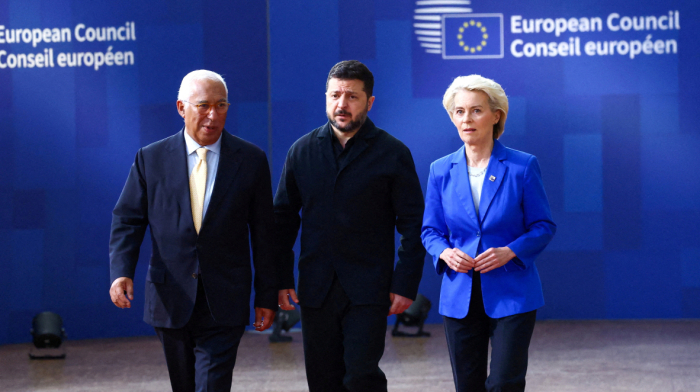
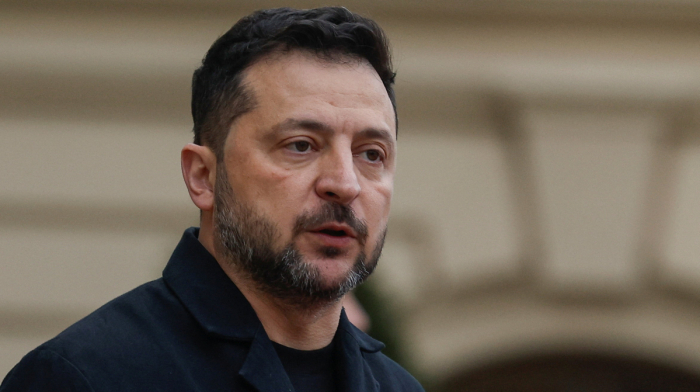
Ukrainian officials have characterised Vardanyan’s financial networks as instruments of Russian influence, used to evade sanctions and project power. Consequently, Ukrainian President Volodymyr Zelenskyy sanctioned Vardanyan, citing these alleged links to the Russian establishment.
Garabagh administration
Vardanyan was appointed so-called State Minister of the de facto separatist regime of the unrecognised "State of Nagorno-Karabakh" in November 2022. Vardanyan's tenure was brief, ending in dismissal in February 2023, yet he remained in the region until Azerbaijan restored full control over it.
His presence during this period forms the basis of the charges levied against him by the State Security Service of Azerbaijan, which asserted that his leadership role made him directly responsible for the actions of the illegal regime during that timeframe.
Criminal charges
Following the Azerbaijani military operation in September 2023, which lasted less than 24 hours and resulted in the dissolution of the separatist entity, Vardanyan was detained at the Lachin border checkpoint while attempting to leave for Armenia.
The charges filed by the Prosecutor General’s Office of Azerbaijan included the financing of terrorism, the creation of illegal armed groups not recognised by Azerbaijani law, and illegal border crossing.
Azerbaijani authorities asserted that Vardanyan’s entry into the region in 2022 was an unauthorised intrusion into sovereign territory. Furthermore, prosecutors alleged that under his administration, the Lachin corridor, ostensibly a humanitarian route, was utilised for military logistics. Their claim was based on witness accounts.
Alleged illegal mining operations
Meanwhile, Azerbaijani officials claim that Vardanyan oversaw large-scale illegal mining operations in the region. This allegedly involved the extraction of valuable metals, such as gold and copper, which were then reportedly exported illegally.
Azerbaijan viewed this as a deliberate attempt to destabilise the region and plunder sovereign resources for personal and political gain, labelling Vardanyan a "separatist leader" responsible for prolonging the conflict and causing environmental devastation.
Diplomatic isolation
His family and various human rights organisations have campaigned for his release from custody, hiring high-profile international PR firms to promote his case, and labelling him a "political prisoner."
However, the government of Armenia has notably distanced itself from his case. When Vardanyan was arrested, the administration in Yerevan refrained from mounting a robust diplomatic defence, signalling a shift in Armenian foreign policy priorities.
Armenian officials have repeatedly stressed that Vardanyan renounced his Armenian citizenship to become a Russian national years prior, and subsequently renounced his Russian citizenship to move to Garabagh.
This legal distinction allowed Yerevan to step back without violating its consular obligations.
Political analysts suggest this was a strategic decision; Armenia did not wish to jeopardise peace negotiations with Azerbaijan over a figure who, despite presenting himself as a defender of Armenian interests, was viewed as a liability with deep ties to Russia’s old guard.
International reaction
Internationally, the United Nations Working Group on Arbitrary Detention (WGAD) assessed the case in early 2025.
Azerbaijani officials have welcomed the group’s findings, asserting that the detention adheres to national and international legal standards and emphasising that no individual is above the law, regardless of their wealth or former status.
At the same time his legal team continued to lobby Western governments.
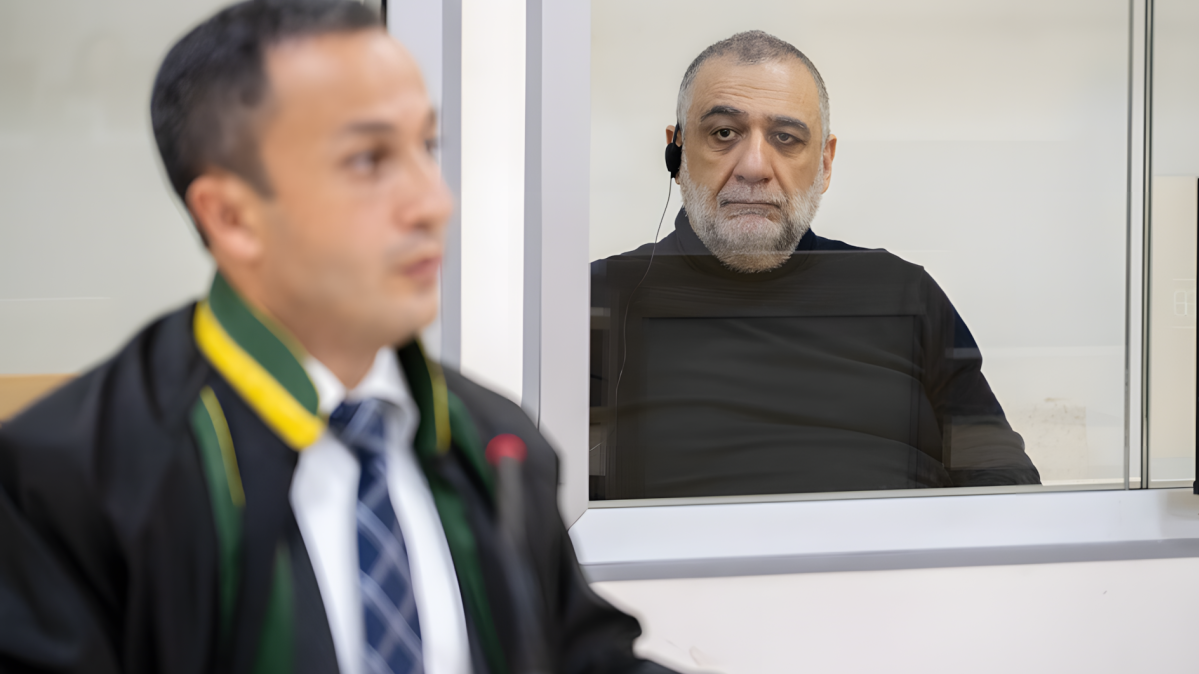
On 17 February, 2026, a court in Baku sentenced Vardanyan to 20 years in prison. A military court found him guilty on multiple charges under Azerbaijan’s Criminal Code, including crimes against peace and humanity, war crimes, terrorism, and financing terrorism. His trial was regarded as a landmark proceeding in Azerbaijan.










What is your opinion on this topic?
Leave the first comment