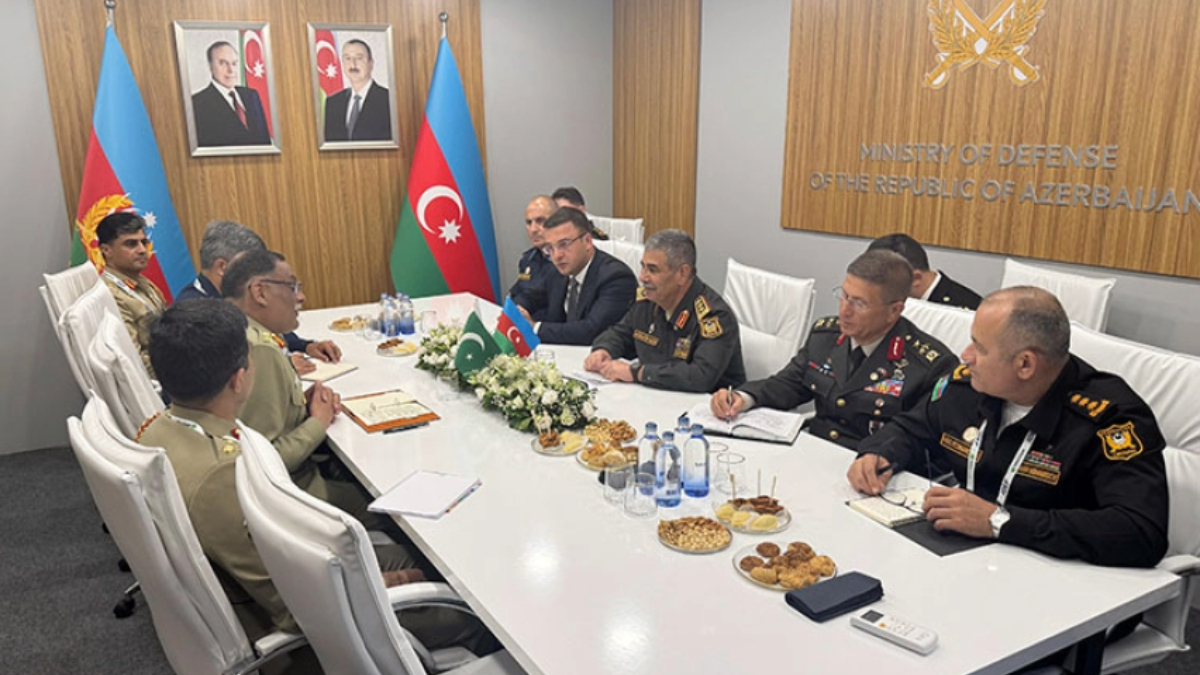
Azerbaijan and Pakistan are bolstering bilateral ties and cooperation across energy, defence, trade and regional connectivity. This was highlighted at a high-level meeting of the two countries’ foreign ministers in Abu Dhabi, United Arab Emirates, on Sunday, 14 December.
Azerbaijan’s Foreign Minister Jeyhun Bayramov met his Pakistani counterpart, Mohammad Ishaq Dar, on the sidelines of the Sir Bani Yas Forum, organised by the UAE Ministry of Foreign Affairs.
Speaking to AnewZ from Islamabad, Dr Farhat Asif of the Institute of Peace and Diplomatic Studies described the talks as taking place at a “very important time” for both countries, noting a visible surge in high-level engagement throughout 2025.
According to Dr Asif, Azerbaijan and Pakistan have long-standing friendly relations, but recent months have seen contacts reach what she called "the best possible level".
The meeting offered an opportunity for close bilateral and diplomatic discussions amid a packed international agenda.
Dr. Asif stressed that the timing was significant, coming toward the end of the year after sustained exchanges between leaders at presidential and prime ministerial level.
This follows official state visits earlier in 2025 in which both governments reiterated intentions to deepen cooperation across multiple sectors, including oil and energy exploration, defence production, renewable energy and infrastructure development.
“These conversations have been happening on energy, defence, connectivity, regional connectivity, economics and trade,” she said, adding that multiple high-level engagements have helped maintain momentum across key sectors.
Regional security
Dr Asif also placed the meeting within a broader regional security context. She pointed to a surge in terrorist activity across the region, ongoing instability along Pakistan’s border with Afghanistan, tensions on Pakistan’s eastern border with India, and Islamabad’s efforts to stabilise its economy.
In this environment, she argued, Azerbaijan’s engagement carries added weight. “The presence of Azerbaijan and conversations at such a high level are important in terms of what they can bring,” she noted, emphasising the reaffirmation of strong and friendly ties between the two countries.
Dr. Asif recalled that earlier this year, around 200 Pakistani business representatives travelled to Azerbaijan for a business forum in July 2025, signalling growing commercial interest on both sides. She highlighted trade and defence cooperation as among the most significant areas of progress, alongside education and diplomacy.
Economic cooperation
Dr Asif recalled that earlier this year, around 200 Pakistani business representatives travelled to Azerbaijan for a business forum, signalling growing commercial interest on both sides. She highlighted trade and defence cooperation as among the most significant topics at the meeting, alongside education and diplomacy.
Earlier in the year, Pakistan’s prime minister and Azerbaijan’s economy minister agreed to pursue a bilateral trade target of US$2 billion and to explore energy investments, including Azerbaijan’s White Oil Pipeline and SOCAR’s involvement in Pakistan’s energy sector.
History of diplomatic relations
Long-standing bilateral ties between Baku and Islamabad have roots in early diplomatic recognition and mutual support in international forums such as the UN and the Organisation of Islamic Cooperation. Pakistan was among the first countries to recognise Azerbaijan’s independence in 1992. This historical foundation continues to shape cooperation in political, economic and defence areas.
According to Dr Asif, the key message both sides aimed to send through this meeting was one of continuity and consolidation. Commitments made at foreign minister level, she said, are expected to further solidify bilateral relations and translate sustained political goodwill into practical cooperation in the months ahead.












What is your opinion on this topic?
Leave the first comment