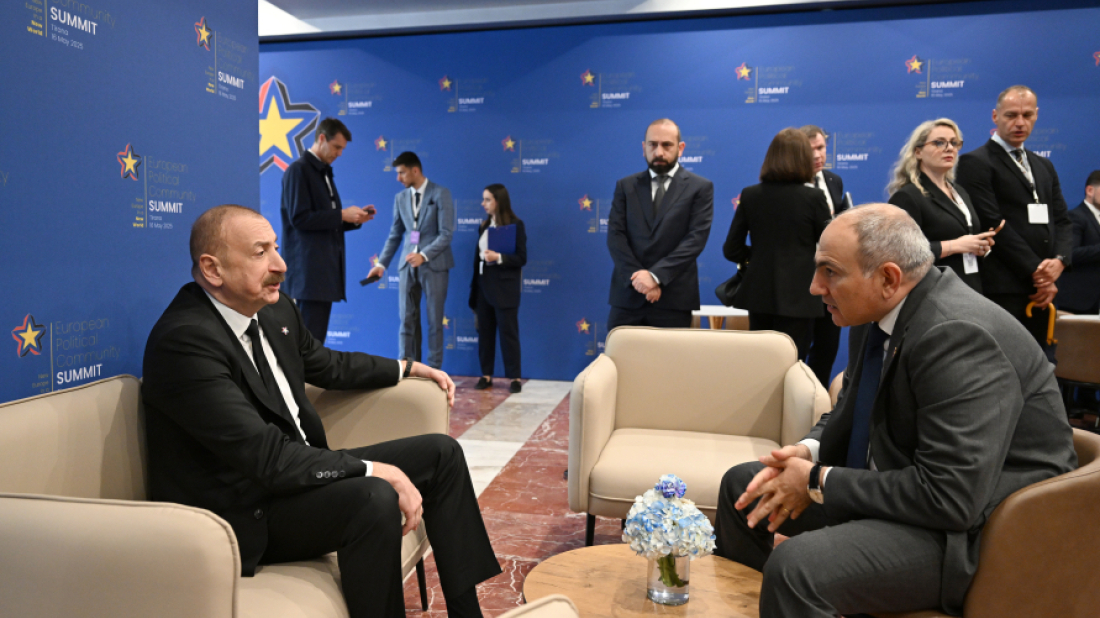
A nationwide poll conducted by the International Republican Institute’s (IRI) Center for Insights in Survey Research (CISR) shows that a majority of respondents support the peace treaty being negotiated with neighbouring Azerbaijan.
A plurality of 47% of respondents would like to see reaching a lasting peace deal between Armenia and Azerbaijan, the two countries have been engaged in a territorial conflict for decades.
At the same time, security and peace are regarded as the most important issues in Armenia, with a plurality of respondents (35%) considering national security and border concerns as the main problems facing the country.
Additionally, the majority believes that establishment of peace (22% of respondents) and ensuring country's security are two key issues that Nikol Pashinyan’s government should address in the next six months.
“Security and peace are clearly the main issues on the minds of Armenians,” said Stephen Nix, Senior Director for Europe and Eurasia at IRI.
The data was collected via telephone administered interviews with 1,505 Armenian residents and Nagorno-Karabakh refugees from 16–26th June.
According to the results, Prime Minister Nikol Pashinyan emerged as the most trusted politician in Armenia, with 13% of respondents expressing confidence in him. He was followed by Foreign Minister Ararat Mirzoyan at 5%, and opposition leader and former President Robert Kocharyan at 4%.
Meanwhile, only 38% of respondents expressed satisfaction with the Prime Minister’s office, a continued decline from over 80% in the aftermath of the 2018 Velvet Revolution.
Notably, 61% of respondents said they did not trust any political figure.
Regarding Armenia’s international relations, most respondents described the country’s relationship with France as “very good,” while the relationship with Azerbaijan was overwhelmingly viewed as “very bad.”
The poll found that 49% of respondents would vote to join the European Union if a referendum on Armenia’s prospective membership were held this coming Sunday. When asked about the main benefit of joining the EU, 37% of respondents cited strengthened security, while 18% pointed to economic improvement. Additionally, 10% highlighted national development, 5% mentioned visa liberalization, another 5% noted the advancement of democracy, and 4% identified peace as the primary benefit.












What is your opinion on this topic?
Leave the first comment