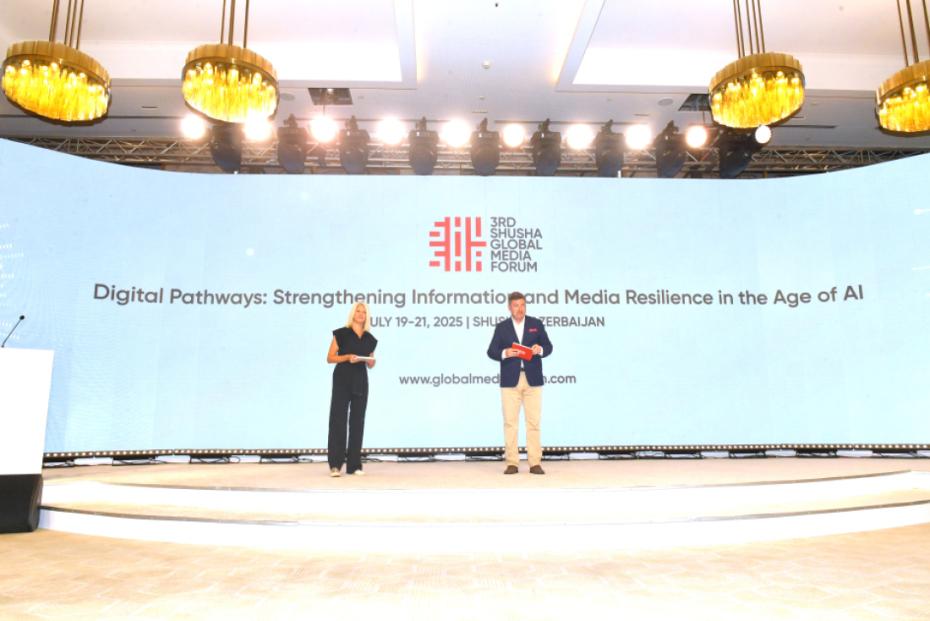
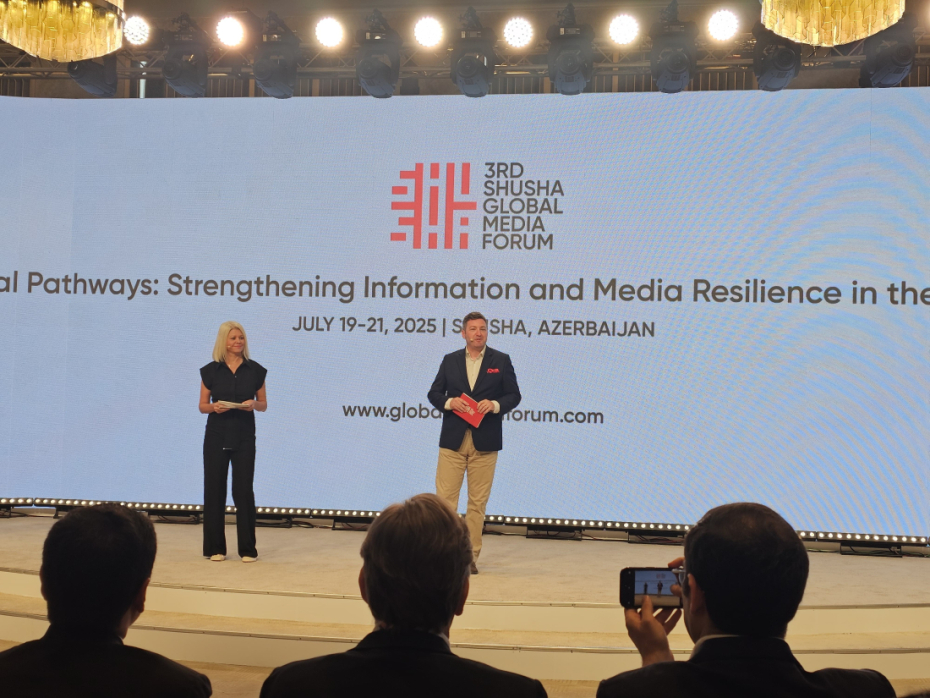
The 3rd Shusha Global Media Forum officially opened on July 20 under the theme “Digital Pathways: Strengthening Information and Media Resilience in the Age of AI.” The event gathers media professionals, experts, and officials from around the world for three days of dialogue and strategic exchange.
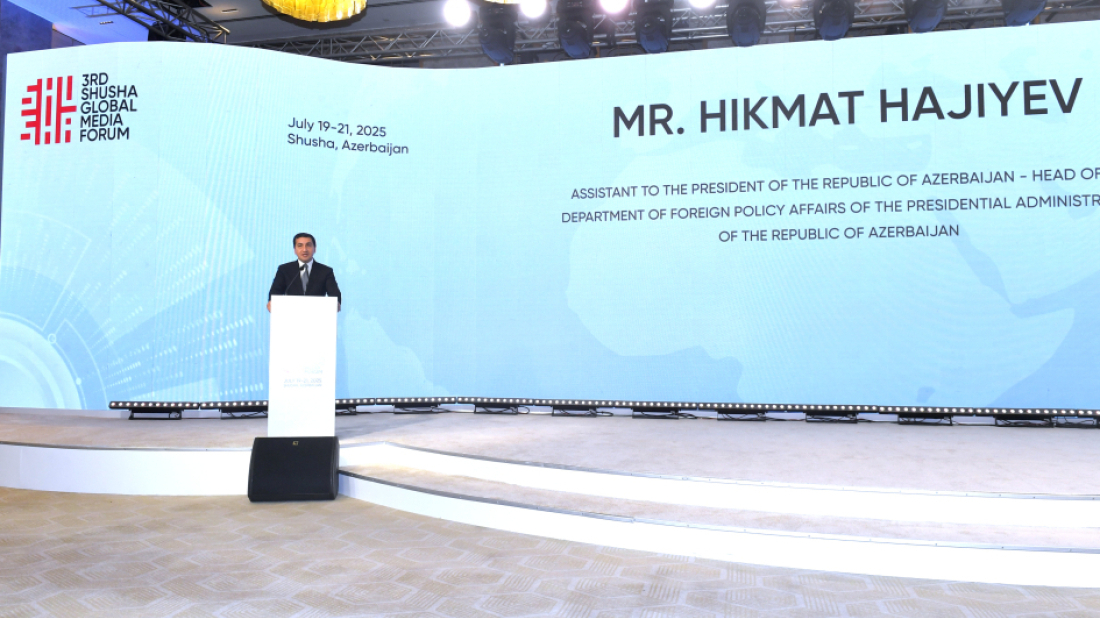
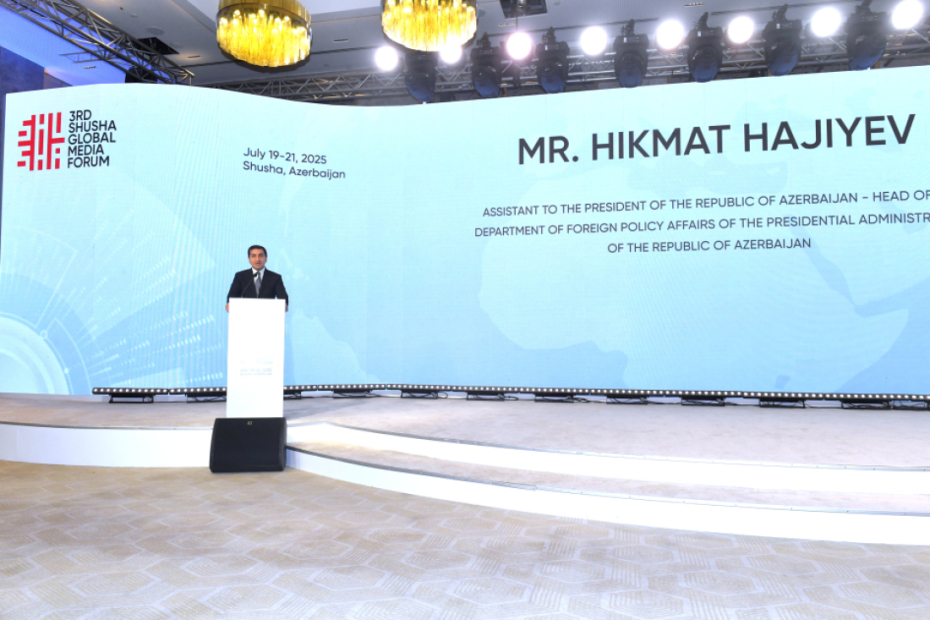
The Forum began with the screening of a video about the event. In his opening remarks, Hikmet Hajiyev, Assistant to the President of Azerbaijan and Head of the Foreign Policy Affairs Department of the Presidential Administration, said that hosting the Forum in Shusha – the cradle of Azerbaijani culture – is not a coincidence.
“Shusha is the historical memory and source of inspiration for the Azerbaijani people. Shusha is the birthplace of countless writers and intellectual figures who have made significant contributions to Azerbaijan’s cultural and scientific heritage,” Hajiyev stated.
He underlined that the presence of international media figures and thinkers gives the Forum a unique opportunity to shape innovative ideas and perspectives. “It is significant that this Forum is being convened in the post-conflict period, in a city that was once scarred by war, but is now undergoing a process of reconstruction,” he noted.
Hajiyev also emphasized that the Forum offers a direct platform for engagement with President Ilham Aliyev, allowing participants to gain insights into ongoing regional developments.
Marking a historic milestone, he highlighted the 150th anniversary of the Azerbaijani press. He referred to the country’s first newspaper, Akinchi, published by Hasan bey Zardabi, as the foundation of Azerbaijan’s media heritage. “Despite strict censorship of the time, Akinchi addressed evolution, enlightenment, and social progress. It laid a vital foundation for the spread of new ideas,” Hajiyev added.
Panel: Media literacy in the age of AI
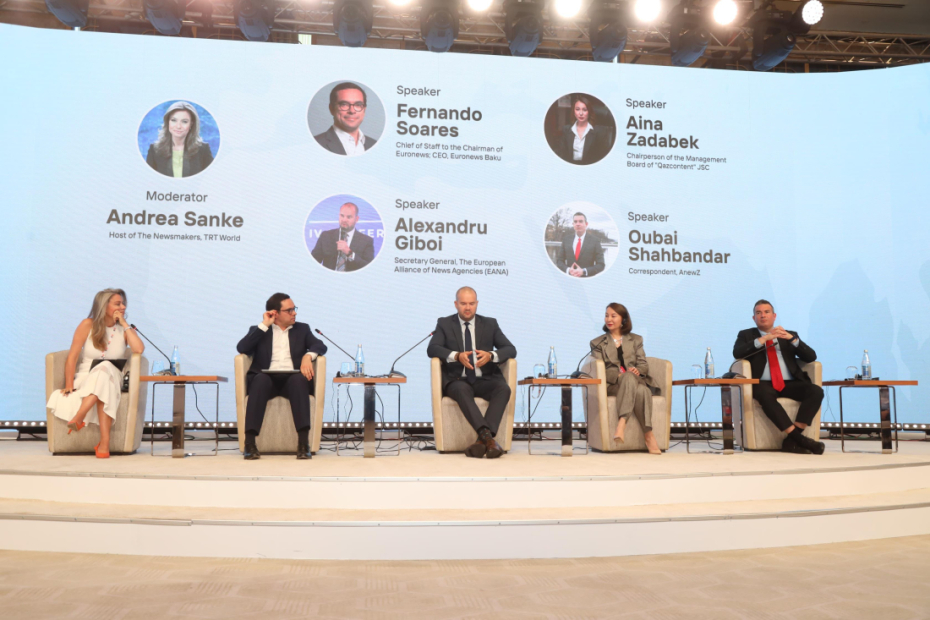
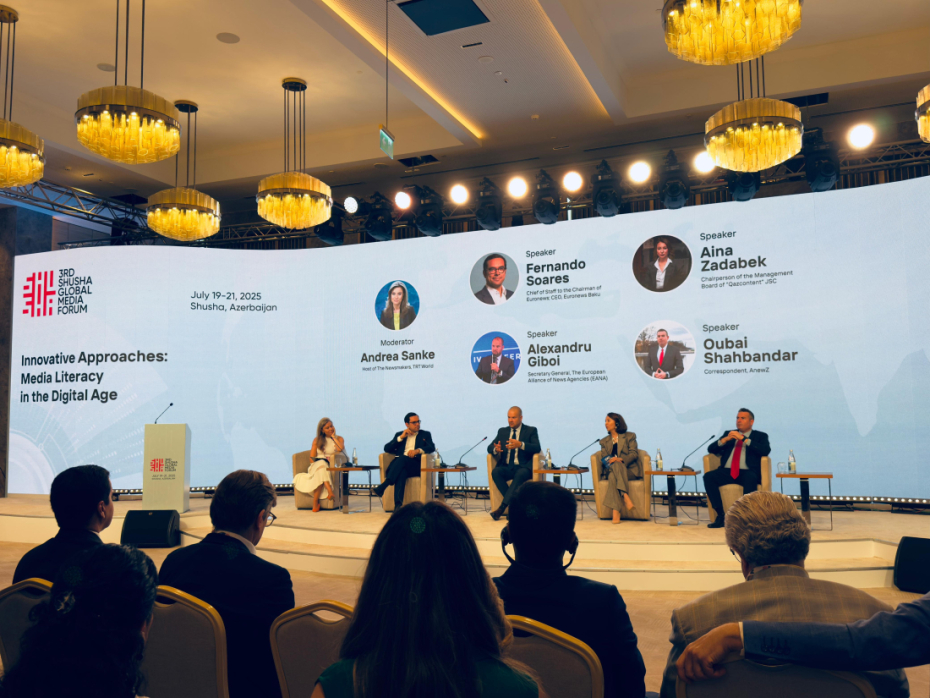
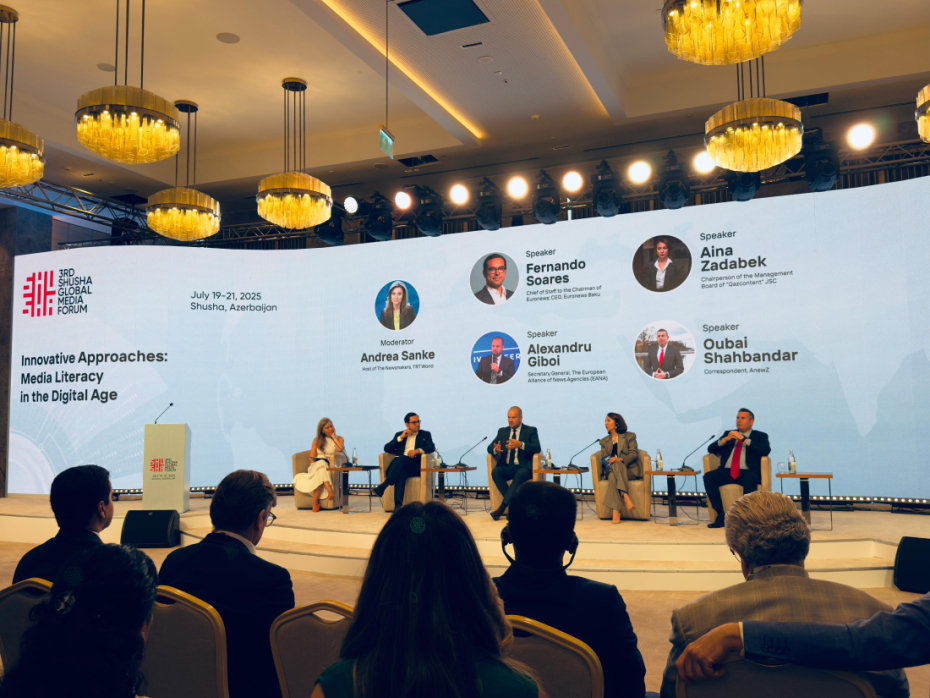
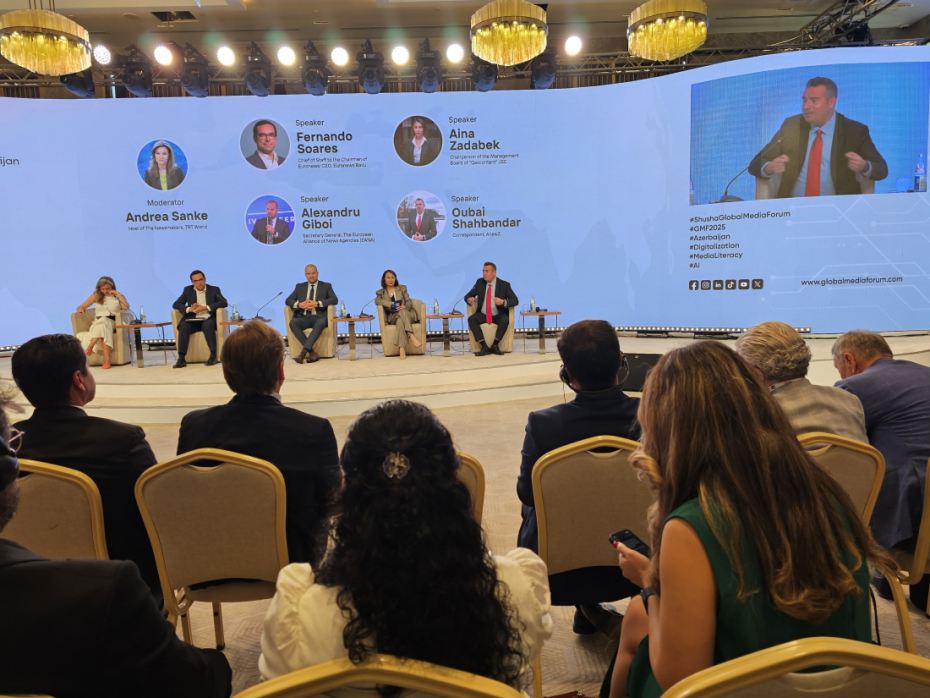
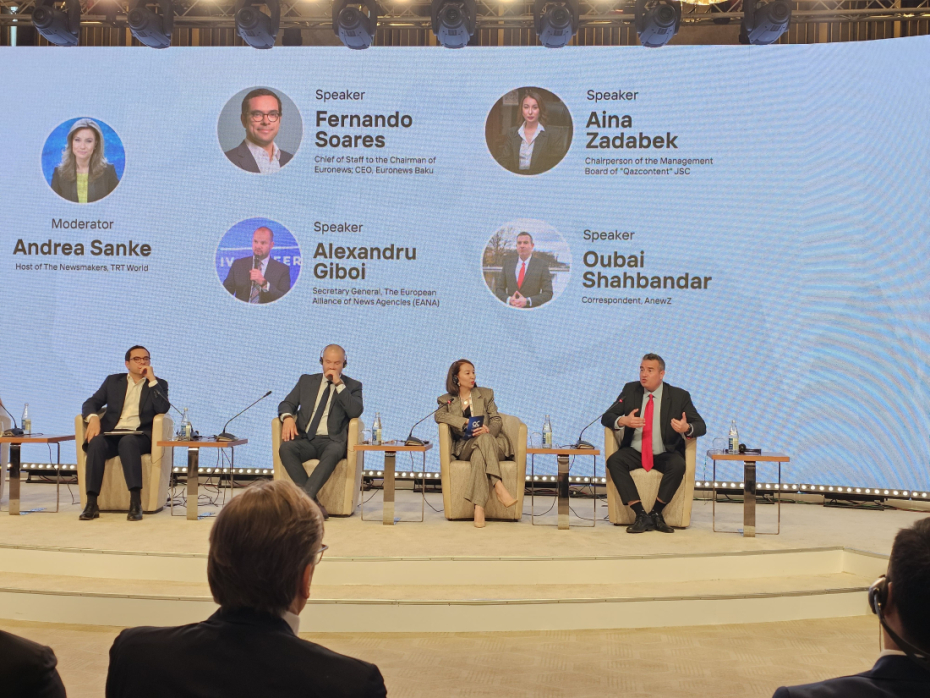
The opening panel, titled “Innovative Approaches: Media Literacy in the Digital Age,” was moderated by Andrea Sanke, host of TRT World's The Newsmakers.
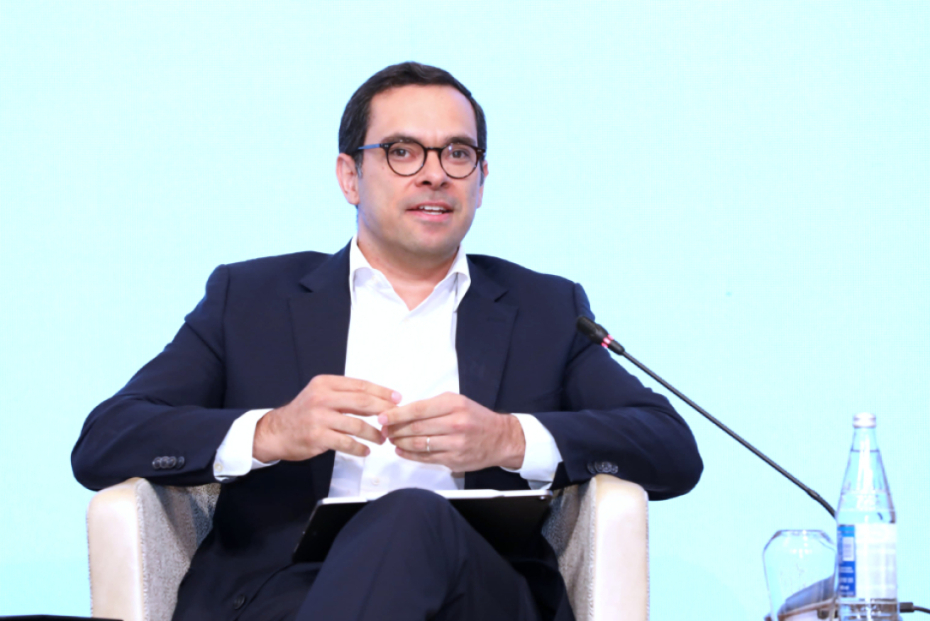
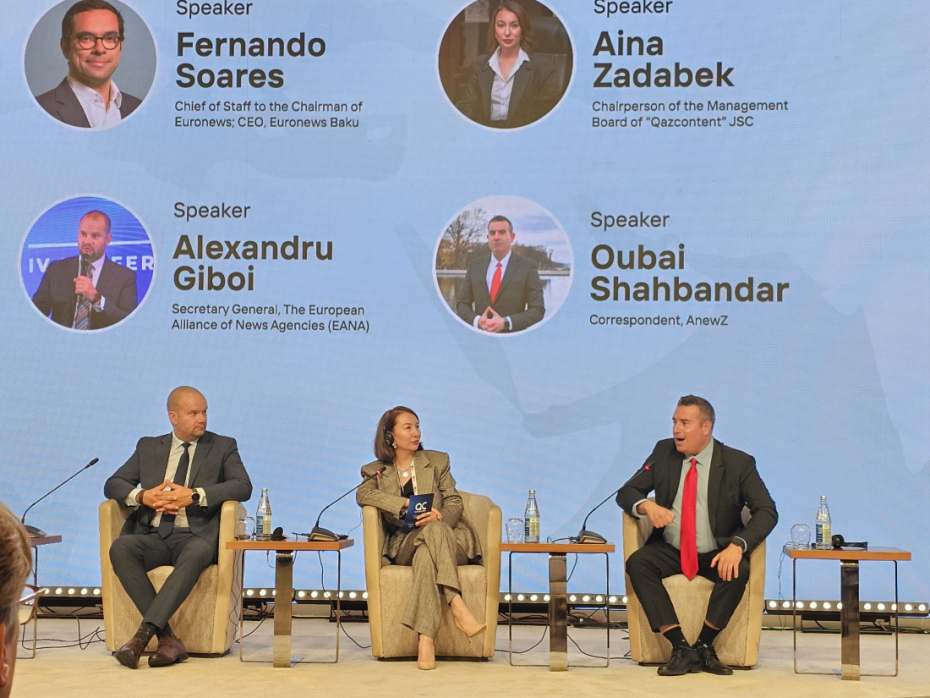
Fernando Soares, Executive Director of Euronews TV Channel in Baku, highlighted that in today’s environment, it is essential for citizens to understand the origin and purpose of information. “Information wars, disinformation campaigns, and digital manipulation should be a wake-up call for everyone. The media is not just about presenting news, but also a guardian of the truth,” he stressed.
Alexandru Ion Giboi, Secretary General of the European Alliance of News Agencies (EANA), remarked that the information landscape has become broader and more complex. He noted strong partnerships, particularly with AZERTAC, as essential to information reliability.
“AZERTAC, as Azerbaijan’s State News Agency, provides official, verified and accurate information. TREND, meanwhile, is a private news agency that holds a special place in the country's media landscape. We know that the news published by these agencies is based on accuracy, official sources and core principles of professional journalism, which is a guarantee of information security for us,” Giboi stated.
He also underlined the need for media to help audiences think critically: “We must not forget that media is the herald of truth, whose role is not only to report facts, but to encourage people to think, analyze, and draw their own conclusions.”
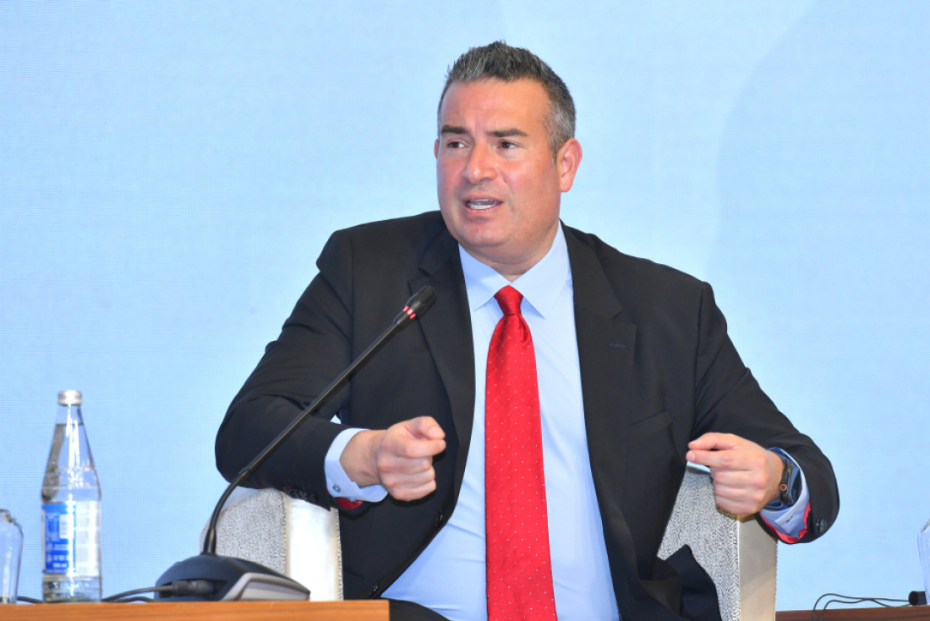
Oubai Shahbandar, correspondent for AnewZ TV channel, noted that in today’s landscape, anyone—from social media users to bloggers—can claim the role of a journalist. “While this reflects the democratisation of media, it also increases our responsibility. Ethical principles, objectivity, and a responsible approach are essential for maintaining public trust and resisting information chaos,” he said.
Aina Zadabek, Chairperson of the Management Board of Qazcontent JSC, shared Kazakhstan’s digital development strategy. “Since 2024, a development concept has been adopted, and a supercomputer has been established to boost sectors by 2029. We are committed to training more than 1 million people in artificial intelligence. If journalists use AI effectively, it will significantly impact media development,” she added.
The panel concluded with live discussion among participants.
Forum agenda and international participation.
The forum will feature further discussions on topics such as:
“Media Literacy as the Guarantee of Information Security”
“How Social Media Evolution Affects Public Trust: Embracing Media Literacy”
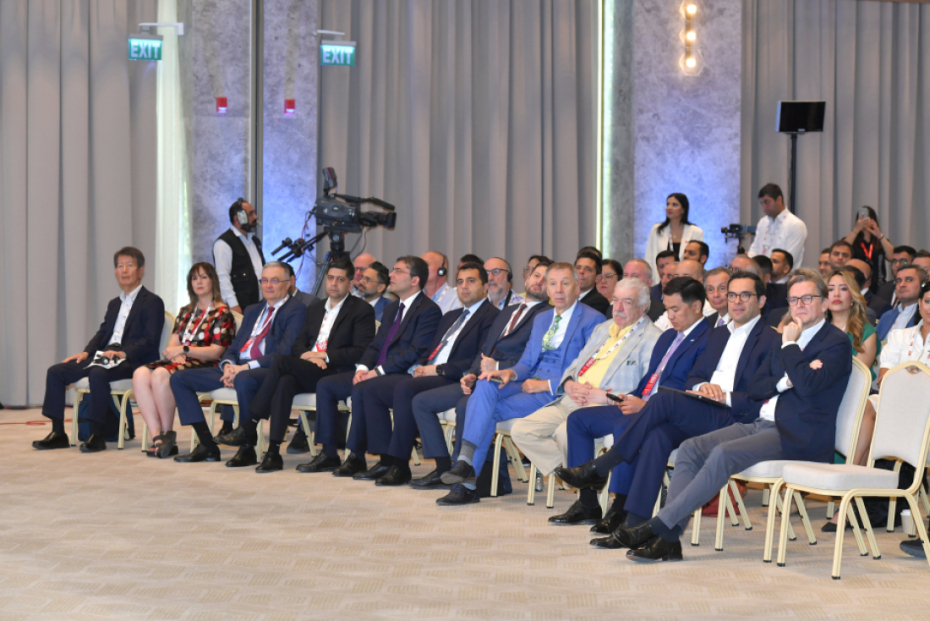
Running from July 19 to July 21, the Forum brings together up to 140 international delegates from 52 countries. Attendees include representatives from over 30 news agencies, seven international organisations, nearly 80 media outlets, and other media-related entities. Alongside foreign participants, representatives of Azerbaijani media, experts, and officials are also taking part.
Following the opening ceremony, the event will continue with panel sessions. Delegates are also scheduled to visit Azerbaijan’s Aghdam district and Lachin city in the coming days.













What is your opinion on this topic?
Leave the first comment