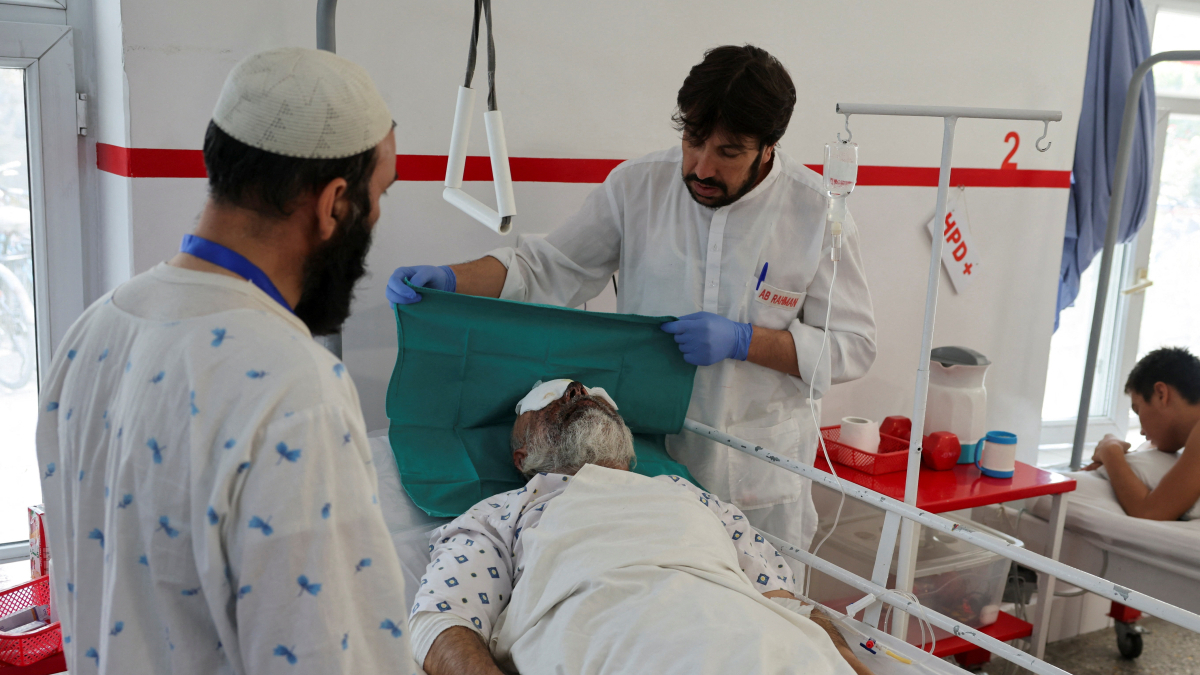
Pakistan has ordered Afghan medical and dental students to return to Afghanistan, widening its repatriation drive as tensions with Kabul persist over militant attacks and cross-border security.
The Pakistan Medical and Dental Council (PM&DC) issued the directive on 1 September, reiterating instructions first issued on 31 July. Medical and dental institutions have been told to facilitate the students’ departure, including byissuing no-objection certificates. New admissions, placements, transfers and other forms of assistance for Afghan nationals have also been barred until further notice.
The council has not disclosed how many students are affected or whether those close to completing their degrees will be exempted. It said the matter relates to “national policy directives.”
More than 300,000 Afghans return in seven months
The order comes as Pakistan presses ahead with a wider repatriation campaign that has seen hundreds of thousands of Afghans leave the country this year.
The latest UN Refugee Agency (UNHCR) figures show that 307,500 Afghans returned to Afghanistan in the first seven months of 2026. Of these, 187,547 were facilitated returns and 119,953 were spontaneous returns. The total is nearly as high as the 312,750 returns recorded throughout 2025.
Since September 2023, more than 2.6 million Afghans have returned from Pakistan, according to the International Organization for Migration.
Pakistan launched its Illegal Foreigners’ Repatriation Plan in September 2023, initially targeting undocumented foreigners, most of whom were Afghans. The policy has since been expanded to include other categories of Afghans living in Pakistan.
Security concerns shape Pakistan’s policy
Islamabad says national security and immigration enforcement are at the centre of the policy.
Pakistan accuses Tehreek-e-Taliban Pakistan (TTP) of operating from sanctuaries in Afghanistan and launching attacks across the border. Kabul rejects claims that it allows Afghan territory to be used against Pakistan.
Tensions over security remain high. On 3 September, Pakistan’s military said security forces had killed 15 militants attempting to cross from Afghanistan into North Waziristan. The military’s media wing, Inter-Services Public Relations, said the infiltration attempt was detected on 1 September, with an exchange of fire continuing for 36 hours. Pakistan identified the militants as TTP members and alleged they were backed by India, a claim denied by both Afghanistan and India.
The previous day, Pakistan’s Foreign Office said progress in relations with Kabul would depend on the Taliban taking concrete and verifiable action against the TTP, the Balochistan Liberation Army (BLA) and other terrorist organisations operating from Afghan soil. Islamabad also reiterated its demand for verifiable assurances that Afghan territory would not be used for terrorism against Pakistan.
Kabul calls for direct dialogue
Afghanistan’s Taliban government rejects Pakistan’s allegations and has called for direct engagement.
Speaking at Pakistan’s National Defence University on 1 September, Taliban ambassador Sardar Ahmad Shakib said Afghanistan should not be used against Pakistan, but argued that security allegations should be specific and supported by concrete information.
Shakib also said collective punishment of Afghan citizens should not be used to address security problems, while trade and transit should not become tools of political pressure. He called for direct dialogue to address both countries’ security concerns.
Pressure on Afghans expands
For Islamabad, the dispute increasingly centres on security, borders and control over who can remain in Pakistan. For Kabul, the growing pressure on Afghans is part of a wider dispute with Islamabad that it says should be addressed through dialogue rather than pressure on civilians.
The order affecting medical students significantly broadens the reach of Pakistan’s Afghan policy, extending it beyond undocumented migrants to students already enrolled in professional degree programmes. The move comes as Islamabad continues to tie its approach towards Afghan nationals to wider security and immigration concerns, with tensions between the two neighbours showing little sign of easing.













What is your opinion on this topic?
Leave the first comment