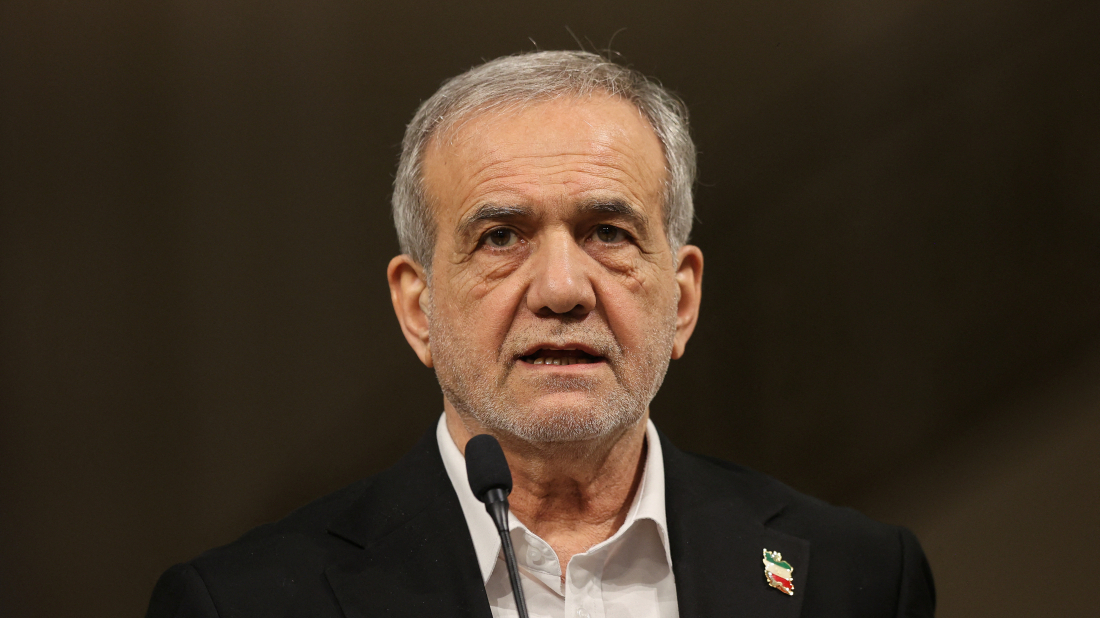
Iranian President Masoud Pezeshkian begins a two-day visit to Oman on Tuesday, during which 14 major cooperation deals are set to be signed, Iran’s envoy in Muscat said, calling the visit a potential turning point in already close political and economic ties.
Iranian President Masoud Pezeshkian pays a state visit to the Sultanate Oman on Tuesday and Wednesday during which 14 major bilateral cooperation agreements and MoUS are scheduled to be signed, said Iran’s Ambassador in Muscat Musa Farhang.
Heading a political and economic delegation, President Pezeshkian will arrive in Muscat on Tuesday afternoon for a two-day visit and will meet Sultan Haitham bin Tariq, ISNA news agency quoted the Iranian envoy saying.
Iran and Oman enjoy friendly political ties and strong economic relations. Exchange of visits by their heads of state are regular. The Sultan of Oman visited Tehran in May 2023 following the visit by former Iranian President Ebrahim Raisi to Muscat in May 2022.
According to the Iranian ambassador to Oman, bilateral trade between the two countries increased from US dollars 200 million in 2015 and hit US dollars 2.5 billion dollars in 2025.
Some 25 thousand Iranians are living in Oman, Farhang added, and hundreds of Iranian companies are registered in the Sultanate which have contributed to the leap in the bilateral trade.
Last week, Pezeshkian told the visiting Omani Foreign Minister Badr Albusaidi in Tehran that his visit will be a turning point to deepen the close bilateral relations.
Iran’s ambassador also said that the visit is taking place at a significant juncture while Oman has been mediating between Iran and the US in their indirect nuclear talks.
On the verge of the Iranian president’s visit to Muscat, Iranian and US negotiators met last Friday in Rome to hold their fifth round of discussions.
Unconfirmed reports suggested Oman has provided Iran with a proposal on a six-month freeze of its nuclear enrichment after Tehran rejected the US demand of “zero enrichment” as its redline. Iran says such a proposal was not on the agenda of talks.
Prior to his departure to Oman, President Pezeshkian said on Monday that Iran could survive without a nuclear deal with the US.
"It's not like we will die of hunger if they refuse to negotiate with us or impose sanctions. We have hundreds of ways to survive," he told a conference in Tehran.
The visit by the Iranian president to Oman follows Trump’s tour of the US allies Saudi Arabia, United Arab Emirates and Qatar two weeks ago.
While Iran and its neighboring Persian Gulf Arab states are currently experiencing a thaw in their fluctuating ties, Tehran and Muscat have enjoyed traditionally friendly political and strong trade relations.
These close ties date back to the early 1970s when the pro-west shah of Iran militarily helped Oman during a civil war.
Moreover, Oman has adopted an independent approach in its ties with Tehran compared to other regional Arab countries which generally adjust with Saudi Arabia their Iran relations.












What is your opinion on this topic?
Leave the first comment