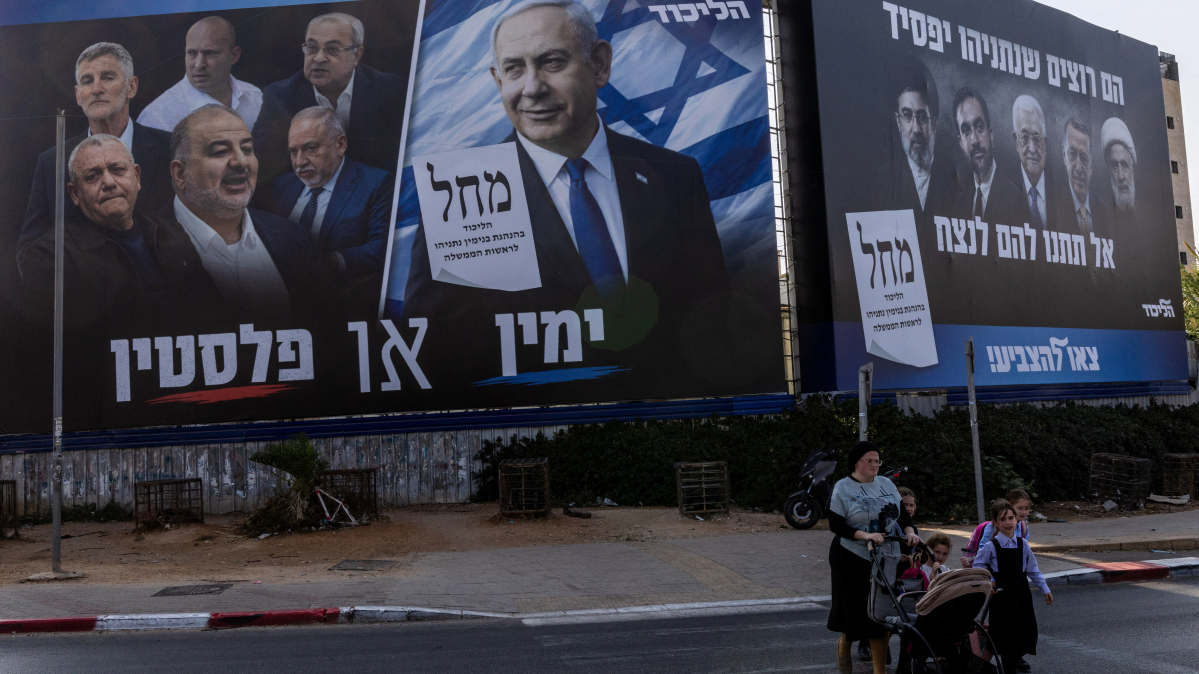
Israeli Prime Minister Benjamin Netanyahu faces a tightening election race as his rivals struggle to find a clear path to power, despite polls previously suggesting he was heading for defeat.
Voters will cast their ballots on Tuesday, choosing parties whose parliamentary seats will be distributed through proportional representation, with candidates elected from party lists.
The election is Israel's first since the Hamas-led attacks of 7 October 2023, which triggered a wider regional conflict involving fighting in Gaza and Lebanon and Israeli airstrikes on Iran.
Here are the main political figures vying for influence in the vote.
Benjamin Netanyahu
Having dominated Israeli politics for much of the period since 2009, following an earlier term as prime minister in the 1990s, Netanyahu has become the face of Israel abroad and a polarising figure at home.
Supporters call him “King Bibi” and regard him as a strong leader capable of defending Israel in a hostile region.
But Netanyahu faces mounting political and legal pressure. He is wanted by the International Criminal Court over alleged war crimes in Gaza, allegations he rejects, and is on trial in Israel on corruption charges, which he denies.
Opinion polls have indicated a sharp decline in support for his Likud party since the 7 October attack, which undermined his reputation on national security. His government's policies on religion and the role of the state have also proved unpopular with many voters.
Despite these setbacks, Netanyahu has said he wants to form a “broad national” government if he wins the election. Should the vote produce a political deadlock, he could remain in office as caretaker prime minister for months.
Netanyahu's top rivals
Former military chief Gadi Eisenkot, who lost a son during fighting in Gaza, has positioned himself as a political outsider with strong military credentials and a hawkish stance on security.
He leads a new centrist party, Yashar, which means “straight” or “honest” in Hebrew.
Naftali Bennett, 54, a former prime minister, commando, Netanyahu aide and high-tech millionaire, has joined forces with another former premier, centrist Yair Lapid.
Their new party, Together, has focused its campaign on healing a nation traumatised by war and restoring stability.
Despite their political differences, Bennett and Lapid previously joined forces in the alliance that removed Netanyahu from power in 2021.
Former Defence Minister Avigdor Lieberman, 68, has emerged as one of Netanyahu's fiercest critics after years as a close ally.
Known for his hardline security views, Lieberman quit Netanyahu's government in 2018, accusing the prime minister of being too soft on Palestinian militants in Gaza.
He has since said on X that he appealed to Israel's attorney general to launch a criminal investigation into Netanyahu on treason charges.
Former general Yair Golan, 64, who was praised for rescuing people during the Hamas-led attacks on 7 October 2023, leads the Democrats. The party was formed from the remnants of Israel's historic Labour party and the smaller left-wing Meretz party.
Netanyahu's political allies
Finance Minister Bezalel Smotrich, 46, and National Security Minister Itamar Ben-Gvir, 50, have faced intense international scrutiny over their far-right policies towards Palestinians.
Ben-Gvir, convicted in 2007 of inciting racism against Arabs, has advocated the death penalty for convicted Palestinian militants, stricter prison conditions for Palestinian detainees and easier access to firearms for Israelis.
Ultra-Orthodox allies
Netanyahu has long depended on two ultra-Orthodox Jewish parties, United Torah Judaism and Shas, to maintain his grip on power.
Their demands for broad exemptions from compulsory military service have fuelled public anger, particularly during wartime.
Low workforce participation and reliance on state benefits within ultra-Orthodox communities have added to tensions with other Israelis.
Parties that could hold the balance of power
Several parties not firmly aligned with either political bloc could play a decisive role in determining the next government.
Among them are Raam and the Joint List, which represent Israel's Arab minority, accounting for around 20 per cent of the population.
Two newer parties, the right-wing People of Israel and the centre-right Reservists, could also influence the outcome, although both have seen fluctuating support in opinion polls.













What is your opinion on this topic?
Leave the first comment