The Houthi offensive in Yemen is extending beyond the country's civil war, adding pressure to two of the Middle East's most important maritime trade routes and raising risks for energy, shipping and food supplies.
The group has seized strategic positions along Yemen's western coast, including areas overlooking the Bab al-Mandeb Strait, while declaring a maritime embargo on Saudi-linked shipping.
The developments come as traffic through both Bab al-Mandeb and the Strait of Hormuz has fallen sharply, putting two major gateways linking the Gulf and Red Sea with Asia and Europe under pressure at the same time.
Traffic through Bab al-Mandeb fell to 48 commodity-vessel crossings over the latest weekend, from 57 the previous weekend, according to Kpler data cited by The National.
The decline at Hormuz has been steeper. Just 14 commodity vessels crossed the strait over the same weekend, compared with 36 the previous weekend. Before the war began on 28 February, around 125 large commercial vessels normally passed through Hormuz each day.
Bab al-Mandeb connects the Red Sea to the Gulf of Aden and provides a key route towards the Suez Canal, while Hormuz connects the Persian Gulf with the Gulf of Oman and is one of the world's main routes for oil and gas exports.
Disruption at either can raise shipping, insurance and energy costs. Pressure on both increases the potential impact on global trade.
Saudi alternative to Hormuz comes under pressure
Saudi Arabia has spent years building infrastructure to move crude without relying entirely on the Strait of Hormuz.
At the centre of that system is the 1,200-kilometre East-West pipeline, which carries crude from the kingdom's oil-producing areas in the east to Yanbu on the Red Sea.
But the route designed to bypass Hormuz has itself come under attack.
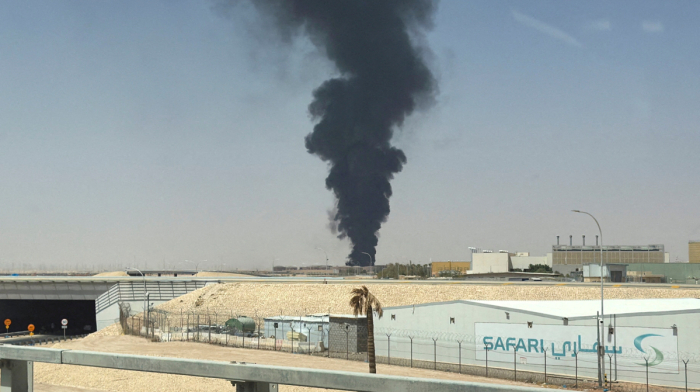
A drone attack on the pipeline on 13 September halted crude shipments through Yanbu, prompting Saudi Arabia to shift more exports towards its eastern Gulf terminals.
On 20 September, Saudi Aramco loaded around 14 million barrels of crude onto seven very large crude carriers at Ras Tanura, while oil flows through Hormuz rose to an average of about 2.9 million barrels per day, compared with 700,000 barrels per day in August, according to Vortexa data cited by Reuters.
The shift leaves Riyadh increasingly reliant on Hormuz just as its alternative Red Sea export route faces greater security risks.
Bab al-Mandeb adds another chokepoint
The Houthi advance along Yemen's western coast has increased pressure at the other end of the regional trade network.
The group has taken control of strategic locations, including the port of Mokha and nearby islands, strengthening its position overlooking Bab al-Mandeb.
The narrow waterway between Yemen and Djibouti and Eritrea lies on a major shipping route between Asia and Europe via the Red Sea and Suez Canal.
The Houthis have said their maritime restrictions target Saudi-linked vessels rather than all commercial shipping, potentially limiting the direct impact on wider Red Sea traffic compared with a blanket closure.
But shipping companies must still weigh the risks of attack and delays against rising insurance and security costs.
Food supplies also at risk
The disruption is not confined to oil and shipping. Countries heavily dependent on imported food are also vulnerable to higher transport and energy costs.
The World Food Programme warned at the beginning of September that disruption to Hormuz, the Red Sea and other major trade routes was affecting the movement of food, fuel and fertiliser.
Yemen is among the countries most exposed.
The WFP said on 17 September that more than 18 million people in Yemen face acute food insecurity, while around 2.2 million children under five are acutely malnourished.
With around 90 per cent of its food imported, Yemen is particularly vulnerable to disruption to trade and supply chains.
The latest fighting has displaced an estimated 125,000 people in a matter of days, according to the WFP. The organisation said 49 food-distribution points had become inaccessible and warned that it may need to expand assistance to another 1.5 million people if the conflict worsens.
The WFP has also warned that rising oil and shipping costs are affecting food systems elsewhere.
Egypt faces renewed Suez risk
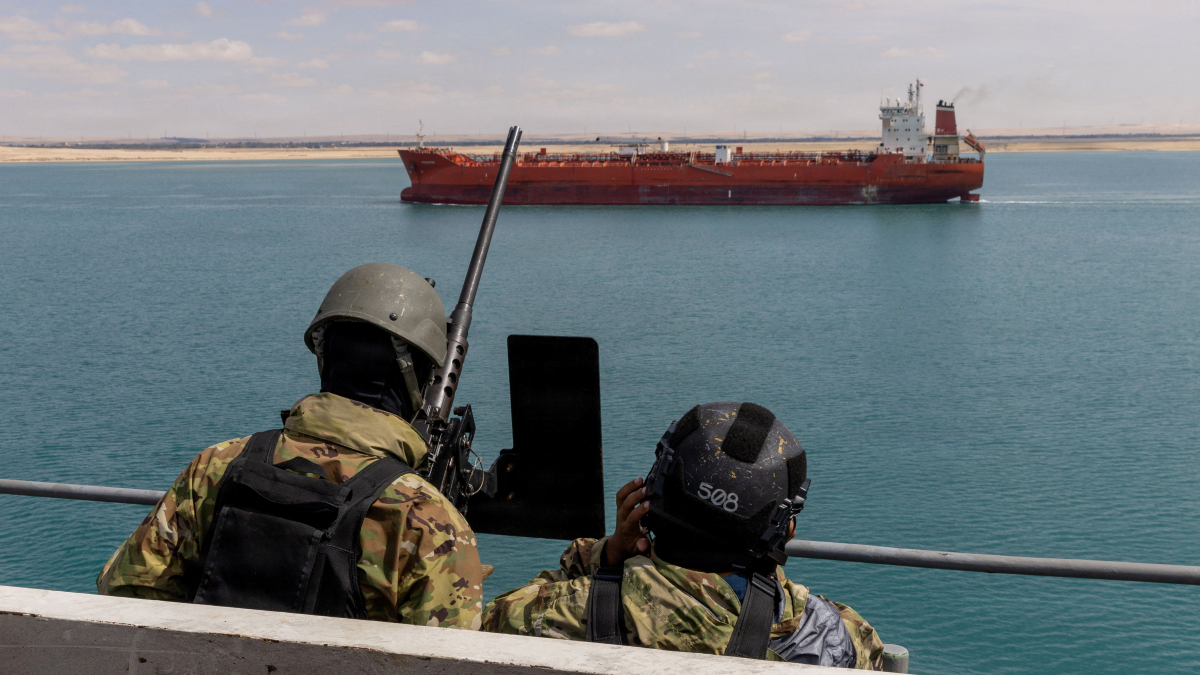
Pressure on Bab al-Mandeb also has direct implications for Egypt because ships using the Red Sea route to Europe pass through the Suez Canal.
Suez traffic has recovered, with 1,358 vessels generating $567.1 million in revenue in August. But renewed disruption at Bab al-Mandeb could reduce traffic reaching the canal and put that recovery at risk.
That makes security in the southern Red Sea an economic concern for Egypt as well as a regional security issue.
Two gates, one global supply chain
Hormuz and Bab al-Mandeb are separate chokepoints, but disruption at both feeds into the same global supply chain. Gulf oil moves through Hormuz, while Bab al-Mandeb links Asian and European trade through the Red Sea and Suez Canal.
Continued pressure on both routes could push up the cost of fuel, food and freight far beyond the Middle East — turning separate security crises into a broader threat to global trade.

















What is your opinion on this topic?
Leave the first comment