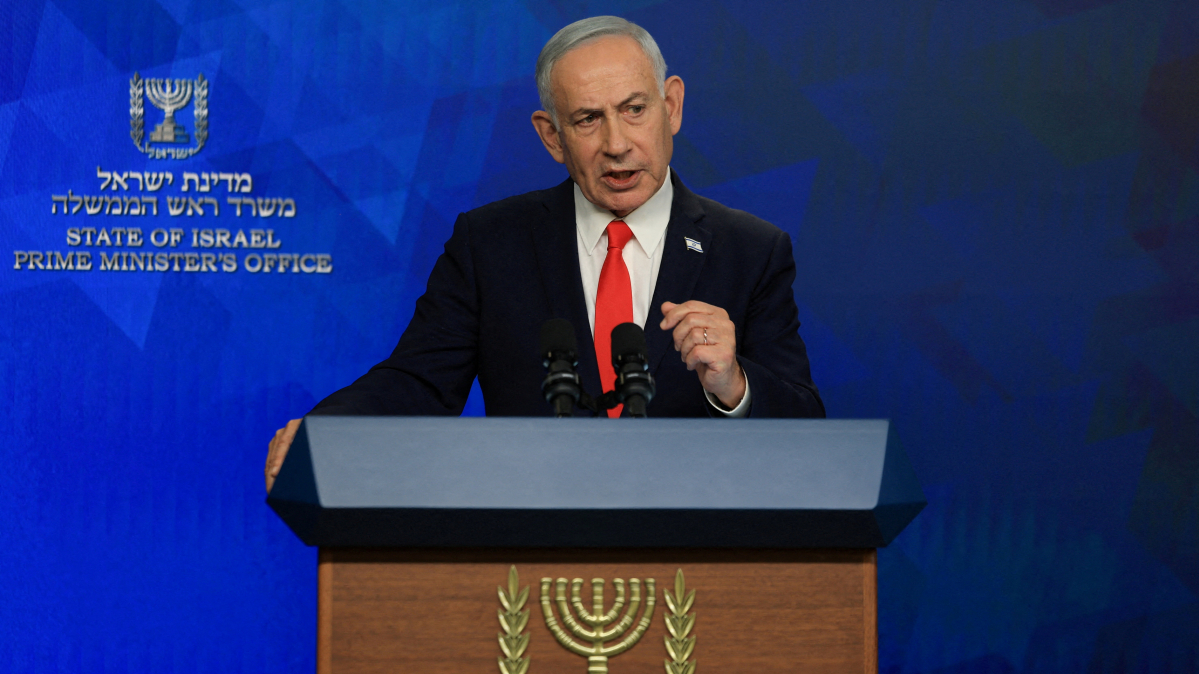
Israeli Prime Minister Benjamin Netanyahu has ordered the dismantling of unauthorised settler outposts in the West Bank, according to people familiar with the decision, as pressure from Washington grows for Israel to curb violence by settlers against Palestinians.
The order covers outposts built without formal approval from the Israeli government.
Such sites are often made up of a handful of prefabricated homes or caravans and can house only a small number of settlers. While some have been demolished by Israeli authorities in the past, others have later received official recognition and access to state funding.
It remains unclear when the removals will begin.
U.S. pressure over settler violence
The move comes as Israel faces increasingly direct criticism from its closest ally, the United States, over attacks by Israeli settlers on Palestinians.
U.S. Ambassador to Israel Mike Huckabee on Saturday described violent settlers as terrorists and called for them to face serious consequences.
Speaking after meeting Palestinian-Americans in a West Bank town, Huckabee said it was in Israel's own interest to confront what he called “criminal behaviour and terrorism”.
Israeli news outlet Ynet reported that the order could affect about 100 outposts across the West Bank.
The Israeli prime minister's office and military did not immediately comment on the reports.
Finance Minister Bezalel Smotrich, a prominent settler and strong supporter of settlement expansion, acknowledged that Netanyahu had ordered the removal of sites built in Areas A and B of the West Bank, where most Palestinians live.
Smotrich said he disagreed with the decision, while arguing that the government had made significant progress in expanding settlements in Area C, which accounts for roughly 60 per cent of the West Bank and remains under full Israeli control.
Court orders return of Palestinian families
The development came on the same day that Israel's Supreme Court ordered defence authorities to facilitate the safe return of three Palestinian families to their homes in the West Bank village of Jalud.
The families had been driven from their homes by Israeli settlers, according to the court case.
The ruling adds another layer to growing scrutiny of settler activity, with Palestinian communities in parts of the West Bank reporting intimidation, harassment and attacks.
Settlement expansion
The West Bank has been at the centre of the Israeli-Palestinian conflict for decades. Under the Oslo Accords of the 1990s, the territory was divided into Areas A, B and C, with varying degrees of Palestinian and Israeli control.
Israel has established hundreds of settlements and smaller outposts across the territory. Peace Now, an Israeli organisation that opposes settlement expansion, says there are currently 340 outposts and 146 formally recognised settlements in the West Bank.
Most governments and United Nations bodies regard Israeli settlements in the West Bank as illegal under international law and consider the territory occupied. Israel disputes that legal interpretation, describing the West Bank as disputed territory.
Rare pressure on settlers
Israeli governments have repeatedly condemned settler violence, but critics say those responsible are rarely arrested and even less frequently prosecuted.
The issue has become particularly sensitive in Washington, where the U.S. administration has been pressing Israel to take stronger action.
Last month, settlers surrounded Palestinian homes in a nearby village, including a property belonging to a Palestinian-American, before Israeli forces removed the residents from the area. Palestinians there say harassment and intimidation by settlers have continued.
For Netanyahu's government, dismantling unauthorised outposts would represent a notable step, particularly as far-right politicians and settler leaders remain influential within the coalition.
Whether the order leads to widespread removals - and how strongly it is enforced on the ground - remains to be seen.
Read more:















What is your opinion on this topic?
Leave the first comment