Iran and Italy have exchanged updates on talks over the Strait of Hormuz and negotiations between Lebanon and Israel, as Tehran says an agreement with Oman on new shipping arrangements is close.
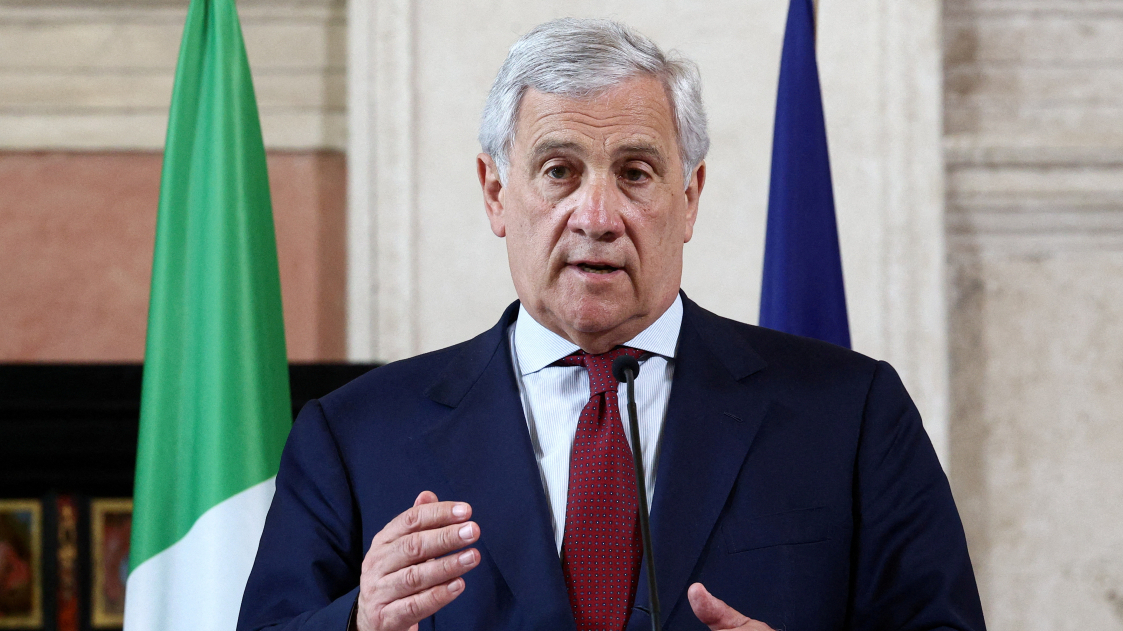
Iranian Foreign Minister Abbas Araghchi and his Italian counterpart Antonio Tajani spoke by telephone on Wednesday to discuss the latest regional developments, according to official sources.
Amid reports that Tehran and Muscat are close to announcing an agreement on the strategic waterway, Iran's Foreign Ministry said Araghchi updated Tajani on the latest diplomatic contacts with Oman.
“The parties also emphasized the importance of continuing political and diplomatic consultations and regional cooperation to reduce tensions,” the ministry said.
According to the state-run IRNA news agency, Tajani said in a post on X that he had briefed Araghchi on negotiations between Lebanon and Israel in Rome on a comprehensive ceasefire agreement.
He reportedly expressed hope that the ongoing negotiations in the Italian capital would produce tangible results to strengthen the ceasefire in Lebanon and reach a comprehensive agreement.
Clause One of the Islamabad Memorandum of Understanding, signed by the Iranian and U.S. presidents in June, set out the cessation of war and hostilities on all fronts, including in Lebanon.
Iran says Hormuz agreement is close
Meanwhile, Deputy Foreign Minister for Legal Affairs Kazem Gharibabadi said Iran and Oman are close to finalising an agreement on new shipping arrangements for the Strait of Hormuz, which is expected to be announced soon.
However, he stressed that the agreement would not result in the immediate or full reopening of the strategic waterway linking the Persian Gulf and the Gulf of Oman.
He said regional states had supported the Tehran-Muscat talks as a bilateral matter, adding: “The understanding with Oman does not mean implementing Clause Five of the Islamabad Memorandum of Understanding” with the U.S. concerning the Strait of Hormuz.
Parliament insists conditions have changed
In a separate development, Hassan Ghashghavi, spokesperson for the Parliament's National Security and Foreign Policy Commission, said conditions in the Strait of Hormuz would not return to their pre-war state.
“The conditions in the Strait of Hormuz will absolutely not return to the conditions before the war began.”
The lawmaker was quoted by the Parliament news agency, ICANA, as saying that Iran would not accept the so-called southern corridor because it did not safeguard the country's national interests.
"We will not agree with the southern corridor, which the United States sought to impose through pressure and threats, contrary to Clause Five of the 14-point Islamabad Memorandum of Understanding.”
The senior MP added: “This corridor fails to ensure Iran's national security and national interests, and for this reason, Iran has declared its clear opposition to the Omani side.”
Joint statement in final drafting stage
Foreign Ministry spokesperson Esmaeil Baghaei also said that the geographical coordinates of the proposed shipping route had been agreed during negotiations between Iran and Oman.
“If certain third parties do not obstruct in the process, the joint statement of the two countries, including the main considerations and points agreed upon, are in the final review and drafting stage,” the Iranian spokesperson was quoted as saying, without naming any country.
Tehran has accused the U.S., along with several regional and extra-regional states, of hindering negotiations between Iran and Oman by pressuring Muscat to reject Tehran's proposals for reopening the waterway.
Amid renewed hopes of de-escalation following the Iran-Oman talks, Baghaei also said that neither Foreign Minister Araghchi nor Parliament Speaker Mohammad Bagher Ghalibaf was scheduled to visit Pakistan or Qatar for mediated talks with the U.S.
His comments followed unconfirmed media reports that Iran's senior negotiators were expected to travel to Islamabad and Doha for indirect talks with U.S. officials.
Read more:












What is your opinion on this topic?
Leave the first comment