Protest outside Azerbaijani Embassy in London features Iranian flags and hijab placards
Demonstrators carrying Iranian flags and placards supporting the hijab gathered outside the Azerbaijani Embassy...
Nearly 270,000 Israelis left the country for at least three months between 2023 and 2025, according to a new study by researchers at Tel Aviv University, raising concerns about a sharp increase in long-term emigration and its potential impact on the country's future.
The research, reported by Israeli newspaper Yedioth Ahronoth, found that 86,509 people left Israel for extended periods in 2023, followed by 91,499 in 2024 and 90,922 in 2025.
The annual average of around 90,000 departures marks a significant increase from the roughly 60,000 recorded each year between 2010 and 2019.
Professor Itai Ater, who supervised the study at Tel Aviv University's Coller School of Management, described the figures as "deeply troubling".
He warned that the greatest concern was not only the number of people leaving but the possibility that the trend could continue to accelerate.
"The real danger lies in the loss of equilibrium and the possibility that emigration numbers will continue rising rather than remain at their current levels," he said.
Researchers said the findings point to a clear shift after years in which migration levels had remained relatively stable.
The study also highlighted growing concerns over the loss of highly skilled workers.
Previous research cited by Yedioth Ahronoth found increasing numbers of doctors, engineers, academics, PhD graduates and high-income professionals leaving the country.
The newspaper said Israel's economy depends heavily on skilled workers, particularly in the technology sector and other knowledge-based industries, making the loss of experienced professionals a long-term challenge.
The study comes as Israel continues its military campaign in Gaza, which began in October 2023, alongside military operations in Lebanon, Syria, Yemen and Iran.
Israeli military figures show that at least 966 Israeli soldiers have been killed since the start of the Gaza war.
With Israel's population now exceeding 10 million, researchers said the sustained rise in long-term emigration has disrupted the country's migration balance and could have lasting consequences if the trend continues.
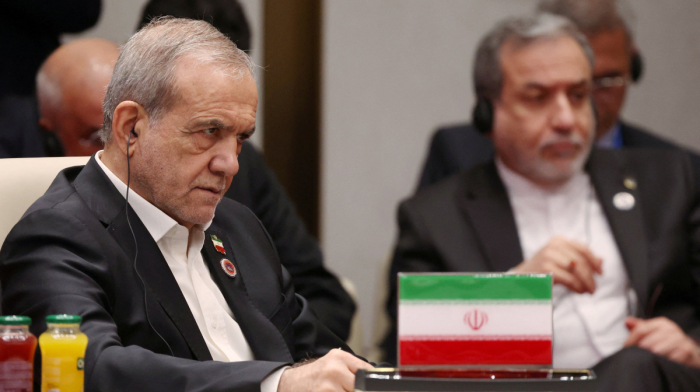
The Middle East conflict remains tense as diplomatic efforts continue alongside renewed Houthi attacks. Iran says it remains open to mediation, while the Saudi-led coalition says it intercepted a ballistic missile fired towards the kingdom.
Rescuers searched the wreckage of two high-speed trains in central Spain on Thursday as the death toll rose to a provisional 74, making it the country's second fatal high-speed rail disaster this year.
Evacuations and the provision of humanitarian aid in the Russian-occupied southern Ukrainian town of Oleshky have begun, a senior Ukrainian official said on Friday. In a statement on Telegram, David Arakhamia said a six-day ceasefire was holding, and that more details would follow.
Qatari mediators returned to Tehran on Friday as part of efforts to reach a deal between the U.S. and Iran, according to an official briefed on the talks.
UN human rights experts comprising a group including Special Rapporteurs and independent experts who are part of the UN Human Rights Council, have criticised French authorities over their handling of nationwide student protests.
Demonstrators carrying Iranian flags and placards supporting the hijab gathered outside the Azerbaijani Embassy in London.
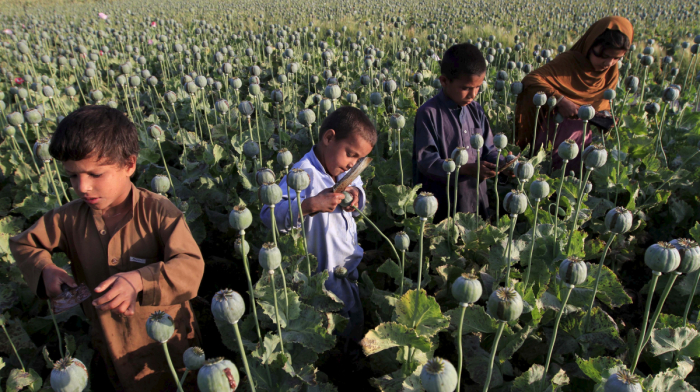
Opium poppy cultivation in Afghanistan surged by 330 per cent in 2026 despite a four-year ban, the United Nations said on Thursday. Afghan authorities disputed the findings, while Japan urged continued support for farmers seeking alternative livelihoods.
Central Asia could gain up to $640 million a year from closer energy cooperation, but strained electricity grids threaten to limit those gains, with Kazakhstan particularly exposed to regional power shortages and growing pressure on its network.
Georgia and Azerbaijan are stepping up efforts to boost trade, strengthen transport links between Asia and Europe and resolve a longstanding border dispute, as both countries seek to deepen their strategic partnership.
People travelling between Uzbekistan, Kazakhstan, Kyrgyzstan, Tajikistan and Azerbaijan could soon be able to pay for purchases using their usual banking apps. Central banks from the five countries are working on linking their national payment systems.
You can download the AnewZ application from Play Store and the App Store.
What is your opinion on this topic?
Leave the first comment